
• FOLLOW US


January 13, 2026

Aadizookaan: Winter Storytelling Gathering

Event Date: January 13, 2026
Event Location: Manitoba Theatre for Young People
Event Time: 9:45 am - 2:00 pm

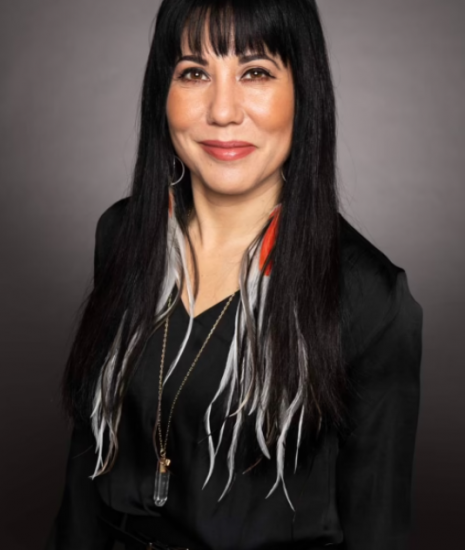
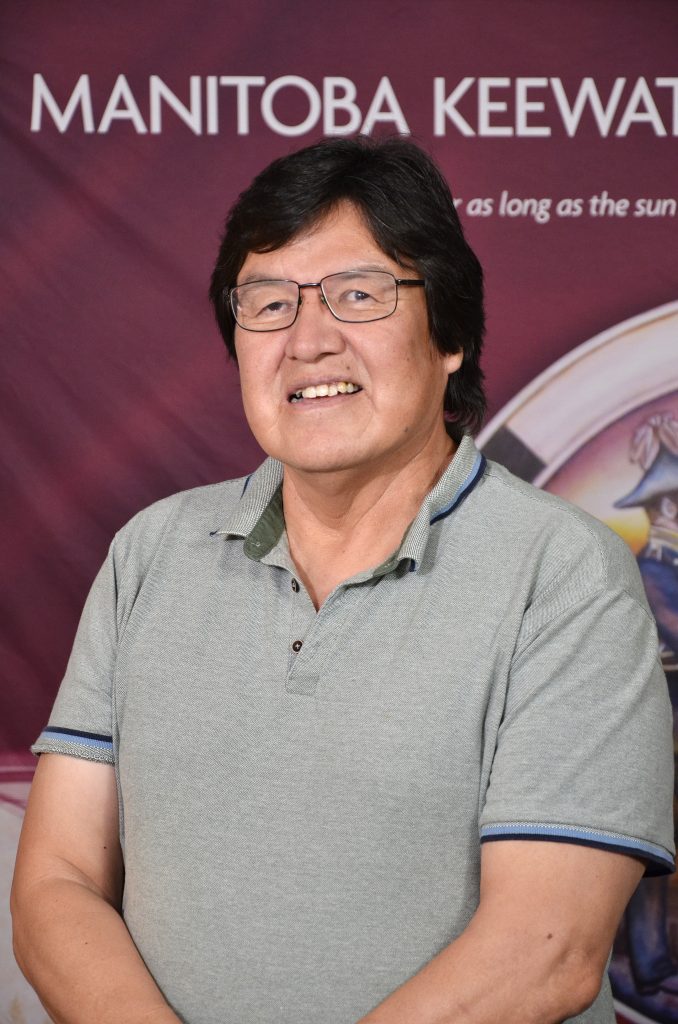
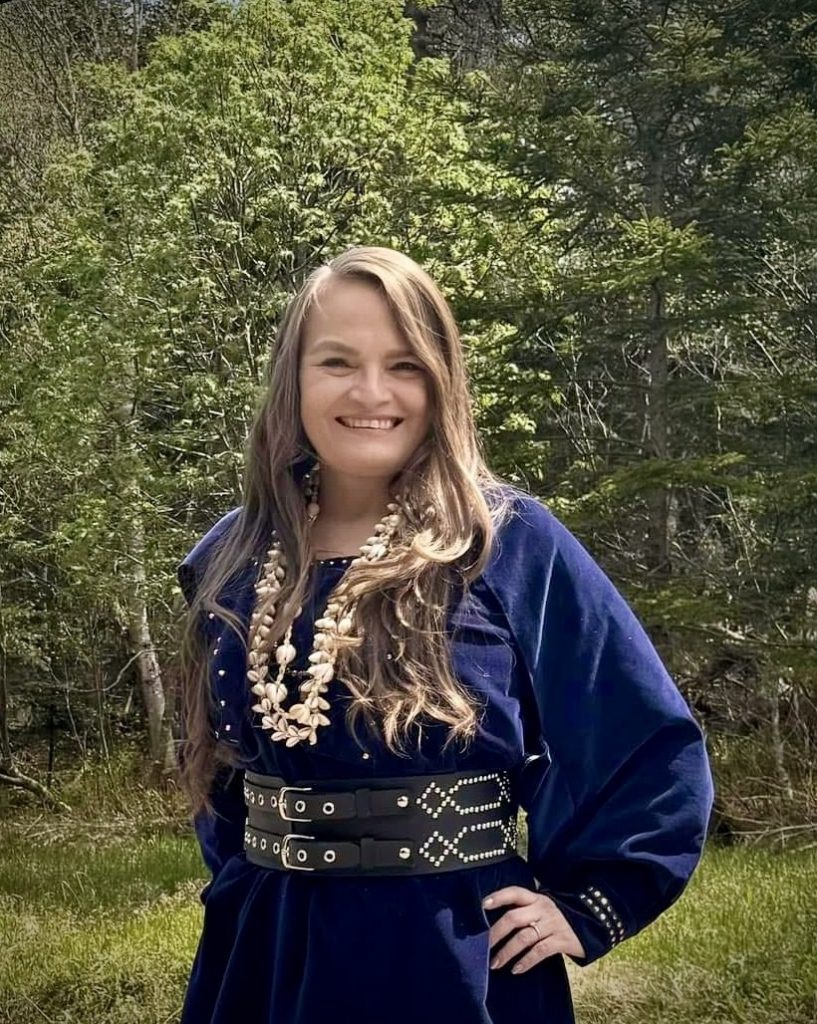
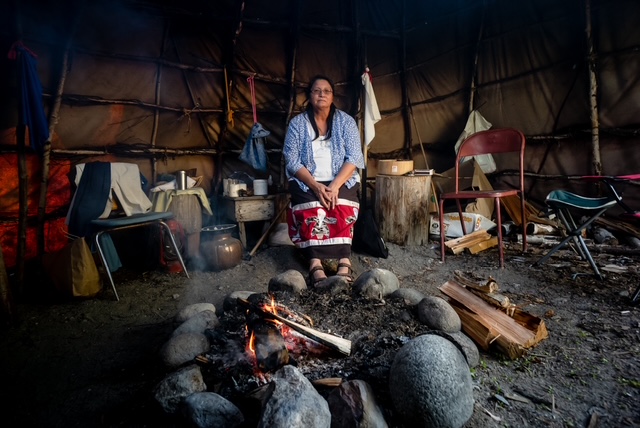
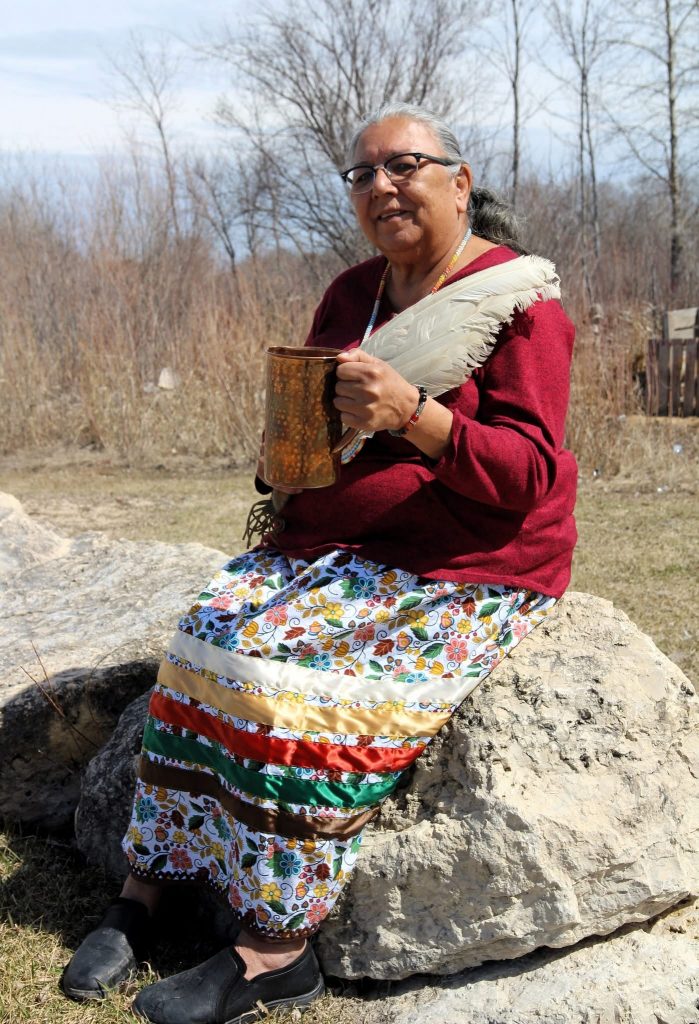
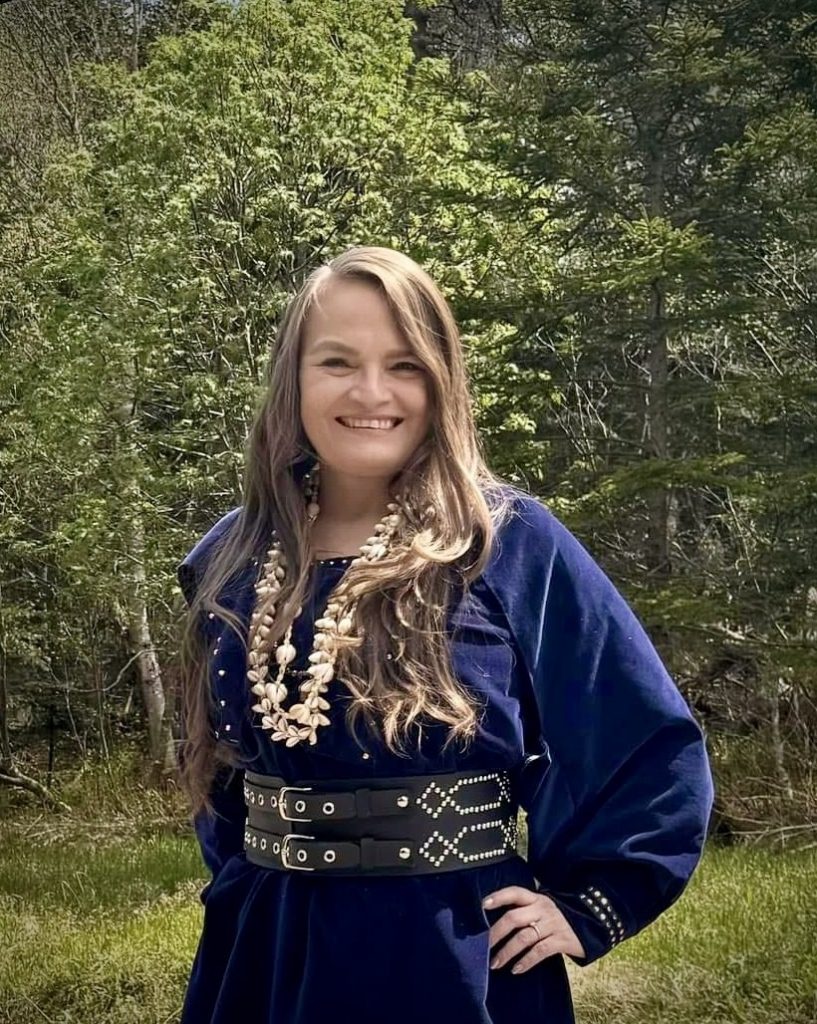
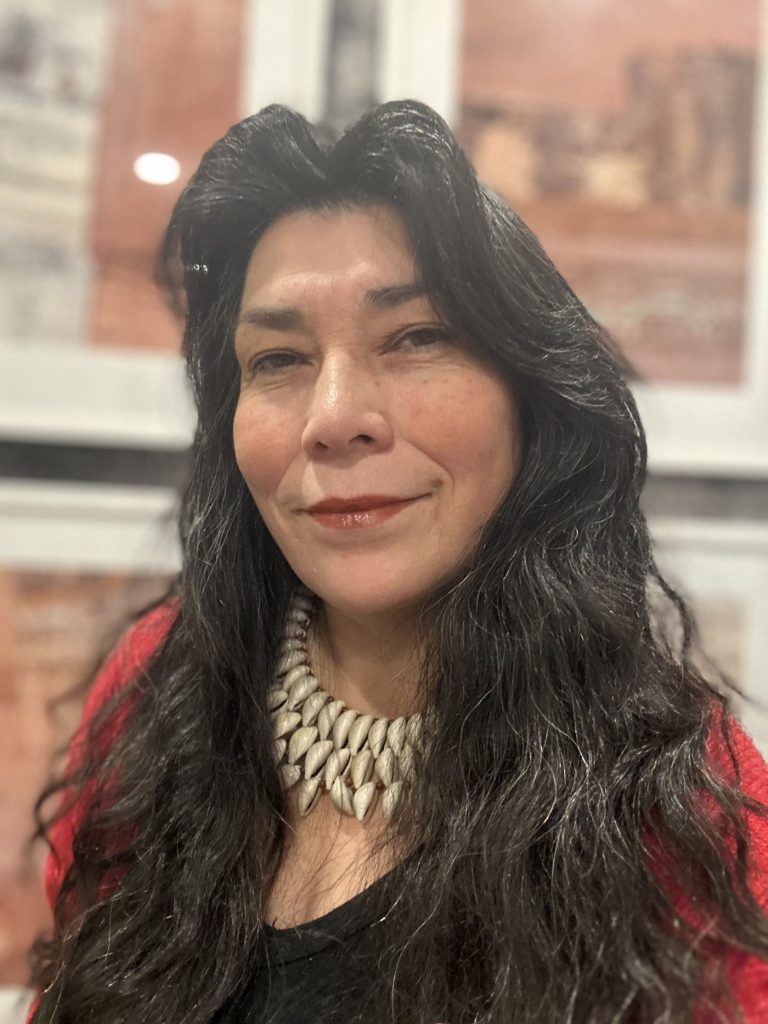
On Tuesday, January 13, 2026, join us for a winter storytelling gathering rooted in First Nations tradition with MC Rylee Nepinak, and storytellers Elder Margaret Lavallee, Jason Bone, Dennis Chartrand and Jason Parenteau. Doors open at 9:25 am.

The event will be held at the Manitoba Theatre for Young People (2 Forks Market Road).

This event is now full to capacity and we are unable to accept more registrations. Thank you for your interest!

Full Program Available Here:

About the Presenters

Jason Bone is a cultural facilitator at Manitoba First Nation Education Resource Centre. He graduated from the university of Manitoba with a Masters of Arts, and a Bachelor of Arts, Indigenous Governance, from the university of Winnipeg. Jason is from Keeseekoowenin First Nation, near riding mountain national park. His cultural knowledge comes from the midewin teaching lodge, and from being an oshkaabewis (helper/writer) to the late Midewid(one who works with the sound of the drum) Ron Indian Mandamin (Iban).

Dennis Chartrand, a member of Minegoziibe Anishinabe (formerly known as Pine Creek). He currently works at NCI FM and hosts Da Minos Music Lodge Monday to Thursday evenings from 8 pm to 9 pm. He has also worked with the University of Winnipeg’s WiiChiiwaakanak Learning Centre, Indigenous Engagement, and the Oral History Centre, U of Manitoba, Indigenous Languages of Manitoba, NCI, and Mazinaate Publishing on an Indigenous Language radio show entitled ‘Aakoziiwigamig: An Ojibwe Radio Drama’. Chartrand is as known as voicing Darth Vader in the Ojibwe-dubbed Star Wars film, “Anangong Miigaading: A New Hope’.

Rylee Nepinak is a proud Anishinaabe who grew up off-reserve in Winnipeg’s North End and is a member of Sagkeeng First Nation in Treaty 1 Territory.

Rylee is one of the Co-Founders of Anishiative, a grassroots community organization that connects Indigenous youth to land-based education, Inner-city cultural and mental wellness opportunities.

Motivated by a state of emergency In Tataskewayak Cree Nation, Nepinak cycled across Canada raising money and promoting awareness about Indigenous youth suicide. Nepinak finished his journey in 40 days.

Rylee has also been involved in supporting relatives experiencing houselessness by means of coordinating the community warming tipis at the Thunderbird House every winter. The efforts of which helped lead to the beginning stages of an Indigenous-led warming space for houseless relatives called N’dinawemak.

Practicing lateral kindness, reclaiming identity, and promoting Indigenous youth voices are the driving forces behind Rylee’s mission here on Turtle Island.

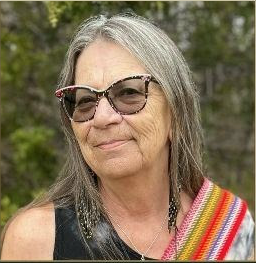
Margaret Lavallee is an Anishinaabe Ikwe from Sagkeeng First Nation and an Elder in Residence at Ongomiizwin Education from the Indigenous Institute of Health and Healing at Rady Faculty of Health Sciences, University of Manitoba. 

Margaret’s experience comes from over 40 years in varied Human Relations responsibilities within the health care field. Margaret holds a degree in Bachelor of General Studies from Brandon University. She was also honoured by the University of Manitoba, Rady Faculty of Health Sciences with an honorary doctorate degree for her lifelong work for the Indigenous community in the health care field. 

Margaret’s role as Elder in Residence for the last 17 years ensures Indigenous knowledge and world views are incorporated into all levels of student support at the University of Manitoba. Margaret assists with research, classroom presentations, and traditional cultural teachings for both staff and learners.

Jason Parenteau, a Lenape man born in Vancouver, a member of Moravian of the Thames Delaware Nation, and a recognized member of the Indigenous community in Manitoba. He has worked with Manitoba Justice and Dakota Ojibwe Child and Family Services providing culturally appropriate services. He founded the Roseau River Jiu Jitsu Club and he operates Miikwan Consulting & Indigenous Education.

Support Us

Whether you are passionate about interdisciplinary human rights research, social justice programming, or student training and mentorship, the University of Manitoba offers opportunities to support the opportunities most important to you. 

DONATE
  • FOLLOW US


November 05, 2025

Water and Climate Justice: Advancing Intersectional Approaches

Event Date: November 05, 2025
Event Location: Zoom Webinar, see below for registration link
Event Time: 11 am - 12:30 pm CST

Join us for the next webinar in The Last Drop Water Researchers Speaker Series with panelists Aimée Craft (University of Ottawa), Linda Mendez-Barrientos (University of Denver), Deborah McGregor (Anishinabe, Whitefish River First Nation, Professor, University of Calgary), Anaís Roque (Duke University), and Sameer H. Shah (University of Washington).

Water and climate change are inextricably linked — extreme weather events are making water more scarce, more unpredictable, and more polluted. These impacts throughout the water cycle threaten all aspects of human relationships with water. Work at the intersection of water and climate justice is needed to understand how socio-cultural, political, and economic relationships at different scales serve to co-create and maintain injustices in diverse hydrosocial systems (i.e., transition to low-carbon futures using large-scale hydroelectricity generation requires assessment of water justice impacts).

Furthermore, critical assessment of the human drivers of water and climate crises can advance understandings of the ways that water- related climate risks and impacts are not strictly natural phenomena, rather they are produced by the interaction between socio-economic and political marginalization as well as physical changes in water dynamics. Overall, a combined water and climate justice lens adds nuance to ongoing and emergent water and climate crises, as they prompt us to ask who benefits, who loses out, in what ways, where, and why? At the same time, more work is needed to understand the points of intersection and divergence between water and climate injustices. This session brings together diverse scholars whose work addresses water and climate justice to explore the intersections and divergences between water and climate justices, including how these overlap with other patterns and experiences of marginality and injustice.

Registration required. To register, visit: https://umanitoba.zoom.us/meeting/register/0rzhln4-SQWrazhJCNNtxg

About the Speakers

Aimée Craft is an award-winning teacher and researcher, recognized internationally as a leader in the area of Indigenous laws, treaties and water. She holds a University Research Chair Nibi miinawaa aki inaakonigewin: Indigenous governance in relationship with land and water.

An Associate Professor at the Faculty of Common law, University of Ottawa and an Indigenous (Anishinaabe-Métis) lawyer from Treaty 1 territory in Manitoba, she is the former Director of Research at the National Inquiry into Missing and Murdered Indigenous Women and Girls and the founding Director of Research at the National Centre for Truth and Reconciliation. She practiced at the Public Interest Law Centre for over a decade and in 2016 she was voted one of the top 25 most influential lawyers in Canada. In 2021 she was awarded the prestigious Canadian Bar Association President’s Award.
Prof. Craft prioritizes Indigenous-lead and interdisciplinary research, including through visual arts and film, co-leads a series of major research grants on Decolonizing Water Governance and works with many Indigenous nations and communities on Indigenous relationships with and responsibilities to nibi (water). She plays an active role in international collaborations relating to transformative memory in colonial contexts and relating to the reclamation of Indigenous birthing practices as expressions of territorial sovereignty.

Photo of Aimee Craft

Linda Mendez-Barrientos is an Assistant Professor at the Josef Korbel School of Global and Public Affairs at the University of Denver. In this role, she leads the Environmental Justice & Policy Research lab (ejpr), which is dedicated to understanding how inequality and power asymmetries shape institutional change processes and environmental justice. She is also the co-founder of s2e-Science to Empower, an environmental justice initiative that leverages data and innovative research to facilitate environmental accountability and human rights protection, and increase the participation of diverse and historically excluded voices in the decisions that define new sustainable trajectories.

Dr. Mendez-Barrientos research lies at the intersection of institutional change, public policy implementation, environmental justice, and natural resource governance, with a focus on water policy and management. Her work has been published in top interdisciplinary journals including Scientific ReportsSociety & Natural Resources, Ecology & Society, Environmental Policy & Planning, Environmental Policy & Governance, and Environment and Planning E: Nature & Space, as well as leading water journals, including Nature Water, Wiley Interdisciplinary Reviews: Water, Water Security, Water Policy, and the International Journal of Water Resources Development. She is also the recipient of a number of prestigious and competitive awards, including the National Science Foundation (NSF) Graduate Research Fellowship (2016-2021), NSF Integrative Graduate Education & Research Traineeship (2015-2017), and European Commission Agris Mundus Scholarship (2008-2010).

Dr. Mendez-Barrientos earned her Ph.D. in Ecology from the University of California Davis, and holds a MSc. in Water Management from Wageningen University in the Netherlands, and a MSc. on Tropical Agrarian Systems from Montpellier SupAgro in France. Before academia, Dr. Mendez-Barrientos served as an environmental policy analyst for several years with the Environmental Defense Fund.

Photo of Linda Mendez-Barrientos

Deborah McGregor, Anishinabe, Whitefish River First Nation, Professor, University of Calgary. Dr. McGregor’s research has focused on Indigenous knowledge systems in diverse contexts including environmental and water governance, environmental and climate justice, health and Anishinaabe legal traditions. She remains actively involved in a variety of First Nation initiatives, continuing to serve as an advisor and engaging in community-based research and initiatives.

Dr. Anaís Delilah Roque Antonetty (she/her/ella) is an environmental social scientist and anthropologist who studies resource insecurity and health in the Anthropocene. Currently, her research agenda is interested in how households and communities experience, prepare for, and respond to food, energy, and water insecurity during “normal” times and in the wake of a hazard (e.g., geophysical, climatological) or disaster. Dr. Roque is also interested in the health outcomes of such experiences and the extent to which strategies to address insecurity across scales (e.g., household, community, policy) shape pathways to better or worse health and well-being. Trained as a mixed-methods scholar, Dr. Roque uses a range of methodologies in her research, including ethnographic research methods, participatory research methods (e.g., photovoice, participatory mapping, CBPR, action research), social networks, and surveys, among others.

Inspired by scholarship that embraces diverse epistemological approaches, Dr. Roque is part of several interdisciplinary and transdisciplinary teams that advance research at the intersections of environmental behaviors, community resilience, and social vulnerability. She conducts research in Puerto Rico, the U.S. Gulf Coast, and the U.S./Mexico Borderlands.

Dr. Sameer Shah (he/him) is a John C. Garcia Professor and Assistant Professor of Climate Adaptation in the School of Environmental & Forest Sciences (SEFS) at the University of Washington. He is also an Affiliate with the UW Center for Studies in Demography in EcologyCenter for Environmental Politics, and Clean Energy Institute. Dr. Shah holds expertise in the human dimensions of climate change vulnerability and adaptation. He aims to understand how systemic marginalization, and climate-related change and disasters interact to create and amplify uneven water, food, and energy insecurities for communities on the frontlines of climate change. In particular, his research develops theoretical, conceptual, and empirical analyses of the equity, justice, and sustainability outcomes of climate adaptation and disaster response at multiple scales.

Dr. Shah’s most current research is focused on the causal drivers and impacts associated with “climate maladaptation.” Through research in South/Southeast Asia, the contiguous U.S., and Puerto Rico, he and his collaborators seek to advance interventions that reduce the disproportionately larger climate risks experienced by marginalized groups, and to shape long-term policy strategies that transform the underlying systems that heighten these impacts. At SEFS, Dr. Shah directs the WATERS Research Collaborative (Water, Adaptation & Transformation: Equity, Resilience and Sustainability). He is also a co-founder of the SOLVER (Social Vulnerability and Resilience) Research Laboratory.

Image of water droplet

Support Us

Whether you are passionate about interdisciplinary human rights research, social justice programming, or student training and mentorship, the University of Manitoba offers opportunities to support the opportunities most important to you. 

DONATE
  • FOLLOW US


October 30, 2025

telltales

Event Date: October 30, 2025
Event Location: 267 Sherbrook Street, Winnipeg, MB
Event Time: By appointment only

To view Jaimie Isaac’s solo exhibition, telltales, please make an appointment with Isaac (@isaac.jaimie or www.jaimie-isaac.ca). Appointments are available until October 30.

About the exhibition:

An exhibition of work and research that provides visual indications of the state and presence of waterways. Mixed media of installation, film and experimental sound, the artworks present a culmination of work produced from Isaac’s art residency with Just Waters in 2024-25.

Through various lifeways, Isaac is working on reclaiming and restoring a relationship with water, and honouring the continuum of sustained relationships community has maintained for millennia. Many Indigenous peoples globally recognize that water is sacred, and countries have pass groundbreaking laws granting legal personhood status to their water systems, honouring the Indigenous peoples’ perspective of waters as relatives and ancestors.

In relation to waterways, Lake Winnipeg and the Red River are endangered, telltales that phosphorous is the cause of blue-green algal blooms which are maintained by evidence-based research (Lake Winnipeg Foundation and Lake Winnipeg Indigenous Collective Report Card, May 2024). Telltales builds awareness of water injustices and deepens collective connection to water.

About the artist:

Jaimie Isaac (she/her/hers) is a curator and interdisciplinary artist, Anishinaabe member of Sagkeeng First Nation and is of British heritage. She was the Chief Curator at the Art Gallery of Greater Victoria from 2021-2023, and advisor 2023-2024.

As the Curator of Contemporary and Indigenous Arts at the Winnipeg Art Gallery 2015-2021, she was awarded the Canadian Museums Association outstanding achievement award in exhibitions category with the Boarder X exhibition. Isaac has a degree in Art History and a Masters of Arts from the University of British Columbia focused on decolonizing gallery/museum practices.

Through academic, curatorial, consulting/advisory, collaborative and artistic projects, Jaimie engages in areas of reconciliation, resistance, decolonization in art and in sport, Indigenous feminism, environmental justice, language and cultural resurgence. Isaac has lectured, curated internationally with research trips and residencies in Norway, Finland, Italy, Australia, New Zealand, Chicago, and New York. Bodies of art commissioned and exhibited take form in film, public art, installation and mixed media. With published work, Isaac has contributed to scholarly collections of writing within textbooks and journals.

Support Us

Whether you are passionate about interdisciplinary human rights research, social justice programming, or student training and mentorship, the University of Manitoba offers opportunities to support the opportunities most important to you. 

DONATE
  • FOLLOW US


October 22, 2025

telltales

Event Date: October 22, 2025
Event Location: 267 Sherbrook Street, Winnipeg, MB
Event Time: 6 pm

Just Waters is thrilled to invite you to celebrate Jaimie Isaac’s solo exhibition, “telltales.” Join us on Wednesday, October 22 at 6 pm for an opening talk and welcome to the exhibition.

To view the exhibition at another time, please make an appointment with Jaimie Isaac (@isaac.jaimie or www.jaimie-isaac.ca). Appointments are available until October 30.

About the exhibition:

An exhibition of work and research that provides visual indications of the state and presence of waterways. Mixed media of installation, film and experimental sound, the artworks present a culmination of work produced from Isaac’s art residency with Just Waters in 2024-25.

Through various lifeways, Isaac is working on reclaiming and restoring a relationship with water, and honouring the continuum of sustained relationships community has maintained for millennia. Many Indigenous peoples globally recognize that water is sacred, and countries have pass groundbreaking laws granting legal personhood status to their water systems, honouring the Indigenous peoples’ perspective of waters as relatives and ancestors.

In relation to waterways, Lake Winnipeg and the Red River are endangered, telltales that phosphorous is the cause of blue-green algal blooms which are maintained by evidence-based research (Lake Winnipeg Foundation and Lake Winnipeg Indigenous Collective Report Card, May 2024). Telltales builds awareness of water injustices and deepens collective connection to water.

About the artist:

Jaimie Isaac (she/her/hers) is a curator and interdisciplinary artist, Anishinaabe member of Sagkeeng First Nation and is of British heritage. She was the Chief Curator at the Art Gallery of Greater Victoria from 2021-2023, and advisor 2023-2024.

As the Curator of Contemporary and Indigenous Arts at the Winnipeg Art Gallery 2015-2021, she was awarded the Canadian Museums Association outstanding achievement award in exhibitions category with the Boarder X exhibition. Isaac has a degree in Art History and a Masters of Arts from the University of British Columbia focused on decolonizing gallery/museum practices.

Through academic, curatorial, consulting/advisory, collaborative and artistic projects, Jaimie engages in areas of reconciliation, resistance, decolonization in art and in sport, Indigenous feminism, environmental justice, language and cultural resurgence. Isaac has lectured, curated internationally with research trips and residencies in Norway, Finland, Italy, Australia, New Zealand, Chicago, and New York. Bodies of art commissioned and exhibited take form in film, public art, installation and mixed media. With published work, Isaac has contributed to scholarly collections of writing within textbooks and journals.

Support Us

Whether you are passionate about interdisciplinary human rights research, social justice programming, or student training and mentorship, the University of Manitoba offers opportunities to support the opportunities most important to you. 

DONATE
  • FOLLOW US


October 08, 2025

Water Challenges in the Anthropocene: Lessons from India

Event Date: October 08, 2025
Event Location: Zoom Webinar
Event Time: 12:00 pm CST, 10:30 pm IST

Recording available here: University of Manitoba Sustainability YouTube Channel

Registration required. To register, please visit: https://umanitoba.zoom.us/meeting/register/vQ5TwAaPSqSLBdFBweM0rQ

About the Speaker

From 2009 to 2014, Dr Mihir Shah was a Member of the Planning Commission, Government of India, holding the portfolios of Water Resources, Rural Development, and Panchayati Raj. He is the youngest ever Member of the Planning Commission.

Dr Shah was chiefly responsible for drafting the paradigm shift in the management of water resources enunciated in the 12th Five Year Plan. He also initiated a makeover of MGNREGA, the largest employment program in human history, with a renewed emphasis on rural livelihoods based on construction of productive assets. From 2019 to 2021, he chaired the Government of India’s Committee to draft the new National Water Policy. This is the first time ever that a person from outside government was asked to chair this committee.

Dr Shah graduated in Economics from St. Stephen’s College, Delhi University, (where he won the prestigious KC Nag Economics Prize) and did his postgraduation from the Delhi School of Economics (where he was Merit Scholar) in the 1970s, before going on to complete a much-acclaimed doctoral dissertation at the Centre for Development Studies, Kerala. After teaching for some years at the Centre, he resigned to explore fresh terrains beyond the ivory towers of conventional academia, which culminated in 1990 in the formation of Samaj Pragati Sahayog (SPS). Inspired by the life and work of Baba Amte, SPS is today one of the largest grass-roots initiatives for water and livelihood security, working with its partners on a million acres of land across 72 of India’s most backward districts. Dr Shah spent nearly three decades living and working in central tribal India, forging a new paradigm of inclusive and sustainable development.

Dr Shah was the first President of the Bharat Rural Livelihoods Foundation (2013-19), which supports innovative civil society action in close partnership with state governments. He was the first Chair of the Revitalising Rainfed Areas (RRA) Network (2014-18) and the National Coalition for Natural Farming (NCNF) (2021-25). He is a Founding Signatory of the Geneva Actions on Human Water Security, 2017. He was a Member of the International Steering Committee of the CGIAR Research Program on Water, Land and Ecosystems (WLE) from 2012 to 2018.

His research has been published extensively in pre-eminent journals such as Economic and Political Weekly, Current Science, Ambio, Hydrogeology Journal, Journal of Hydrology, Contributions to Indian Sociology, Review of Development and Change, International Journal of Rural Management, Seminar and Indian Journal of Labour Economics.

Dr. Shah has addressed audiences on his life’s work all over the world from Stanford University to the World Bank in Washington, the OECD in Paris, the Arctic Circle in Iceland, Chatham House and University College, London and University of Cambridge, England, UNESCO-IHE, Delft, International Institute for Applied Systems Analysis, Austria, the EAT Forum, Stockholm, Rachel Carson Centre, Munich, Himalayan University Consortium, Chengdu, China, International Water Management Institute, Colombo, the Asian Development Bank, Manila, the Asian Institute of Technology, Bangkok and the Singapore Water Week. He was the Keynote Speaker at the Global Water Summit at Rome in 2012 and the International EcoSummit Congress at Montpellier in 2016.

Image of water droplet

Support Us

Whether you are passionate about interdisciplinary human rights research, social justice programming, or student training and mentorship, the University of Manitoba offers opportunities to support the opportunities most important to you. 

DONATE
  • FOLLOW US


October 30, 2025

Refusing to Harness a River: A Study of Dryland Farmers Resisting Irrigation in mid-20th Century Saskatchewan

Event Date: October 30, 2025
Event Location: 108 St. John's College (Cross Common Room)
Event Time: 1:00 pm

Join Just Waters, the Institute for the Humanities and the Faculty of Arts on October 30, 2025 at 1:00 pm as we host Dr. Shannon Stunden Bower for a talk titled, “Refusing to Harness a River: A Study of Dryland Farmers Resisting Irrigation in mid-20th Century Saskatchewan.” This talk will focus on dryland farmers from Saskatchewan’s Outlook-Broderick area in their efforts to resist the Saskatchewan government’s attempts to compel them to irrigate. Drylander resistance illuminates key features of this agricultural community in the mid-20th century: the importance of the ideals of rights and democracy; the significance of women’s roles, and the persistence and creativity of those who sought to protect their own ideas of how best to make good lives and good livings.

No registration is required. This event will take place in Room 108 in St. John’s College. For information on getting to the University of Manitoba, see: https://umanitoba.ca/about-um/our-campuses/getting-here

About the Speaker

I am an environmental historian of northern North America, with particular attention to what is now commonly known as Canada. My research focuses on the Prairies/northern Great Plains, and addresses questions related to water management (with particular concern for the extremes of flood or drought) and government institutions (whether at national, provincial, or local scales). 

I am a member of the executive and the editorial collective for the Network in Canadian History and Environment (NiCHE). I’m also an associate editor with the scholarly journal Prairie History

I’m a settler of mixed European and British ancestry. I’ve lived most of my life in Treaty 6 territory or Treaty 1 territory. My research focuses on areas within treaties 1 through 7. These areas are also Métis homelands. For more information on the concept of treaty in the context of northern North America, please consult the Treaty Map created by the Yellowhead Institute

Image of an irrigation canal

Support Us

Whether you are passionate about interdisciplinary human rights research, social justice programming, or student training and mentorship, the University of Manitoba offers opportunities to support the opportunities most important to you. 

DONATE
  • FOLLOW US


September 22, 2025

Winnipeg, Wastewater, and Environmental Racism

Event Date: September 22, 2025
Event Location: The Forks Historic Port
Event Time: 6:00 - 7:30 pm

How does Winnipeg’s wastewater reflect and perpetuate environmental racism and colonialism? Please join the Just Waters project for an evening of learning about the history and politics of Winnipeg’s sewage system. We will hear researchers and community leaders reflect on how Winnipeg’s wastewater system impacts land, waters, people and Indigenous communities who are on the front line of environmental injustice.

Join us on Monday, September 22 on the Red and Assiniboine Rivers at The Forks Historic Port. Just Waters and the Centre for Human Rights Research are collaborating to host this event, in partnership with The Forks. Funding is provided by the University of Manitoba’s IGNITE program, with in-kind contributions from The Forks.

Speakers:

  • Dr. Kathy Bird
  • Dr. Jocelyn Thorpe

FREE. No registration required.

If you have accessibility requirements, including translation, please email sarah.deckert@umanitoba.ca at least one week before the event. The event will take place outside in an area accessible by ramp. In the case of heavy rain or lightning, we will announce a rain location on social media.

Link to location map: The Forks Historic Port


About the Speakers

Kathy, originally from Norway House MB, lives in Peguis, MB and has worked as a Community Health Nurse, in the Peguis Traditional Healing Program, Peguis Health Services, and Matootoo Lake Medicine Lodge, for 45 years. She learned Indigenous medicines and healing ceremonies for 40 years. Her ancestry is Cree, Nakota and Anishinabe. She is of the Minweyweywigaan Midewin Lodge. Her teacher, Pinukwium has given her direction to share the knowledge of the medicines with Indigenous people. In 2003, she and knowledge keeper, Dr. Edna Manitowabi, set up a 4-year Indigenous Medicine Camp to teach and share the sacred medicine teachings with Indigenous people.

On June 21, 2002, Aki Maskiki Na Nan Da Wii Way Win (Earth Medicine – Healing), was recognized, receiving a Spirit of the Earth Award, sponsored by Manitoba Hydro. In 1997, she was recognized by her colleagues, the College of Registered Nurses of Manitoba, with an award of excellence in the Clinical category for the dedication and work done in the Traditional Healing Program. In July, 2021, she was awarded an Honorary Doctor of Education (HonDEd), Indigenous Knowledge and Development, from the World Indigenous Nations University, Blue Quills, AB.

Dr. Jocelyn Thorpe is a settler professor of women’s and gender studies and history. She studies histories and legacies of colonialism and environmental injustice, as well as the creative ways that people work toward a more just world. She has directed the Centre for Creative Writing and Oral Culture since 2021.

jocelyn_thorpe

Additional Resources

A blue and green map showing the locations of Combined Sewer Outflows (CSOs) in Winnipeg through green dots.

Support Us

Whether you are passionate about interdisciplinary human rights research, social justice programming, or student training and mentorship, the University of Manitoba offers opportunities to support the opportunities most important to you. 

DONATE
  • FOLLOW US


April 10, 2025

Messages in the Water: A Conversation About Art, Community and Advocacy

Event Date: April 10, 2025
Event Location: WAG-Qaumajuq, 300 Memorial Blvd.
Event Time: 6:00 pm

Join Jaimie Isaac (Just Waters Artist In Residence), Dr. Aimée Craft (Decolonizing Water, University of Ottawa), KC Adams (Artist) and Taylor Galvin (Mother Earth Protector, Scientist, Community Organizer) for a conversation about water and the role of art and community organization in a precarious time. Recognizing our relationship to water encourages a responsibility to protect what is sacred. As water carriers, the women carry a responsibility for water stewardship. Walking with community in support, how can we make change and live in reciprocity with the land and water? 

Many Indigenous peoples globally recognize that water is sacred, and countries have passed groundbreaking laws granting legal personhood status to their water systems, honoring the Indigenous peoples’ perspective of waters as relatives and ancestors. This discussion will focus on interdisciplinary perspectives on community advocacy for water, living in relation to water and seeing the messages in the water through art. 

6:00 pm Doors open + food

6:30 pm Panel

FREE

No registration required

Note: Use the entrance at the corner of Memorial Blvd and St. Mary Ave- the new part of WAG-Qaumajuq. The event takes place in Ilavut – Entrance Hall and Ilipvik – Learning Steps.

If you have accessibility requirements, including translation, please email sarah.deckert@umanitoba.ca at least one week before the event.

This event is the third and final installment in the CHRR’s 2025 Critical Conversations series. This year, the series of three public events is held in partnership with WAG-Qaumajuq and focuses on water and justice. Just Waters: Thinking with Hydro-Social Relations for a More Just and Sustainable World, the Centre for Human Rights Research, and the University of Manitoba’s United Nations Academic Impact Hub for Sustainable Development Goal 6 Last Drop speaker series, are collaborating to host these events. Funding is provided by the University of Manitoba’s IGNITE program, with in-kind contributions from WAG-Qaumajuq.

About the Speakers

Jaimie Isaac (she/her/hers) is a curator and interdisciplinary artist, Anishinaabe member of Sagkeeng First Nation and is of British heritage. She was the Chief Curator at the Art Gallery of Greater Victoria from 2021-2023, and advisor 2023-2024.

As the Curator of Contemporary and Indigenous Arts at the Winnipeg Art Gallery 2015-2021, she was awarded the Canadian Museums Association outstanding achievement award in exhibitions category with the Boarder X exhibition. Isaac has a degree in Art History and a Masters of Arts from the University of British Columbia focused on decolonizing gallery/museum practices.

Through academic, curatorial, consulting/advisory, collaborative and artistic projects, Jaimie engages in areas of reconciliation, resistance, decolonization in art and in sport, Indigenous feminism, environmental justice, language and cultural resurgence. Isaac has lectured, curated internationally with research trips and residencies in Norway, Finland, Italy, Australia, New Zealand, Chicago, and New York. Bodies of art commissioned and exhibited take form in film, public art, installation and mixed media. With published work, Isaac has contributed to scholarly collections of writing within textbooks and journals.

KC Adams (Anishinaabe/Ininnew/British) is a registered Fisher River Cree Nation member living in Winnipeg, Manitoba, with a B.F.A. from Concordia University and an M.A. in Cultural Studies, Curatorial Stream from the University of Winnipeg. She is a relational maker, a creator whose work connects to Indigenous knowledge systems and is also an educator, activist, community member and mentor. KC has had several solo and group exhibitions and residencies and has been in three biennales, including the PHOTOQUAI: Biennale des images du monde in Paris, France. Twenty pieces from the Cyborg Hybrid series are in the permanent collection of the National Art Gallery in Ottawa, and four trees from Birch Bark Ltd are in the Canadian Consulate of Australia, NSW collection. Adams was awarded the Winnipeg Arts Council’s Making A Mark Award, Canada’s Senate 150 medal, the Ohpinamake Award in Indigenous Art and the Quill & Quire’s 2019 Books of the Year.

Aimée Craft is an award-winning teacher and researcher, recognized internationally as a leader in the area of Indigenous laws, treaties and water. She holds a University Research Chair Nibi miinawaa aki inaakonigewin: Indigenous governance in relationship with land and water.

An Associate Professor at the Faculty of Common law, University of Ottawa and an Indigenous (Anishinaabe-Métis) lawyer from Treaty 1 territory in Manitoba, she is the former Director of Research at the National Inquiry into Missing and Murdered Indigenous Women and Girls and the founding Director of Research at the National Centre for Truth and Reconciliation. She practiced at the Public Interest Law Centre for over a decade and in 2016 she was voted one of the top 25 most influential lawyers in
Canada. In 2021 she was awarded the prestigious Canadian Bar Association President’s Award.
Prof. Craft prioritizes Indigenous-lead and interdisciplinary research, including through visual arts and film, co-leads a series of major research grants on Decolonizing Water Governance and works with many Indigenous nations and communities on Indigenous relationships with and responsibilities to nibi (water). She plays an active role in international collaborations relating to transformative memory in colonial contexts and relating to the reclamation of Indigenous birthing practices as expressions of territorial sovereignty.

Breathing Life Into the Stone Fort Treaty, her award-winning book, focuses on understanding and interpreting treaties from an Anishinaabe inaakonigewin (legal) perspective. Treaty Words, her critically acclaimed children’s book, explains treaty philosophy and relationships.

She is past chair of the Aboriginal Law Section of the Canadian Bar Association and a current member of the Speaker’s Bureau of the Treaty Relations Commission of Manitoba.

Taylor Galvin, an Anishinaabe-Kwe scientist from Baaskaandibewiiziibiing (Brokenhead Ojibway Nation), is a graduate student at the University of Manitoba. Her research centers on protecting Lake Sturgeon in Manitoba through the use of Indigenous science. She has made significant contributions across various fields, notably as a knowledge keeper in the Lake Winnipeg Personhood case in partnership with the Southern Chief’s Organization. On the international stage, she has worked with Maya youth in Belize to advance planetary wellness and food sovereignty initiatives. Additionally, she has provided counsel to the Canadian Ambassador in the Netherlands on the incorporation of Indigenous knowledge into sustainability projects. As a guest lecturer, she teaches First Nations ecology, Indigenous medicinal plants, and land-based healing practices. Taylor is currently the Host & Creator of the TeaPee Podcast, Director of the Brokenhead Wetland Ecological Reserve and holds positions on several boards that advocate for Indigenous perspectives.

Support Us

Whether you are passionate about interdisciplinary human rights research, social justice programming, or student training and mentorship, the University of Manitoba offers opportunities to support the opportunities most important to you. 

DONATE
  • FOLLOW US


March 26, 2025

Action through Art workshop: What if the river was a person?

Event Date: March 26, 2025
Event Location: 342 Education, 71 Curry Place, University of Manitoba Fort Garry Campus
Event Time: 10 am - 12 pm

What if the river was a person? If it held personhood status, what rights would that provide the river, if any? Nibi is an ongoing work that poses the concept of the Red River and Lake Winnipeg gaining personhood through supporting the work of others that have been advocating on behalf of these waterways. Embedded in the project is a collective worldview that water is sacred. 

Join Jaimie Isaac, Just Waters Artist-in-Residence in a workshop that promotes collective care through building resonant relationships and connections with water. Invited guest Daniel Gladu Kanu of the Lake Winnipeg Indigenous Collective will share a large-scale watershed map, offering an experience in geography, history and culture. Participants will also engage in a collective activity of mixed media art-making and advocacy for water protection. (No art skills required!)

Register here!

Support Us

Whether you are passionate about interdisciplinary human rights research, social justice programming, or student training and mentorship, the University of Manitoba offers opportunities to support the opportunities most important to you. 

DONATE
  • FOLLOW US


March 27, 2025

Critical Conversations on Water and Justice: Navigating Water Injustice Under Climate Colonialism

Event Date: March 27, 2025
Event Location: WAG-Qaumajuq, 300 Memorial Blvd.
Event Time: 6:00 pm

Join Dr. Jeffrey Ansloos (University of Toronto) and Rick Harp (Media Indigena) for a conversation about water and colonial injustice in a time of climate crisis.  From waterless reserves, to flooded homelands and weaponized water, water flows through Indigenous peoples’ experience of colonialism in what is now Canada and beyond. How can we navigate the politics of water and colonialism in a world being remade by climate change, especially considering the mental health implications for communities whose connections to water are disrupted? This discussion will center on the intersection of environmental justice and mental health, and the urgent need for healing and reclamation.

6:00 pm Doors open + food

6:30 pm Conversation

FREE

No registration required

If you have accessibility requirements, including translation, please email sarah.deckert@umanitoba.ca at least one week before the event.

This event is the second installment in the CHRR’s annual Critical Conversations series. This year, the series of three public events is held in partnership with WAG-Qaumajuq and will focus on water and justice. Just Waters: Thinking with Hydro-Social Relations for a More Just and Sustainable World, the Centre for Human Rights Research, and the University of Manitoba’s United Nations Academic Impact Hub for Sustainable Development Goal 6 Last Drop speaker series, are collaborating to host these events. Funding is provided by the University of Manitoba’s IGNITE program, with in-kind contributions from WAG-Qaumajuq.


About the Speakers

Jeffrey Ansloos, Ph.D., is Associate Professor of Indigenous Health and Social Policy and is the Tier II Canada Research Chair in Indigenous Studies of Health and Environmental Justice. His ongoing SSHRC Insight research project investigates the effects of extractivism, neoliberalism, and climate change on suicidal distress among First Nations and Inuit populations. As the founding director of the Critical Health and Social Action Lab, Ansloos oversees a Canada Foundation for Innovation-funded research center that supports community-based action research aimed at promoting health, social, and environmental justice. He is the theme lead for the Indigenous suicide prevention and complex crisis response stream within the Ontario Network Environment for Indigenous Health Research through CIHR. He is the author of The Medicine of Peace: Indigenous Youth Resisting Violence and Decolonizing Healing and Thunder and the Noise Storms, with forthcoming titles including Indigenous X: Networks of Relations and Resistance During and After Twitter and Against Annihilation: Indigenous Struggles for Inhabitable Worlds and Livable Lives. Ansloos is a Member of the College of New Scholars, Artists, and Scientists in the Royal Society of Canada. Dr. Ansloos is Cree and English and a citizen of the Fisher River Cree Nation (Ochekwi-Sipi; Treaty 5).
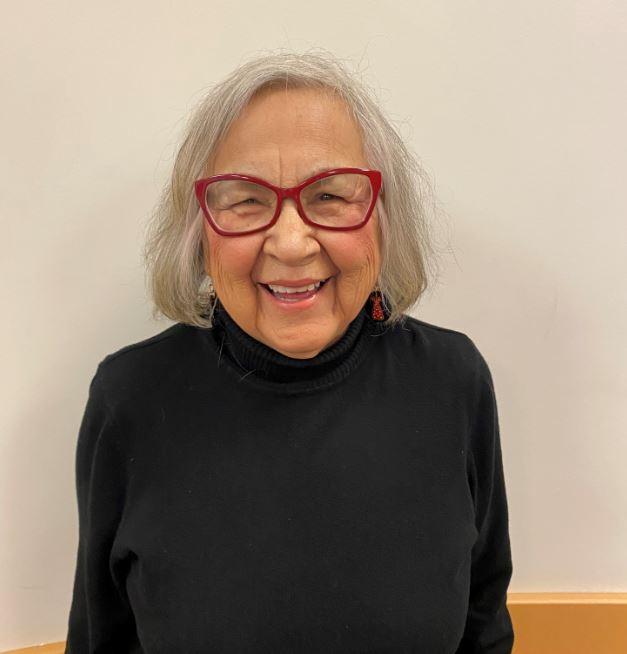
Jeffrey Ansloos. Photo taken by Christopher Katsarov Luna, 2024.

Born and raised in Winnipeg, Manitoba, Rick Harp is part of the Peter Ballantyne Cree Nation in what’s currently known as northern Saskatchewan. First bit hard in the 90s by the radio bug at campus/community station CKCU-FM in Ottawa, Harp’s 30-odd-years in media includes national and regional stints at CBC Radio, NCI-FM, and the Aboriginal Peoples Television Network (APTN), along with 350+ episodes as host/producer of the MEDIA INDIGENA podcast.

Support Us

Whether you are passionate about interdisciplinary human rights research, social justice programming, or student training and mentorship, the University of Manitoba offers opportunities to support the opportunities most important to you. 

DONATE