
bell hooks mural
April 1, 2026
Bruno de Oliveira Jayme
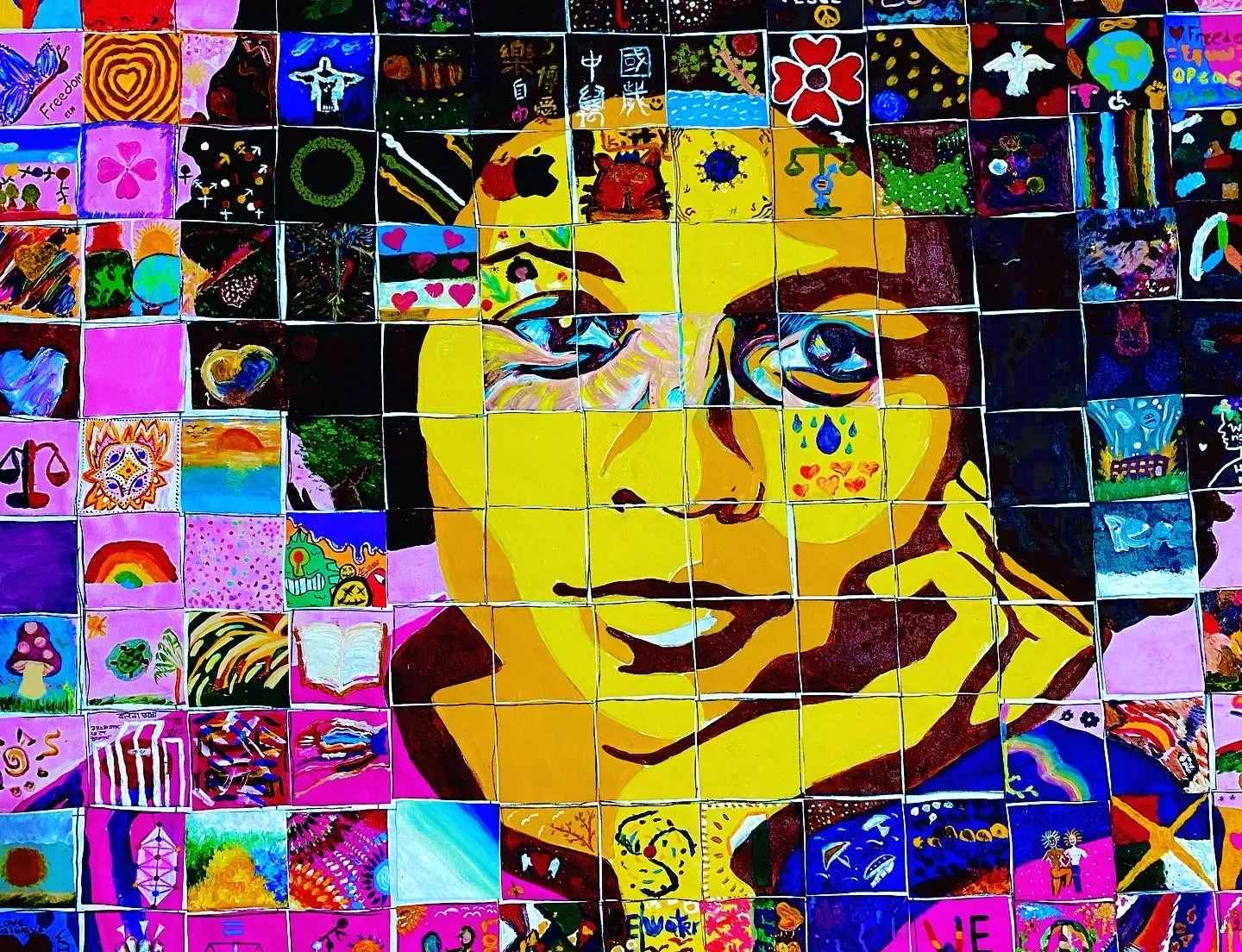
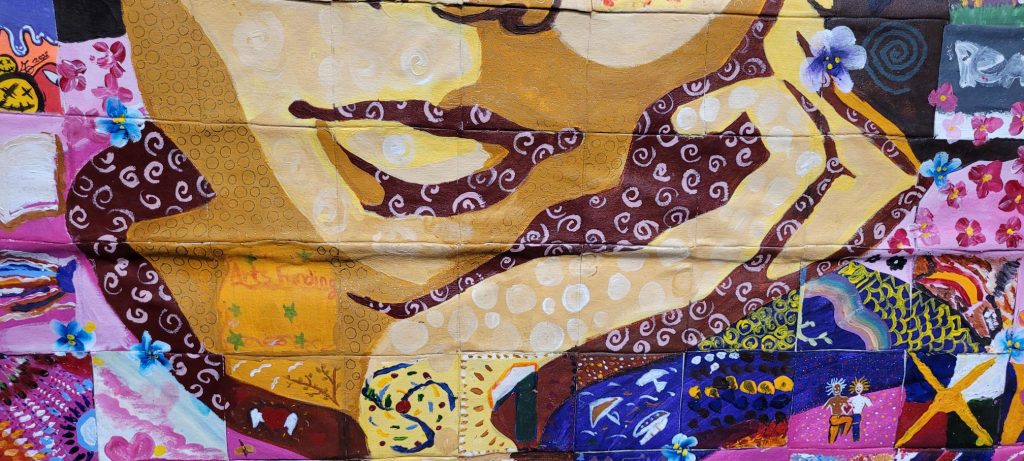
About the Artwork
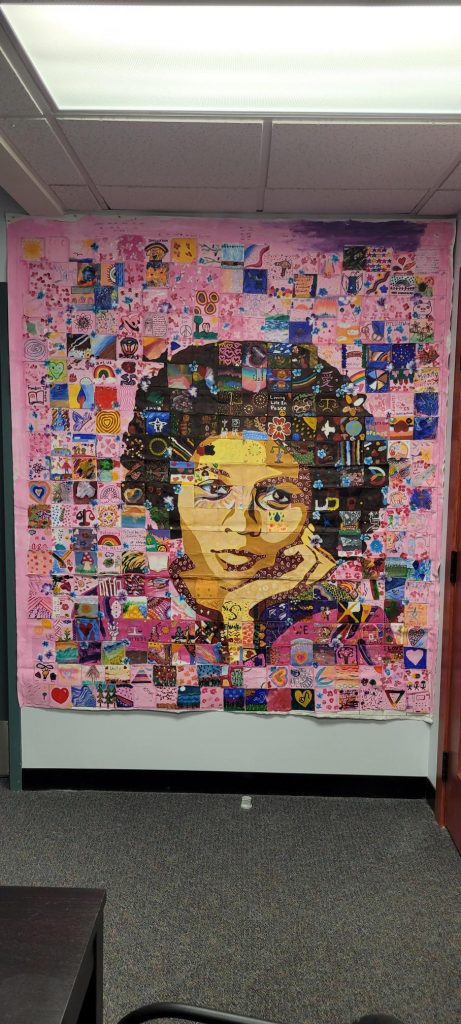
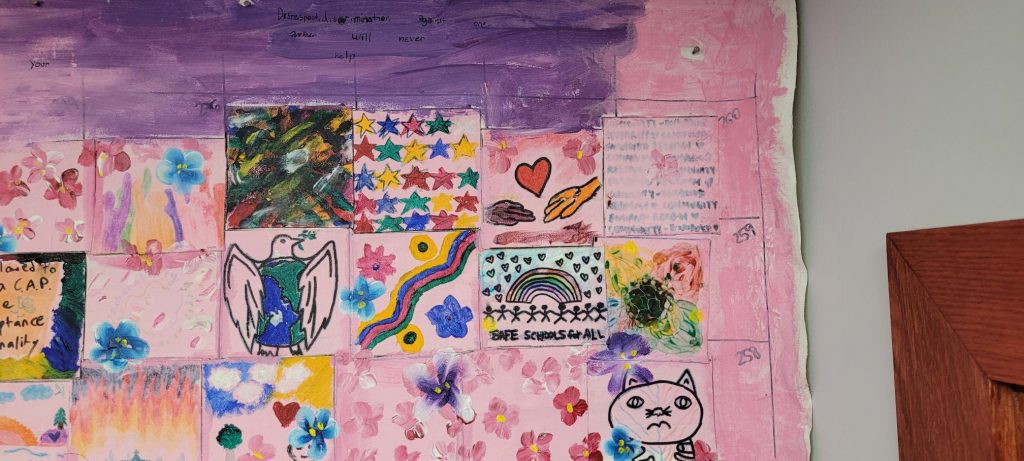
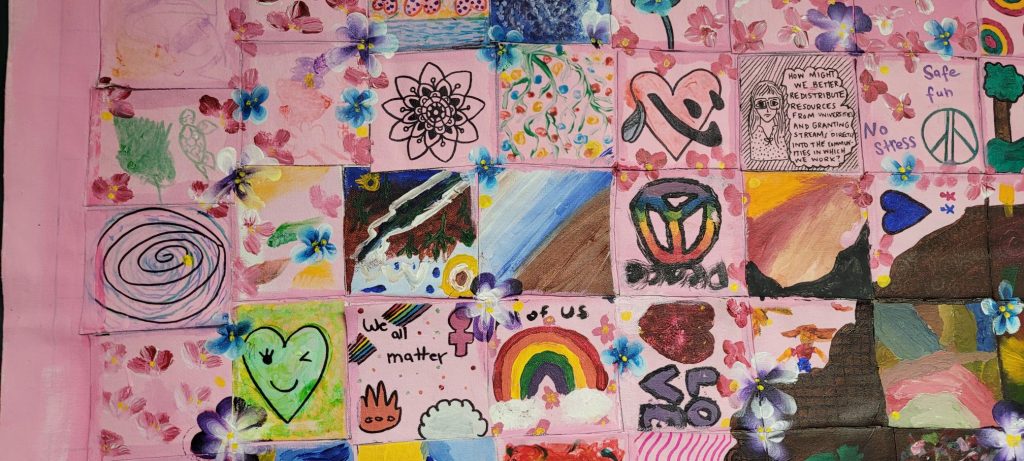
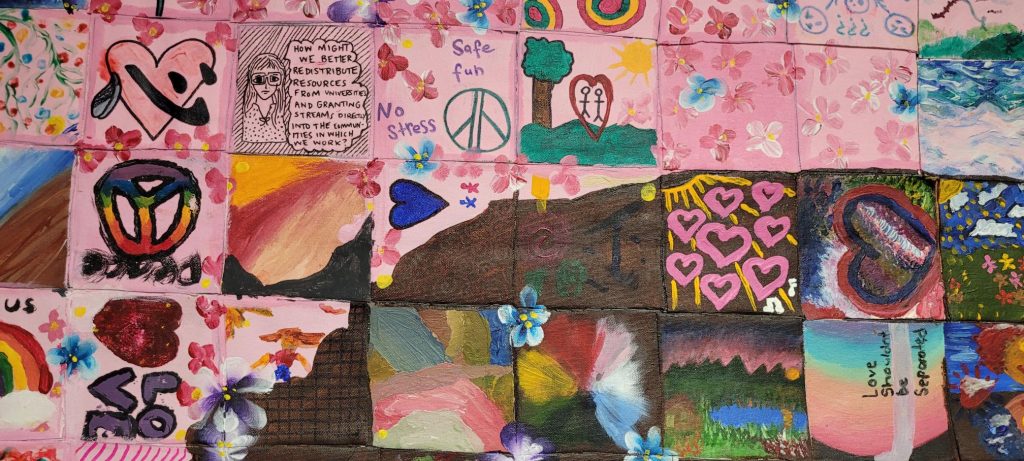
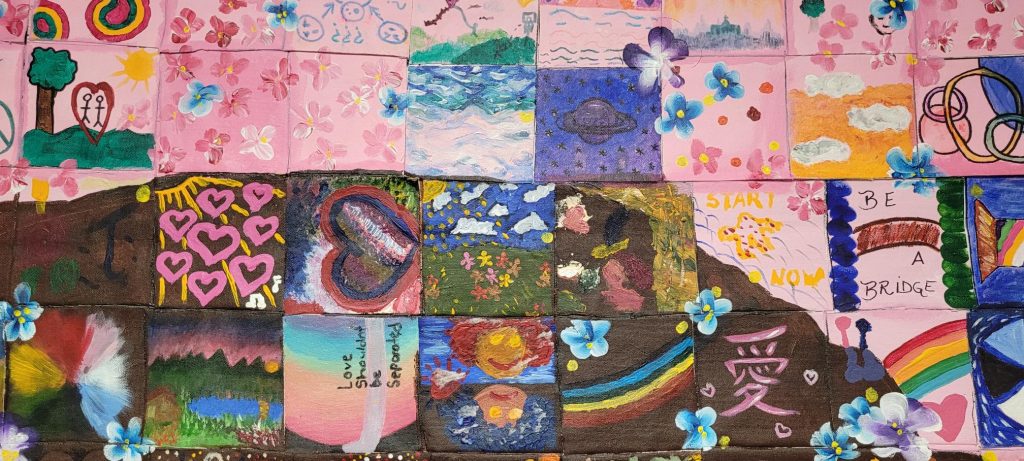
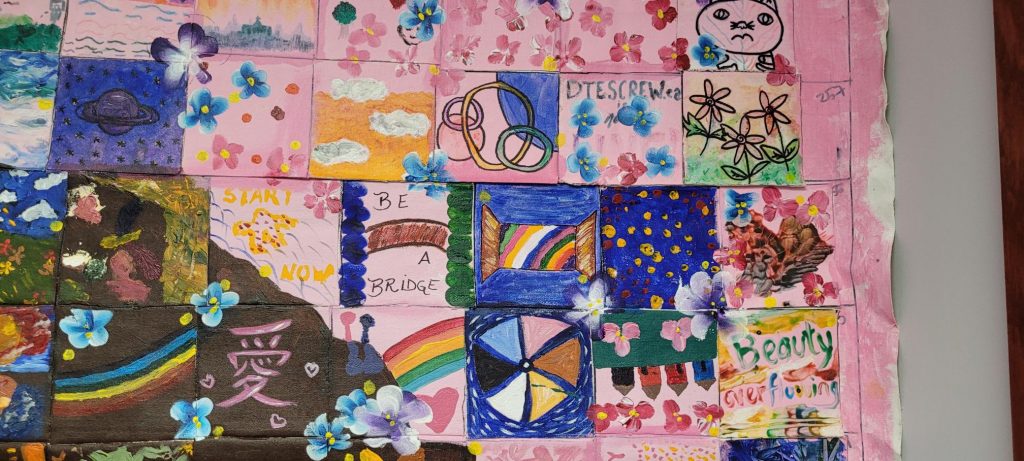
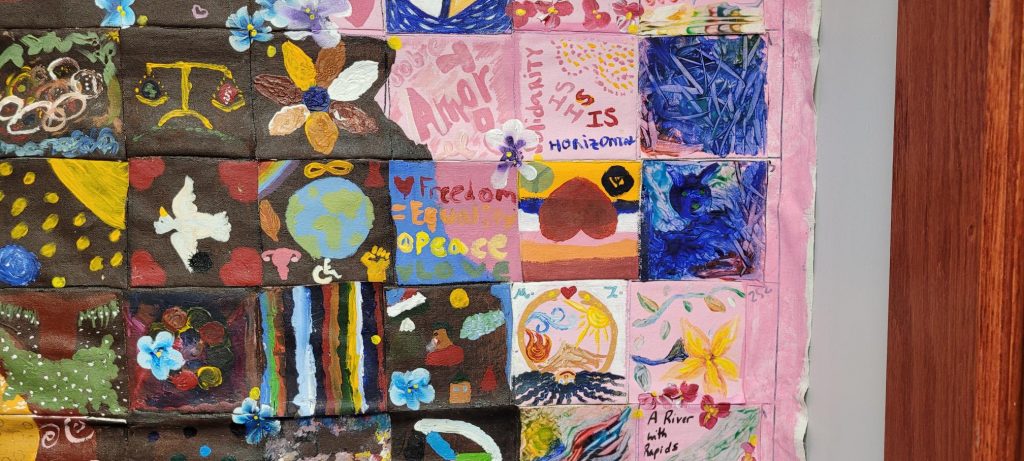
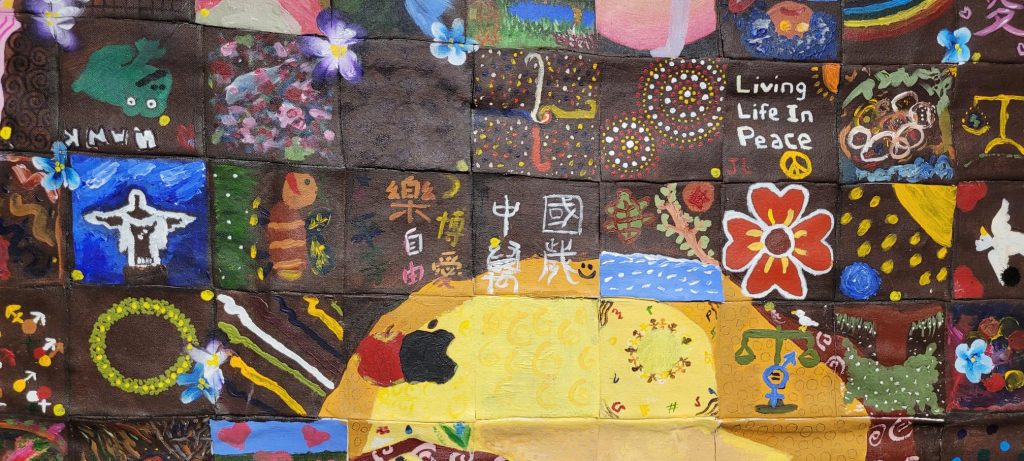
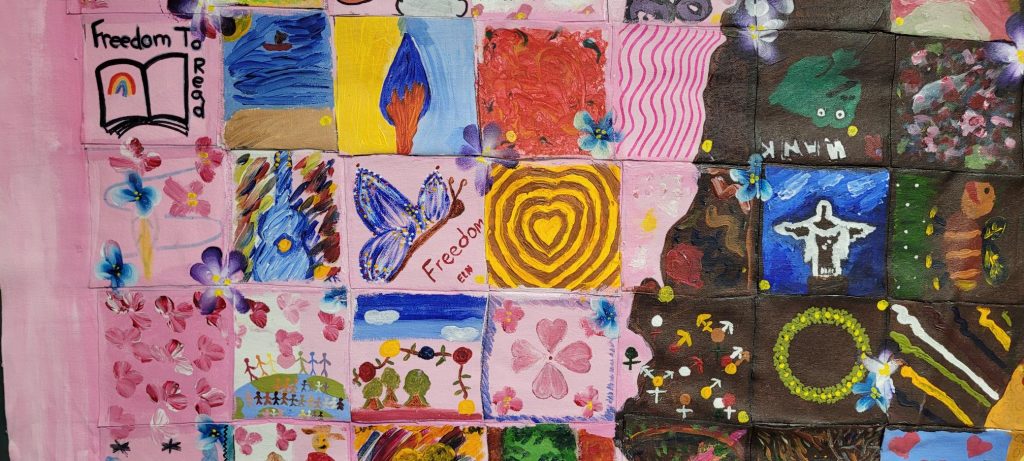
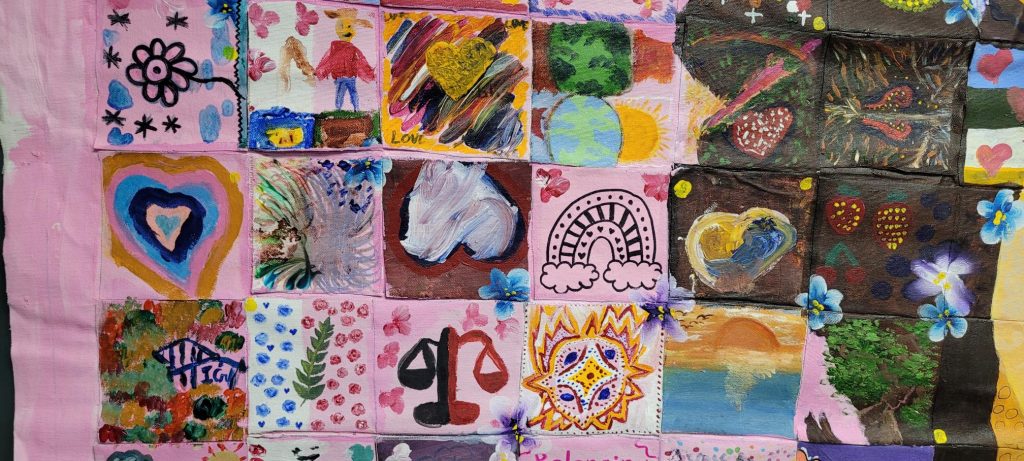
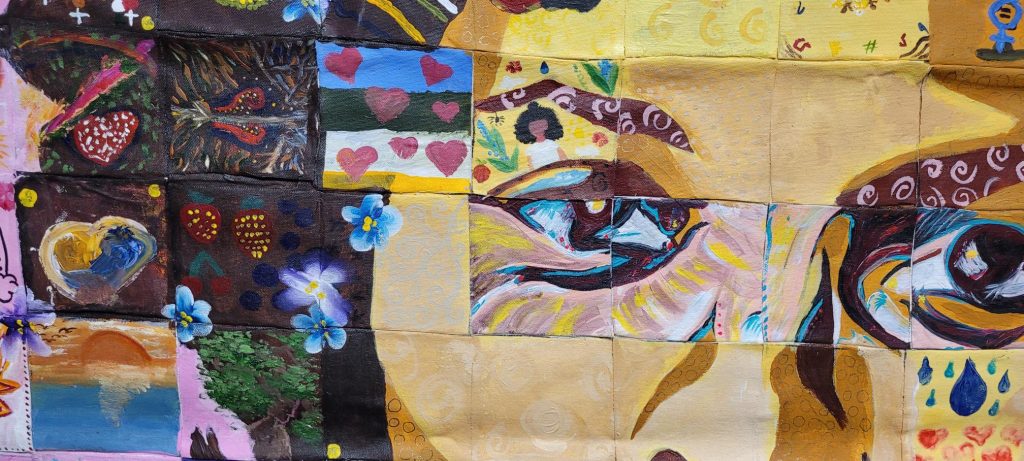
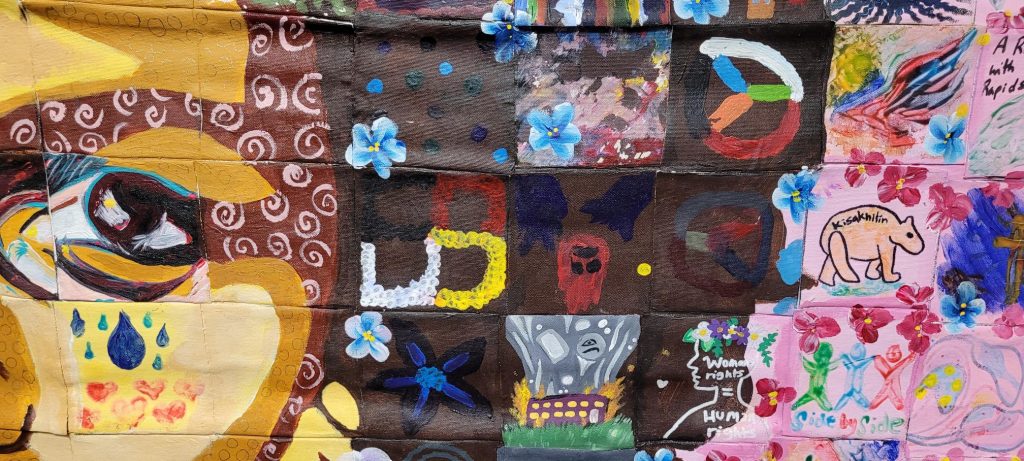
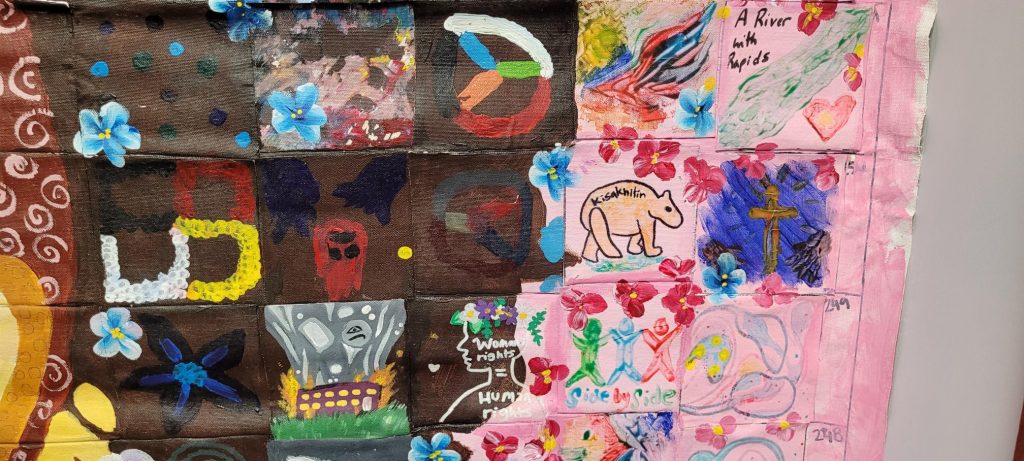
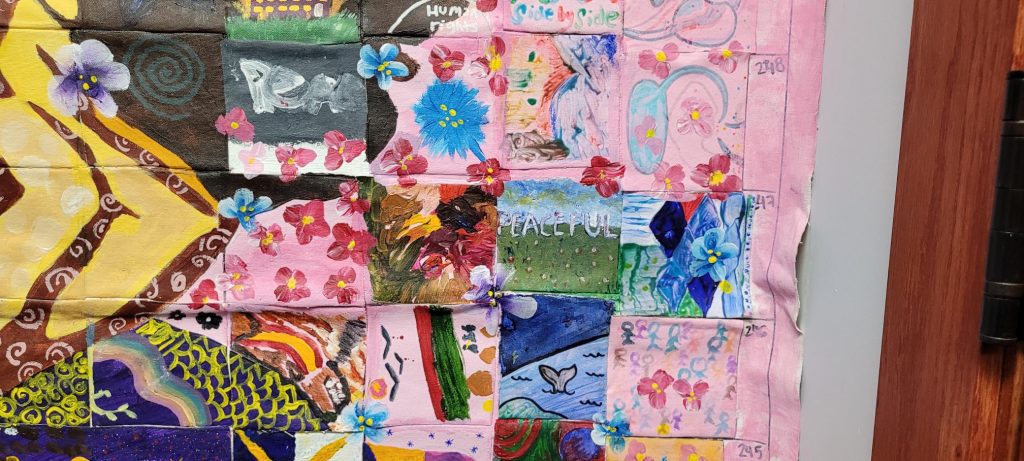
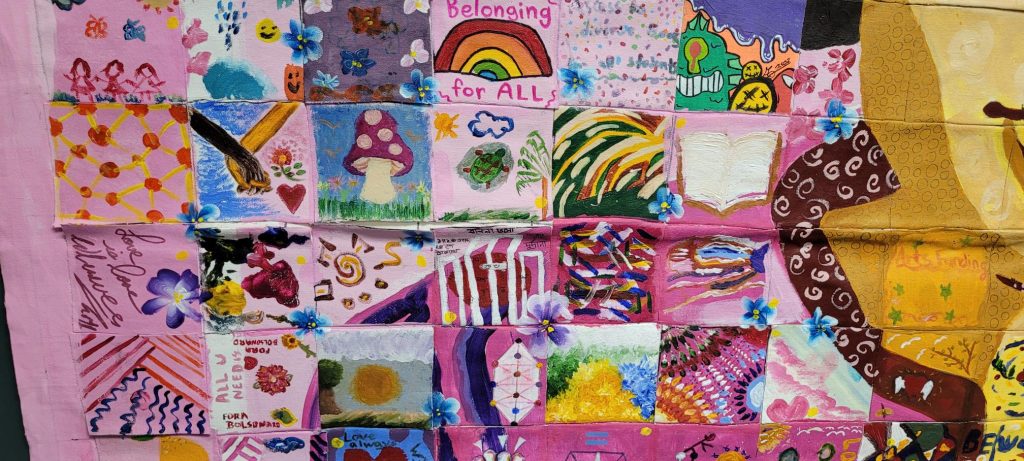
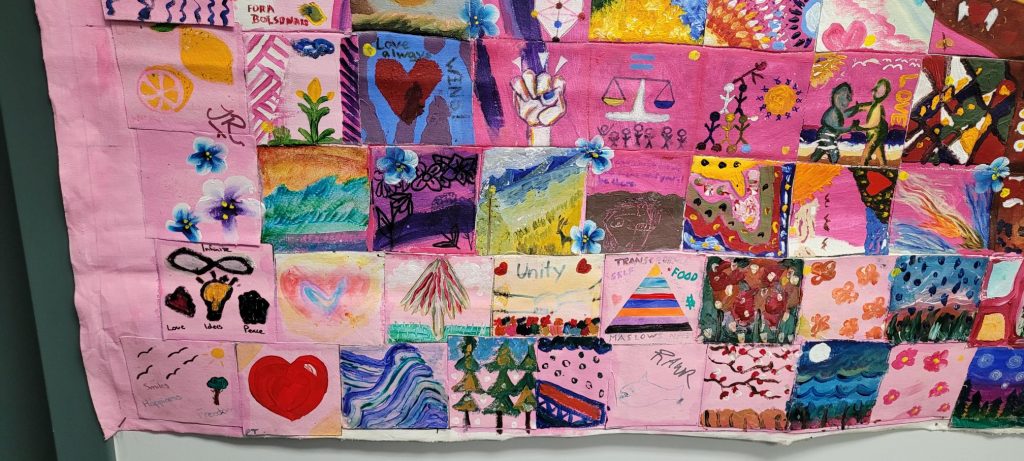
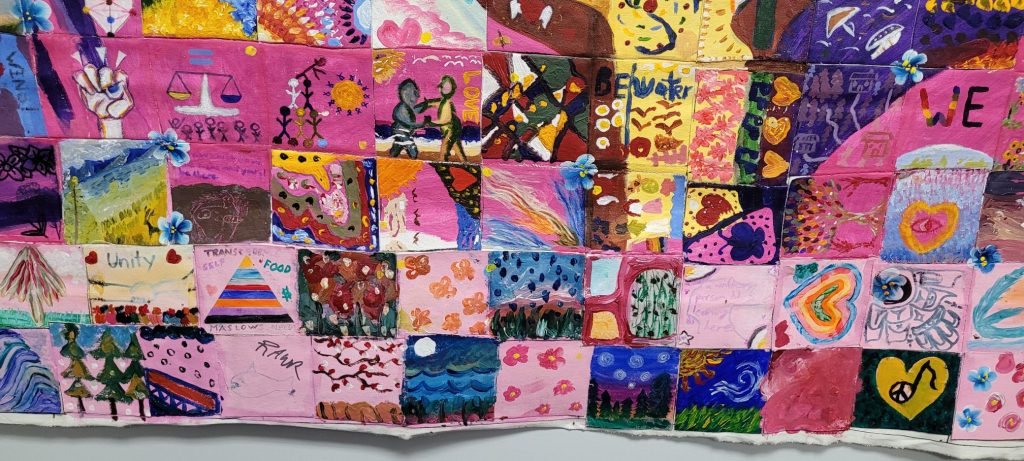
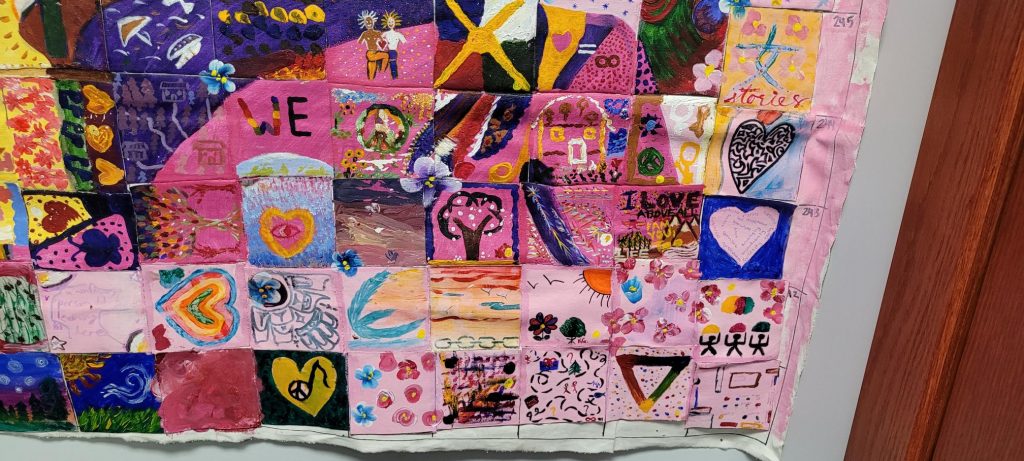
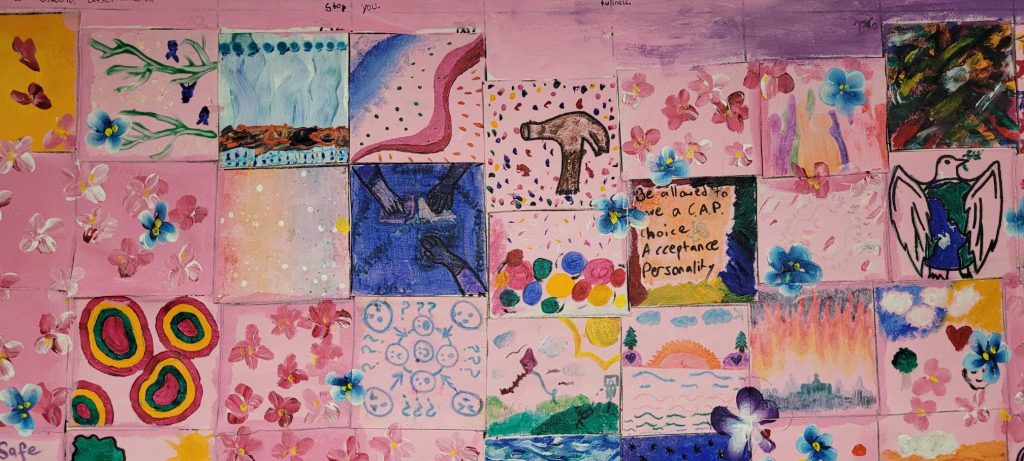
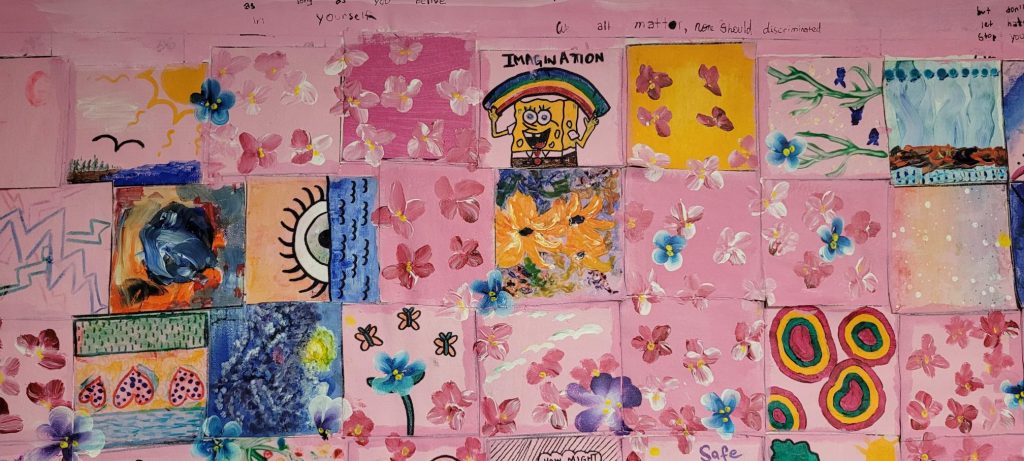
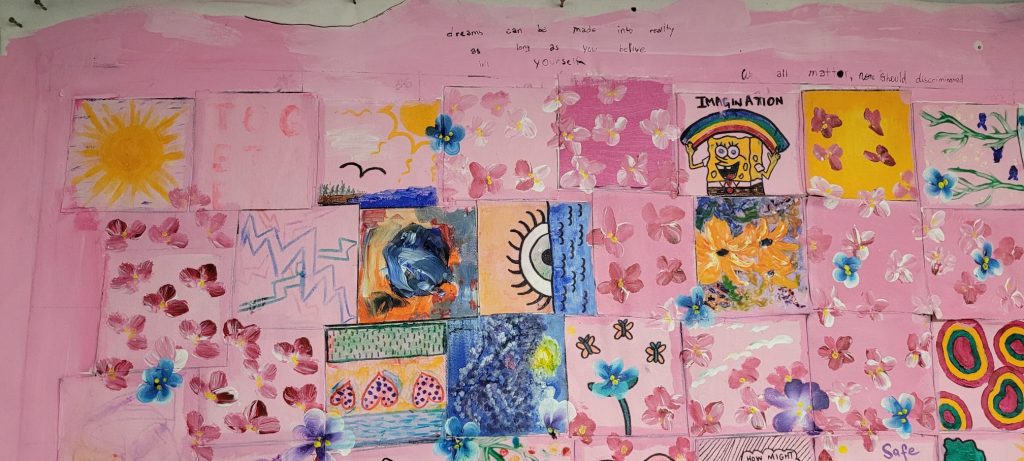
This mural was created by Dr. Bruno de Olivera Jayme as a collective art piece from his travels around the world. The mural reflects Dr. de Oliveira Jayme’s teaching pedagogy, which uses art as a way of learning about issues in social justice alongside one another. Each piece of the artwork was made by event participants who were given a 10×10-inch piece of canvas to paint or write on as guided by a prompt.
The mural is now displayed in the office of the Department of Women’s and Gender Studies at the University of Manitoba.
…people come to the events… and they receive a 10 by 10 little square, not very intimidating. Because when you ask adults to paint something, to make art, it’s scary… But when you ask them to paint something in a little scary, it’s not that intimidating because it’s not very big. And I give them a prompt. And so they did, and once they did, we assembled the pieces together. And a larger collective image formed. But it was so not scary because it was just a small piece that they were able to tell their stories through that little square. It’s so important for the collective because if one square is missing… the whole story is going to be compromised. So that’s what I’m saying. Art helps us have these difficult conversations in a light manner. The idea of community is very important… Community is an art of its own.”
Bruno de Oliveira Jayme, Humans, On Rights (March 2026)
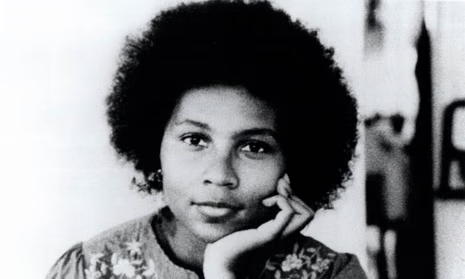
bell hooks (1952-2021)
Author, Feminist, Activist and Scholar
From the National Museum of African American History and Culture
Born Gloria Jean Watkins to working-class parents in 1952, bell hooks grew up in the segregated city of Hopkinsville, Kentucky. Her interest in poetry began at a young age as she recited the likes of Gwendolyn Brooks, Langston Hughes and Elizabeth Barrett Browning for her church community.
Despite having work published in her Sunday school magazine, hooks did not always receive praise for her writing. Always ridiculed for “talking back,” or in her perspective, daring to speak to an adult as an equal, hooks developed a sense of defiance about her. As she pursued writing, she decided to take the name “bell hooks” after her great-grandmother, Bell Blair Hooks, who was known to have sharp opinions. She chose to spell her name in lowercase to shift attention toward her ideas rather than toward her identity.
hooks received her bachelor’s degree from Stanford University and was just 19 when she began working on the draft for her first book, Ain’t I a Woman: Black Women and Feminism. After receiving her master’s degree at the University of Wisconsin-Madison and her doctorate at the University of California, Santa Cruz, hooks published her book in 1981.
Ain’t I a Woman: Black Women and Feminism began a long literary career for hooks. She went on to publish over 40 books, and she won the National Book Award for Fiction and the Pulitzer Prize for Poetry. In her book, Remembered Rapture: The Writer at Work, hooks writes, “Writing is my passion. It is a way to experience the ecstatic. The root understanding of the word ecstasy—“to stand outside”—comes to me in those moments when I am immersed so deeply in the act of thinking and writing that everything else, even flesh, falls away.” Her most notable works, including 1994’s Teaching to Transgress: Education as the Practice of Freedom and 2000’s All About Love: New Visions, further influenced generations of feminists, educators and artists to approach their work with love and purposefulness.
After teaching at Yale, UC Santa Cruz, Oberlin College and San Francisco State University, hooks joined Berea College in Kentucky as a “Distinguished Professor in Residence” in 2004. In 2010, Berea College opened the bell hooks Institute, which serves as a center for hooks’ poems, novels and personal artifacts.
Creating over 70 pieces of published work ranging from films to children’s books, hooks will be remembered as a force in feminist theory and in cultural criticism. Inspiring a multitude of Black and women writers after her, hooks displayed to the world that the best way to make an impact is by “talking back.” And she desired that all people, female and male, be liberated from sexist patterns, domination and oppression.”
Read more of bell hooks’ work
- Ain’t I a Woman: Black Women and Feminism (2006)
- All About Love: New Visions (2001)
- Appalachian Elegy: Poetry and Place (2012)
- Art on My Mind: Visual Politics (1995)
- Belonging: A Culture of Place (2009)
- Black Looks: Race and Representation (1992)
- Bone Black: Memories of Girlhood (1997)
- Breaking Bread: Insurgent Black Intellectual Life (1991)
- Communion: The Female Search for Love (2002)
- Feminism is for Everybody: Passionate Politics (2000)
- Feminist Theory: From Margin to Center (1984)
- Killing Rage: Ending Racism (1995)
- Outlaw Culture: Resisting Representations (1994)
- Reel to Real: Race, Class, and Sex at the Movies (2008)
- Remembered Rapture: The Writer at Work (1999)
- Rock my Soul: Black People and Self-Esteem (2004)
- Salvation: Black People and Love (2001)
- Sisters of the Yam: Black Women and Self-Recovery (1994)
- Talking Back: Thinking Feminist, Thinking Black (1989)
- Teaching Community: A Pedagogy of Hope (2003)
- Teaching Critical Thinking: Practical Wisdom (2009)
- Teaching to Transgress: Education as the Practice of Freedom (1994)
- The Will to Change: Men, Masculinity, and Love (2004)
- We Real Cool: Black Men and Masculinity (2003)
- When Angels Speak of Love (2007)
- Where We Stand: Class Matters (2000)
- A Woman’s Mourning Song (1993)
- Wounds of Passion: A Writing Life (1999)
- Yearning: Race, Gender, and Cultural Politics (1990)


Contact Us
We’d love to hear from you.
442 Robson Hall
University of Manitoba
Winnipeg, Manitoba
R3T 2N2 Canada
204-474-6453
Quick Links
Subscribe to our mailing list for periodic updates from the Centre for Human Rights Research, including human rights events listings and employment opportunities (Manitoba based and virtual).
Traditional Territories Acknowledgement
The University of Manitoba campuses are located on the original lands of the Anishinaabeg, Ininiwak, Anisininewuk, Dakota Oyate, Dene and Inuit, and on the National Homeland of the Red River Métis.