Jennifer Chinoye Amadi with contributions from Sarah Deckert and Pauline Tennent
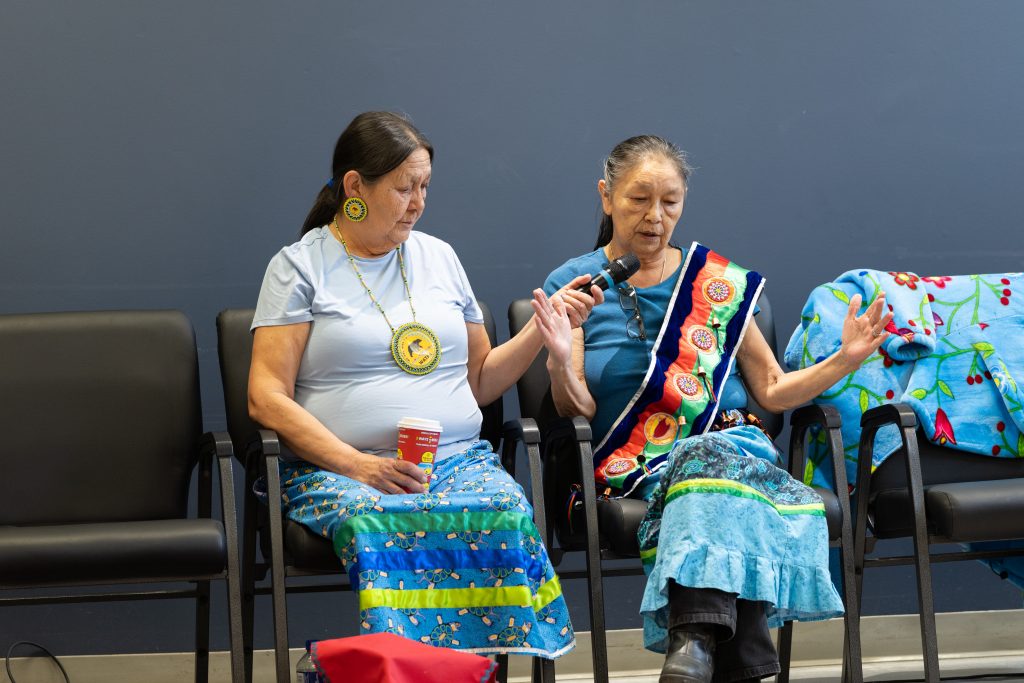
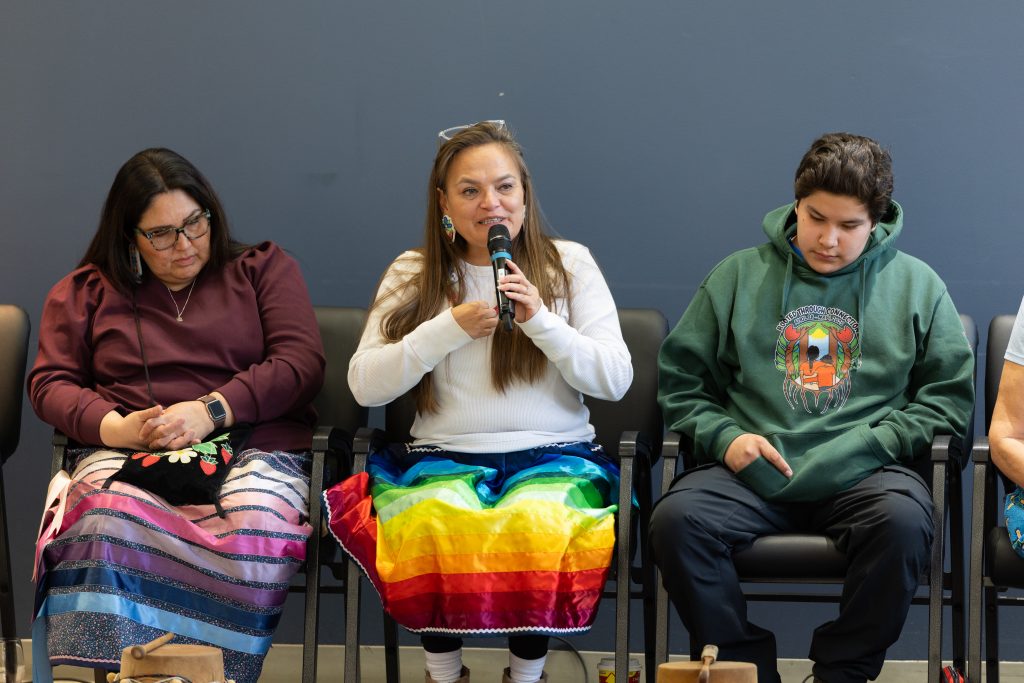
On March 17, 2026, Just Waters hosted an event titled “Respecting That Which Gives Us Life.” We were privileged to take part in a water ceremony and to learn from Nookomis Hilda Atkinson and Nookomis Louise Pierre, Roseau River Anishinaabe First Nation. Joined by their children and grandchildren, we saw these younger generations taking up sacred responsibilities to the water.
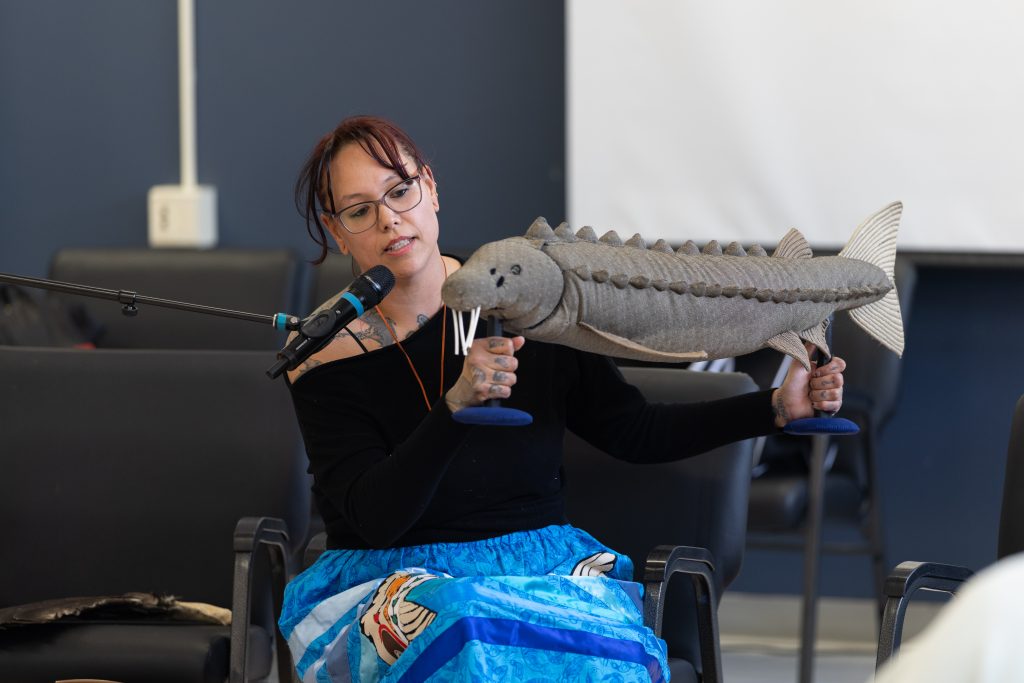
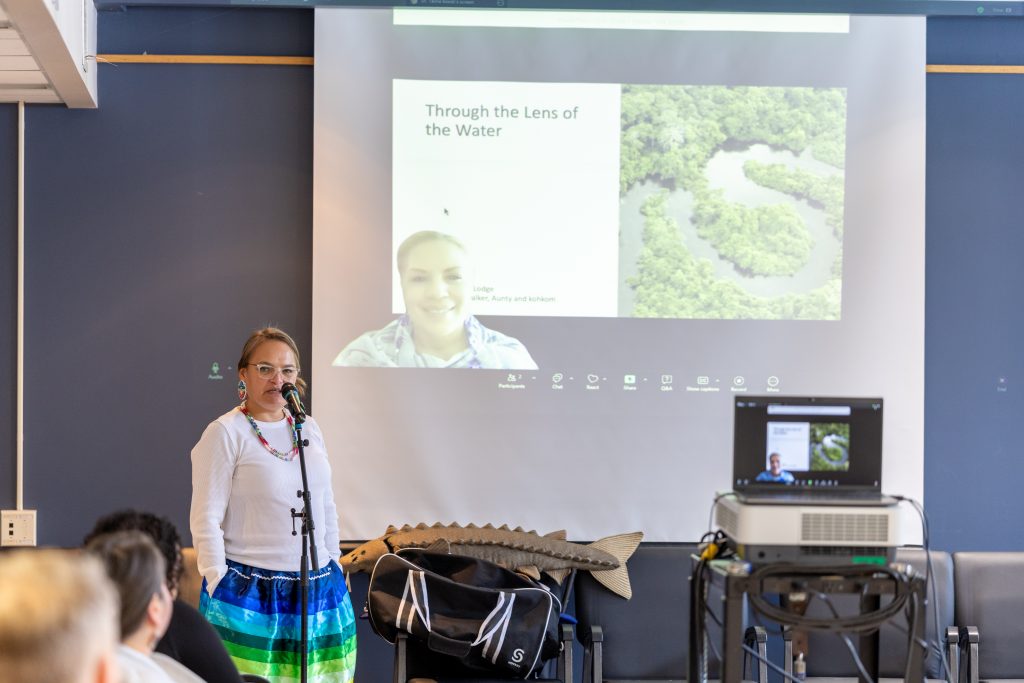
In the afternoon, Dr. Tasha Beeds spoke powerfully about her experiences participating in water walks across Canada and the United States and raising awareness about the condition of our water systems. Taylor Galvin and Kookum Nameo engaged us with stories and teachings about the sturgeon and we learned how Manitoba Hydro is impacting the sturgeon. Taylor and Kookum Nameo asked us to consider what we could do to protect the waters and the sturgeon.
Just Waters Student Researcher Jennifer Chinoye Amadi shares her reflections on World Water Day and “Respecting That Which Gives Us Life” in the following blog post titled “Embracing Water Generosity and Justice as Hope for Women’s Rights.”
Embracing Water Generosity and Justice as Hope for Women’s Rights
As you reflect on World Water Day, consider water justice as giving back to the water as much as we take from it. Water shields us as embryos and offers us a plethora of grace by supporting our birth into the world. It helps us to clean our bodies, cook our meals, nourish our bodies, and grow our foods. Water can provide us with emotional comfort and mental clarity with its beauty.
Beyond the fundamental and essential benefits that we derive from water, it can keep us safe from raging wildfires and prevent many human and animal displacements that come with fire outbreaks[i]. Think of many other ways water has given to you and continues to give to you. Now think about what happens to the waters when we dump things like refuse and sewage into them. Water, as we know it, is considered an incredibly finite resource and has in different ways become a site of conflict across the world.
While we can agree on the importance of water for human well-being and survival, certain human activities like capitalist initiatives and development agendas can make water unsafe for our use. The impacts of these actions, at worst, affect everyone. However, women and girls suffer differently, and in particular, those living in rural and Indigenous communities around the world bear the heavy burden of unsafe water and inequitable access to water. For example, at Six Nations of the Grand River, an assessment study shows how unsafe water affects maternal mental health.[ii] The study highlights how pregnant women during their post-partum period were not able to access clean running water to protect their newborns from getting infections, and to prepare food for their babies. The impact of water pollution extends to their inability to perform life-affirming spiritual ceremonies during pregnancy and birth, ultimately cutting off their ability to access support for their post-natal recovery with traditional medicines.
Similarly, when there is conflict over water, which is driven most of the time by the capitalist and corporate quest for lucrative ventures, women suffer the most by bearing the negative impact of such initiatives and are not typically consulted in decision-making. One example of this is the binational Arrowhead-Weston project that carries electricity from a dam in Manitoba through Minnesota and Wisconsin.[iii] Women remain the least consulted groups in the decision-making process and in water governance, even when they are most vulnerable to the negative impact of such initiatives. For example, as caregivers, women and girls deal with the exhaustive weight of worry associated with finding clean and safe water for domestic use and hygiene due to faulty water treatment systems.[iv] Actions like this do nothing other than heighten women’s exclusion and oppression and diminish their role in ecological democracy and preservation of water, which gives us life.
The Centre for Human Rights Research at the University of Manitoba, through the Just Waters project, held a water teachings event to remind us that we must respect that which gives us life. As a part of our respectful relationship with water, we owe it our gratitude, to fill it up with life in reciprocity by protecting it and keeping it clean. Speakers at this event described the pain that they experience when they see garbage in the waters, fish killed by pollution, and other harms to the water. This event reminded me to reflect on how I am connected to water, and that whatever I do with water affects every living thing’s well-being and sustenance on Earth. Moreso, I learned that water contains the memories of our ancestors, our grandmothers who came before us, which shifted my perspective on the ripple effects of what we do with and to the waters. I was reminded that our actions to protect waters honor the lives of our ancestors and serve as a tool for transformational change and reclamation, an approach to decolonization through water.
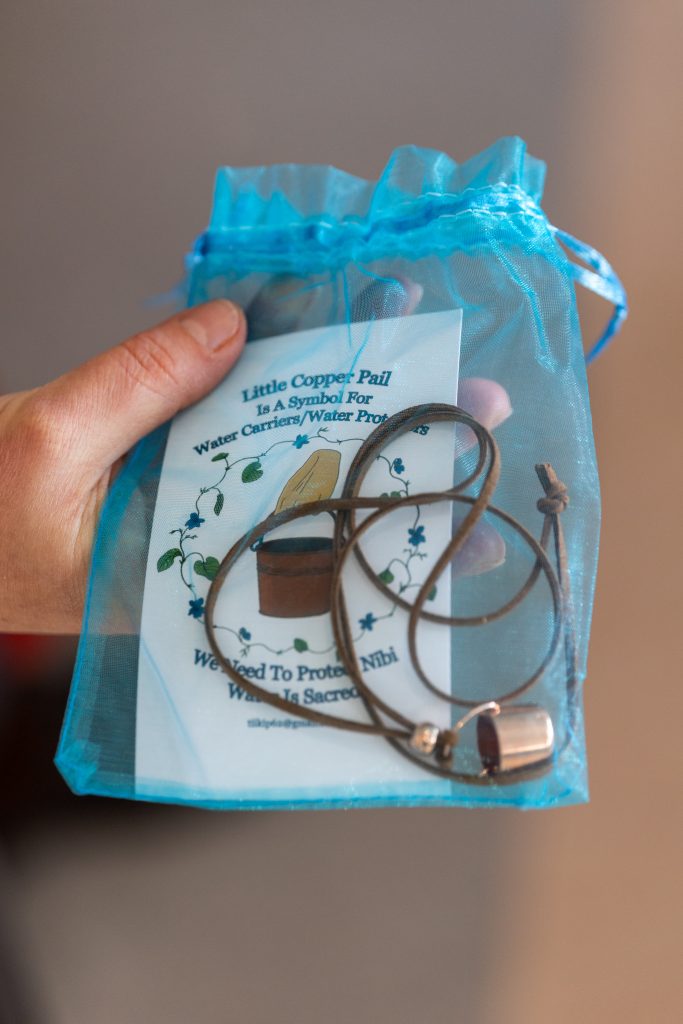
The question of what we are going to do to protect and reciprocate water’s generosity is one we should ask ourselves, as we all have a responsibility to water. Besides coming together for water teachings, we also wanted to leave the event with some commitments to protect waters, both at the individual and institutional levels. This idea was championed by one of the panelists, who work-shopped us into two groups to discuss among ourselves specific and actionable things we can do to foster water reciprocity at our various spaces. Upon reconvening from the group discussions, we agreed that first, at the micro level, as little as resisting the urge to urinate in the river because it is someone else’s home is a good start. This teaching was shared by Knowledge Keeper Ramona Milliea. The concept of discontinuing negligence toward water bodies, a quote from Josephine Mandamin, also resonated with the group.[v]
Secondly, at the meso and macro levels, we will continue engaging our communities to pass down water teachings to seven generations, to rekindle our love for water and reestablish women’s participation in water governance as true guardians of the waters. Additionally, we will deconstruct the colonial way of how we see and use water from a resource to a trust that must be used with mindfulness and reciprocity. Finally, we will reciprocate water’s generosity by standing up to raise awareness because when we all stand tall and together for water, we reassert our positions on water justice, re-enter into a relationship with water, and reconstruct our identity. When we choose generosity to the waters by protecting them, keeping them clean, and upholding them as a sacred trust, we are simultaneously choosing generosity to women. Women, as the traditional guardians of water and the ones who carry life, bear the disproportionate burden of water pollution and conflict. By ensuring water justice and reciprocity, we honour the deep, life-sustaining connection between women and water, reasserting their vital role in ecological democracy and ensuring the well-being of all future generations. Choosing water is also about recognizing the rights and labour that women have always done to care for waters, their work in water governance, and the dignity of women as rights holders.
[i] FN Robinne et al., “Scientists’ warning on extreme wildfire risks to water supply.” Hydrological processes 35, no. 5 (2021): e14086. https://onlinelibrary.wiley.com/doi/full/10.1002/hyp.14086.
[ii] Afroza Sultana et al., “Assessing the impact of water insecurity on maternal mental health at six nations of the Grand River,” Frontiers in Water 4 (2022): 834080,https://www.frontiersin.org/journals/water/articles/10.3389/frwa.2022.834080/full.
[iii] Greta Gaard, “Women, water, energy: An ecofeminist approach,” Organization & Environment 14, no. 2 (2001): 157-172, https://journals-sagepub-com.uml.idm.oclc.org/doi/abs/10.1177/1086026601142002.
[iv] Human Rights Watch, “Make it Safe: Canada’s Obligation to End the First Nations Water Crisis”. June 07, 2016. https://www.hrw.org/report/2016/06/07/make-it-safe/canadas-obligation-end-first-nations-water-crisis
[v] Ayse Gursoz, “Meet Josephine Mandamin (Anishinaabekwe), The “Water Walker,” Mother Earth Water Walk, accessed March 26 2026. https://www.motherearthwaterwalk.com/?p=2845