Just Waters is Learning With the Land
June 2, 2026
Sarah Deckert, Aiden Hindmarch, Majestic Moerland and Ashly Persaud
On May 21, 2026, Just Waters participated in the Louis Riel School Division’s 2nd annual Learning With the Land: A Gathering to Celebrate and Dream. Held at The Forks, students and staff came together with community organizations to celebrate and learn more about land-based learning, Indigenous worldviews, the United Nations Sustainable Development Goals (SDGs), and the United Nations Declaration on the Rights of Indigenous Peoples (UNDRIP).
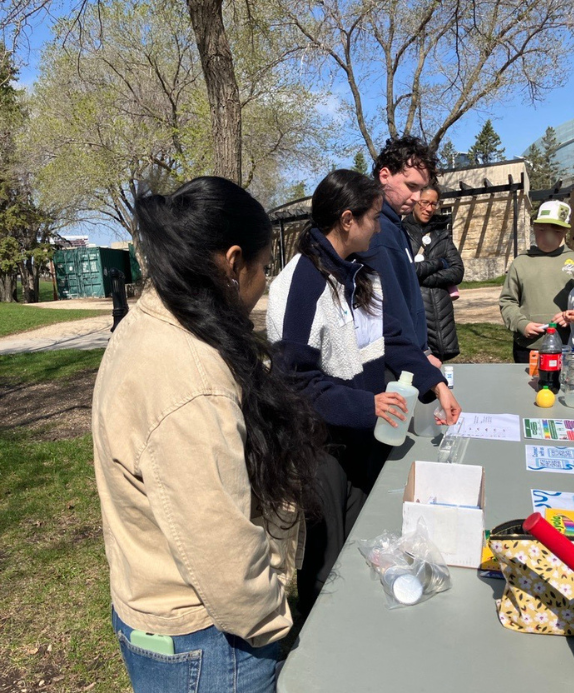
Just Waters Indigenous Summer Intern Majestic Moerland, Centre for Earth Observation Studies student researcher Aiden Hindmarch, and Centre for Human Rights Research student researcher Ashly Persaud planned and facilitated an interactive booth exploring issues of water and justice. Read on for their reflections!
This event was an exciting opportunity to engage with young people on various topics regarding the environment and our relationship with water as humans.
Majestic moerland
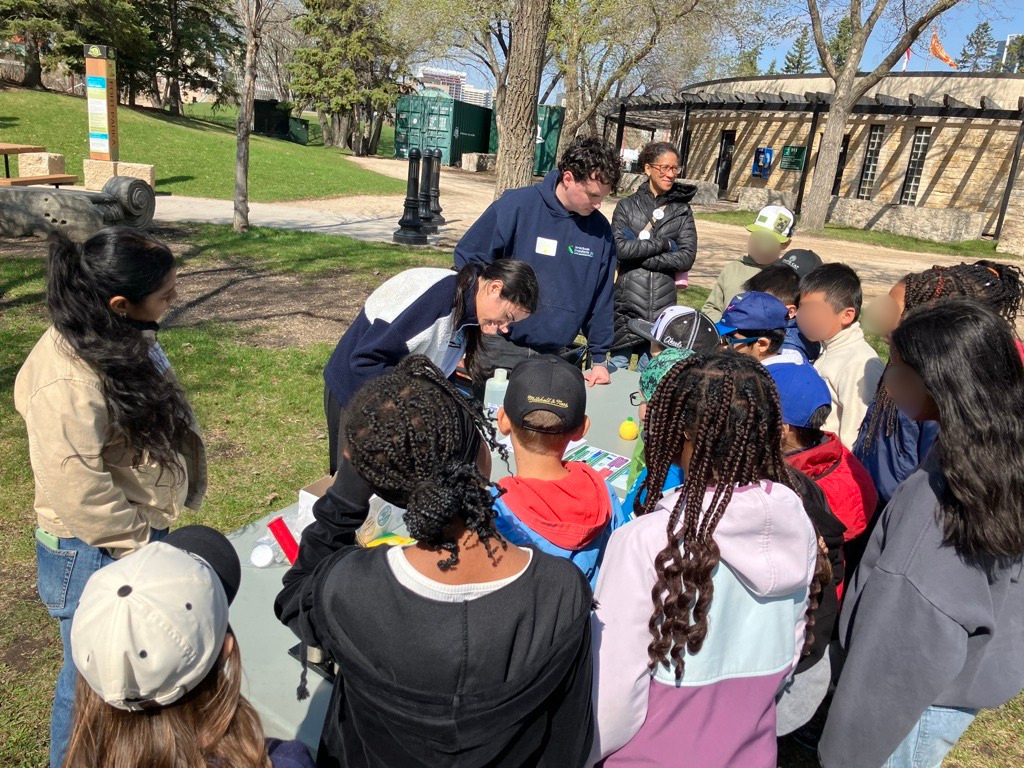
Our interactive booth varied with presentations highlighting PH testing, and density tank demonstrations of salt water and fresh water, relating them to current on-going climate issues. It was a great experience listening to and connecting with students on what they observed through the examples. Allowing students to engage and communicate with own hypothesis on the tests was insightful and interesting.
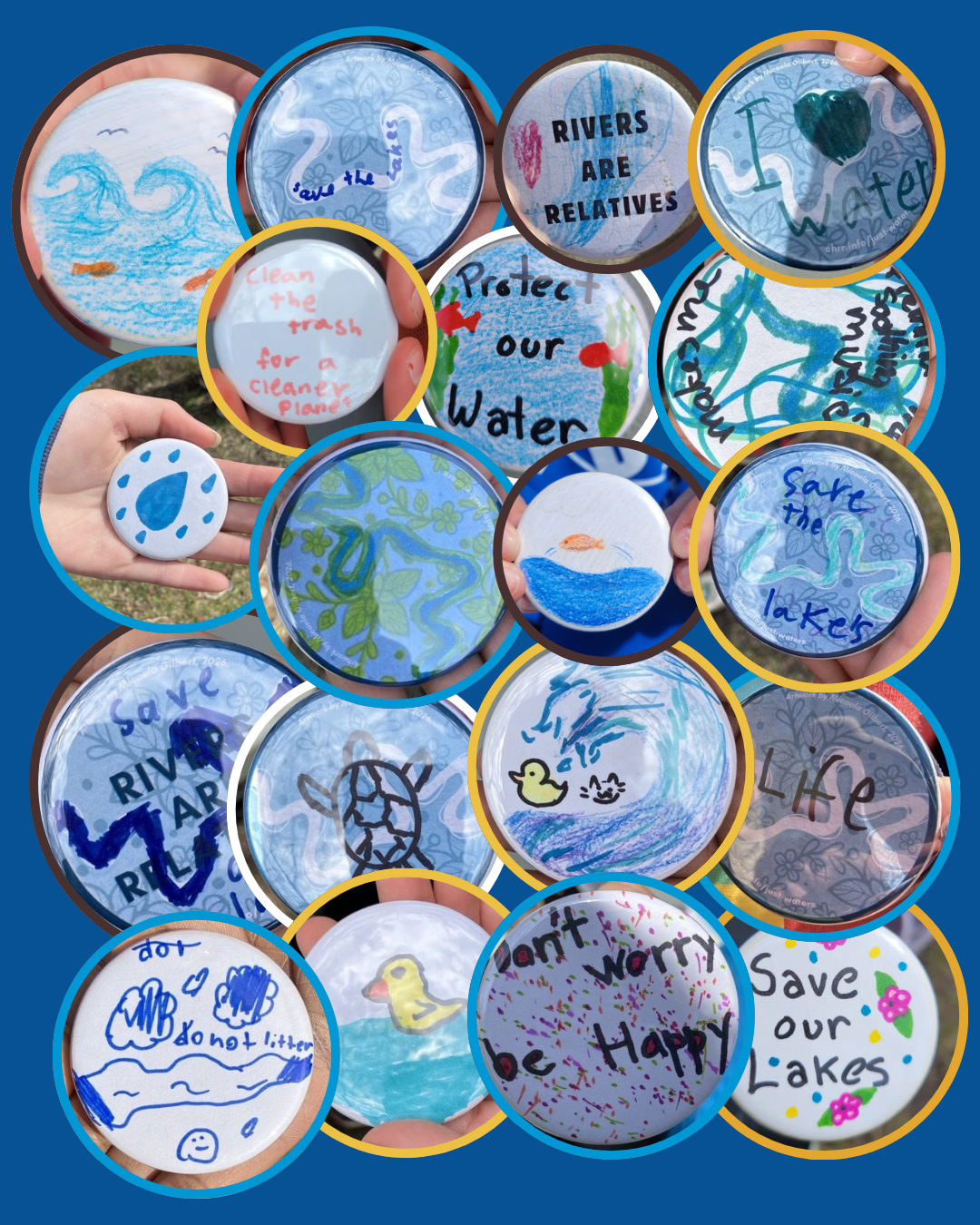
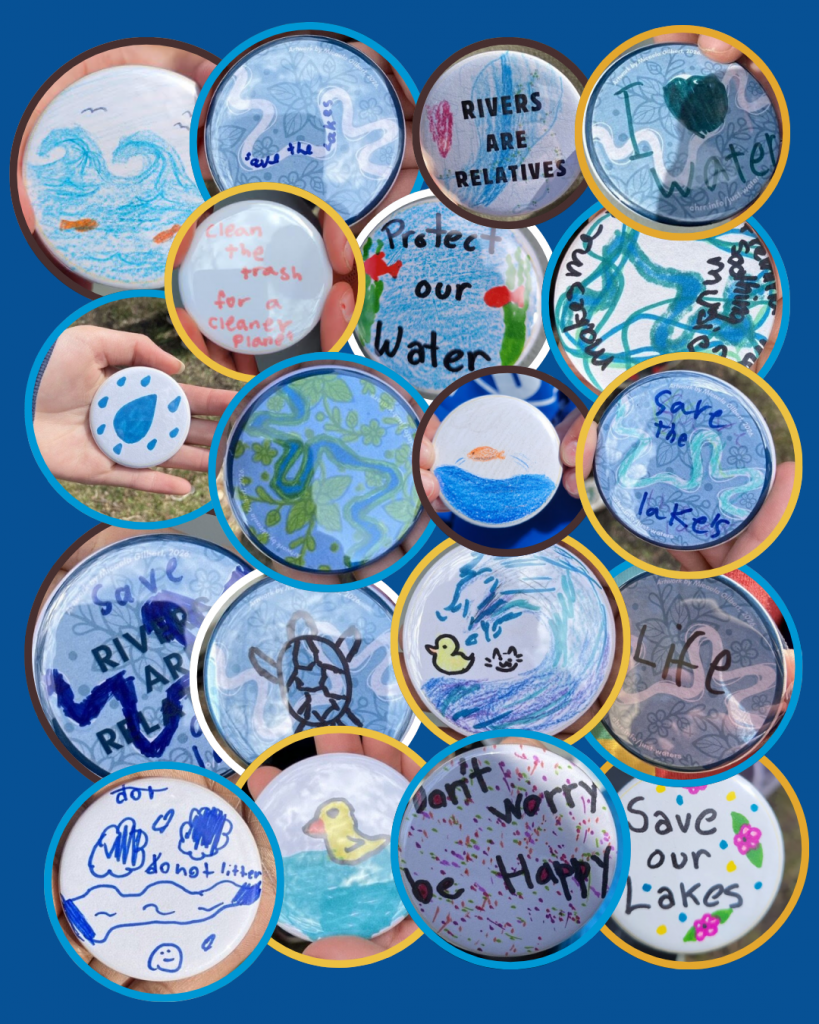
As youth watched and listened to demonstrations, they were able to practice their artistic abilities and create buttons to take home from the event. Students were prompted with the question “What does water mean to you?” and asked to creatively design their personal button in response.
This activity allowed not only students, but everyone present to reflect on what water truly means to them. It was powerful and refreshing to connect with students on their relations to water. While students expressed their creativity with button making, we were able to witness our youth think holistically about their answers and consider all living things such as animals, plants, and insects. These buttons represent a deeper reflection into personal connection and relation with water.
The Learning With the Land event was an exciting opportunity to teach and learn from young brilliant minds who were equally passionate about protecting and living with our relative nibi (water).
Participating in the Learning with the Land event was so much fun. One thing I love to talk about is encouraging the youth to look at our environment from a different perspective. Normally, from my experience, many children see rivers and lakes as places for recreation, like fishing, swimming, or transportation… while they aren’t wrong, there are many ways to look at water such as understanding how these systems function, the biodiversity they support, the wildlife that depends on them and the important role they play in sustaining communities.
Aiden HindMarch
To help students think more critically about how our water systems are being used, we held three demonstrations that students were free to explore. They could learn about the pH scale and what happens when water systems skew too far on both ends of the pH scale, discover what happens when salt water and freshwater mix, or reflect on their personal connection to water by creating a button based on a word, phrase or symbol that is meaningful to them.
For me, the best part of the day was when I made a mistake during one of my demonstrations, and the group of students was quick to point it out. I found it inspiring to see the courage in that group to correct a university student, their enthusiasm and engagement, and it left me with a reinforced belief that learning goes both ways, especially when connecting different perspectives, and that experience highlights the importance of these events.


Embracing Water Generosity and Justice as Hope for Women’s Rights
Embracing Water Generosity and Justice as Hope for Women’s Rights
Jennifer Chinoye Amadi with contributions from Sarah Deckert and Pauline Tennent
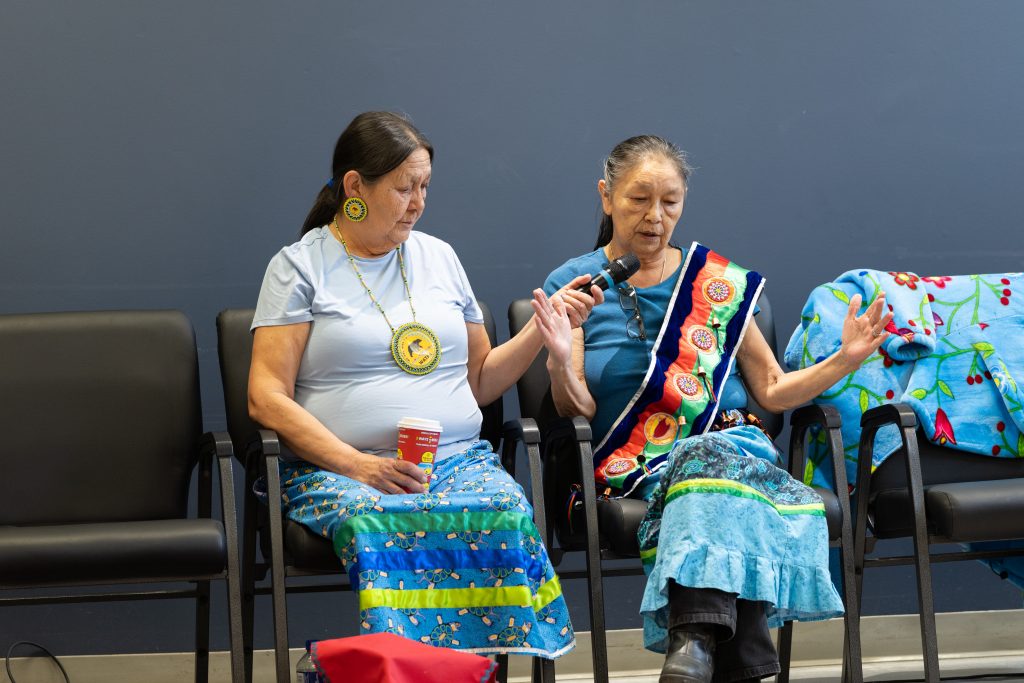
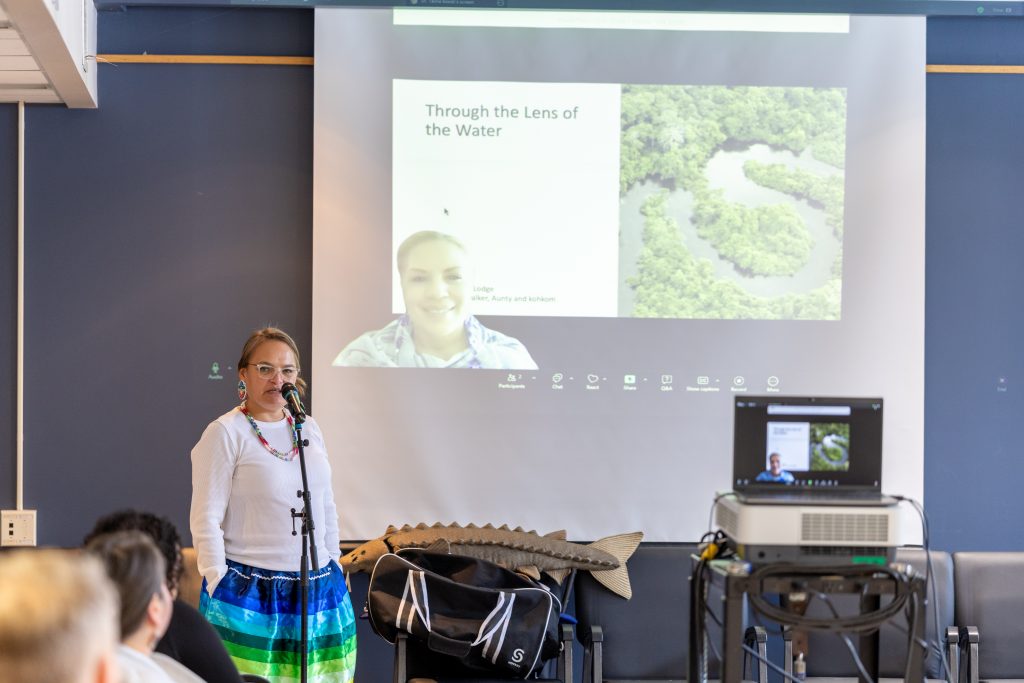
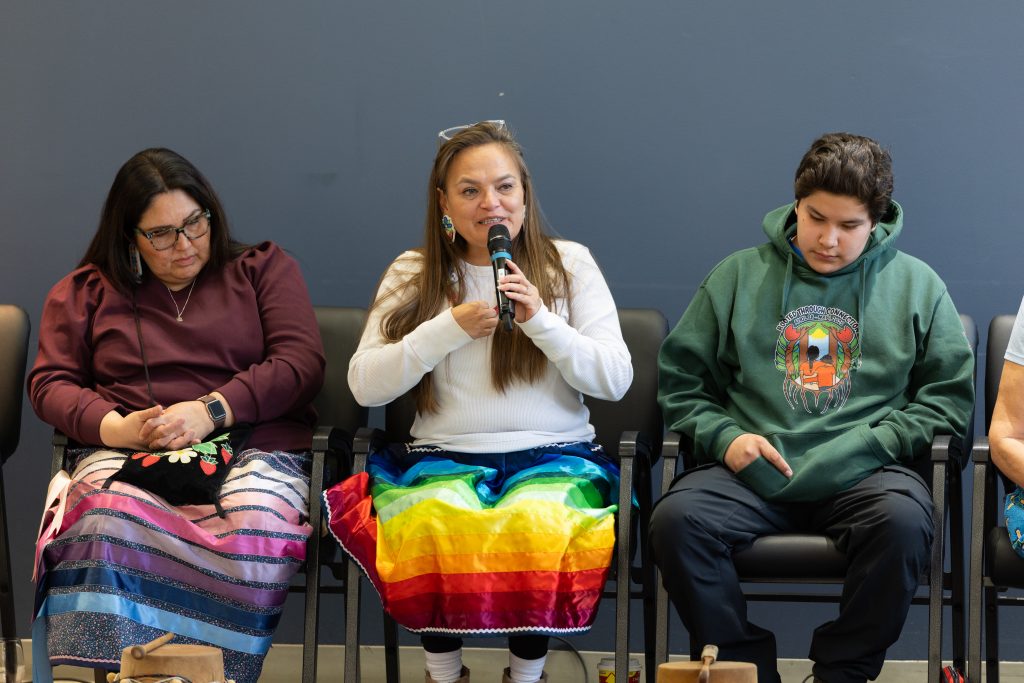
On March 17, 2026, Just Waters hosted an event titled “Respecting That Which Gives Us Life.” We were privileged to take part in a water ceremony and to learn from Nookomis Hilda Atkinson and Nookomis Louise Pierre, Roseau River Anishinaabe First Nation. Joined by their children and grandchildren, we saw these younger generations taking up sacred responsibilities to the water.
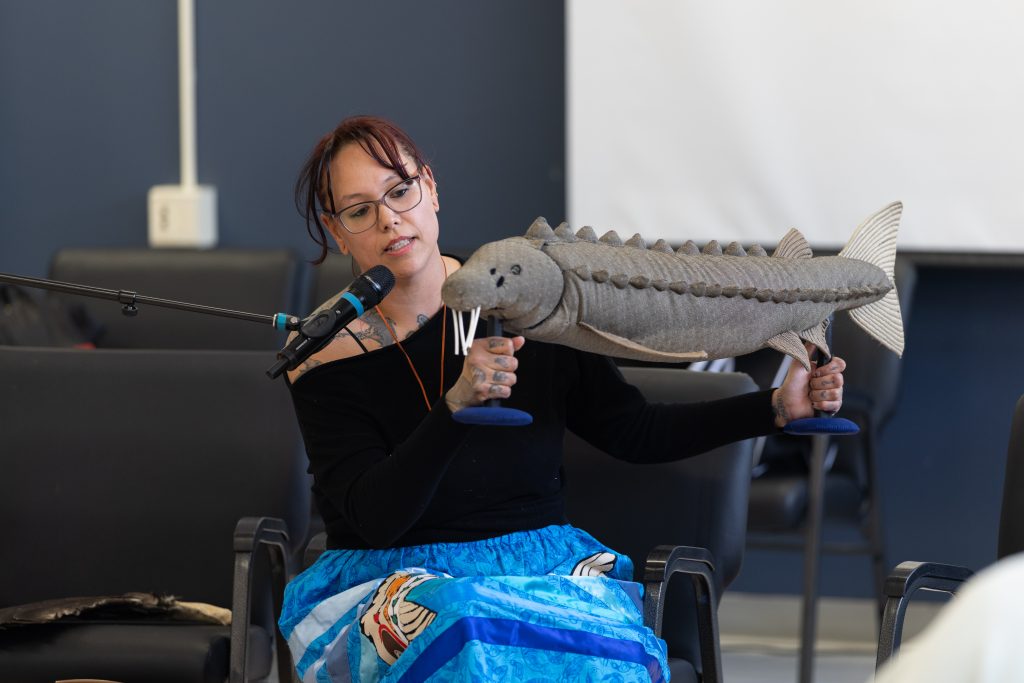
In the afternoon, Dr. Tasha Beeds spoke powerfully about her experiences participating in water walks across Canada and the United States and raising awareness about the condition of our water systems. Taylor Galvin and Kookum Nameo engaged us with stories and teachings about the sturgeon and we learned how Manitoba Hydro is impacting the sturgeon. Taylor and Kookum Nameo asked us to consider what we could do to protect the waters and the sturgeon.
Just Waters Student Researcher Jennifer Chinoye Amadi shares her reflections on World Water Day and “Respecting That Which Gives Us Life” in the following blog post titled “Embracing Water Generosity and Justice as Hope for Women’s Rights.”
Embracing Water Generosity and Justice as Hope for Women’s Rights
As you reflect on World Water Day, consider water justice as giving back to the water as much as we take from it. Water shields us as embryos and offers us a plethora of grace by supporting our birth into the world. It helps us to clean our bodies, cook our meals, nourish our bodies, and grow our foods. Water can provide us with emotional comfort and mental clarity with its beauty.
Beyond the fundamental and essential benefits that we derive from water, it can keep us safe from raging wildfires and prevent many human and animal displacements that come with fire outbreaks[i]. Think of many other ways water has given to you and continues to give to you. Now think about what happens to the waters when we dump things like refuse and sewage into them. Water, as we know it, is considered an incredibly finite resource and has in different ways become a site of conflict across the world.
While we can agree on the importance of water for human well-being and survival, certain human activities like capitalist initiatives and development agendas can make water unsafe for our use. The impacts of these actions, at worst, affect everyone. However, women and girls suffer differently, and in particular, those living in rural and Indigenous communities around the world bear the heavy burden of unsafe water and inequitable access to water. For example, at Six Nations of the Grand River, an assessment study shows how unsafe water affects maternal mental health.[ii] The study highlights how pregnant women during their post-partum period were not able to access clean running water to protect their newborns from getting infections, and to prepare food for their babies. The impact of water pollution extends to their inability to perform life-affirming spiritual ceremonies during pregnancy and birth, ultimately cutting off their ability to access support for their post-natal recovery with traditional medicines.
Similarly, when there is conflict over water, which is driven most of the time by the capitalist and corporate quest for lucrative ventures, women suffer the most by bearing the negative impact of such initiatives and are not typically consulted in decision-making. One example of this is the binational Arrowhead-Weston project that carries electricity from a dam in Manitoba through Minnesota and Wisconsin.[iii] Women remain the least consulted groups in the decision-making process and in water governance, even when they are most vulnerable to the negative impact of such initiatives. For example, as caregivers, women and girls deal with the exhaustive weight of worry associated with finding clean and safe water for domestic use and hygiene due to faulty water treatment systems.[iv] Actions like this do nothing other than heighten women’s exclusion and oppression and diminish their role in ecological democracy and preservation of water, which gives us life.
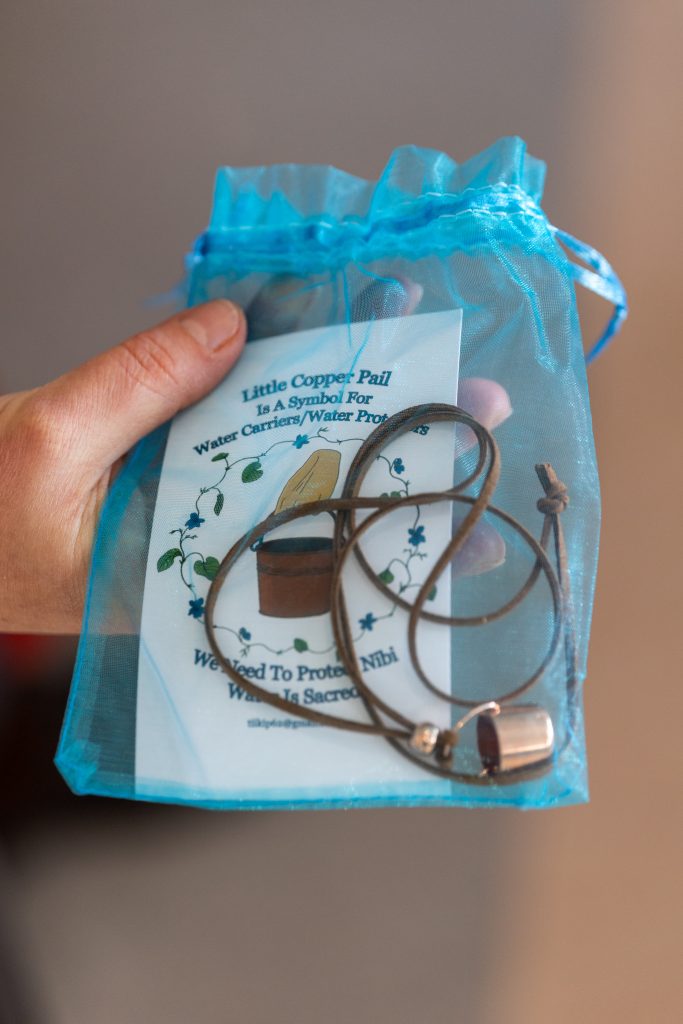
The Centre for Human Rights Research at the University of Manitoba, through the Just Waters project, held a water teachings event to remind us that we must respect that which gives us life. As a part of our respectful relationship with water, we owe it our gratitude, to fill it up with life in reciprocity by protecting it and keeping it clean. Speakers at this event described the pain that they experience when they see garbage in the waters, fish killed by pollution, and other harms to the water. This event reminded me to reflect on how I am connected to water, and that whatever I do with water affects every living thing’s well-being and sustenance on Earth. Moreso, I learned that water contains the memories of our ancestors, our grandmothers who came before us, which shifted my perspective on the ripple effects of what we do with and to the waters. I was reminded that our actions to protect waters honor the lives of our ancestors and serve as a tool for transformational change and reclamation, an approach to decolonization through water.
The question of what we are going to do to protect and reciprocate water’s generosity is one we should ask ourselves, as we all have a responsibility to water. Besides coming together for water teachings, we also wanted to leave the event with some commitments to protect waters, both at the individual and institutional levels. This idea was championed by one of the panelists, who work-shopped us into two groups to discuss among ourselves specific and actionable things we can do to foster water reciprocity at our various spaces. Upon reconvening from the group discussions, we agreed that first, at the micro level, as little as resisting the urge to urinate in the river because it is someone else’s home is a good start. This teaching was shared by Knowledge Keeper Ramona Milliea. The concept of discontinuing negligence toward water bodies, a quote from Josephine Mandamin, also resonated with the group.[v]
Secondly, at the meso and macro levels, we will continue engaging our communities to pass down water teachings to seven generations, to rekindle our love for water and reestablish women’s participation in water governance as true guardians of the waters. Additionally, we will deconstruct the colonial way of how we see and use water from a resource to a trust that must be used with mindfulness and reciprocity. Finally, we will reciprocate water’s generosity by standing up to raise awareness because when we all stand tall and together for water, we reassert our positions on water justice, re-enter into a relationship with water, and reconstruct our identity. When we choose generosity to the waters by protecting them, keeping them clean, and upholding them as a sacred trust, we are simultaneously choosing generosity to women. Women, as the traditional guardians of water and the ones who carry life, bear the disproportionate burden of water pollution and conflict. By ensuring water justice and reciprocity, we honour the deep, life-sustaining connection between women and water, reasserting their vital role in ecological democracy and ensuring the well-being of all future generations. Choosing water is also about recognizing the rights and labour that women have always done to care for waters, their work in water governance, and the dignity of women as rights holders.
[i] FN Robinne et al., “Scientists’ warning on extreme wildfire risks to water supply.” Hydrological processes 35, no. 5 (2021): e14086. https://onlinelibrary.wiley.com/doi/full/10.1002/hyp.14086.
[ii] Afroza Sultana et al., “Assessing the impact of water insecurity on maternal mental health at six nations of the Grand River,” Frontiers in Water 4 (2022): 834080,https://www.frontiersin.org/journals/water/articles/10.3389/frwa.2022.834080/full.
[iii] Greta Gaard, “Women, water, energy: An ecofeminist approach,” Organization & Environment 14, no. 2 (2001): 157-172, https://journals-sagepub-com.uml.idm.oclc.org/doi/abs/10.1177/1086026601142002.
[iv] Human Rights Watch, “Make it Safe: Canada’s Obligation to End the First Nations Water Crisis”. June 07, 2016. https://www.hrw.org/report/2016/06/07/make-it-safe/canadas-obligation-end-first-nations-water-crisis
[v] Ayse Gursoz, “Meet Josephine Mandamin (Anishinaabekwe), The “Water Walker,” Mother Earth Water Walk, accessed March 26 2026. https://www.motherearthwaterwalk.com/?p=2845
World Water Week 2025: Ripple Effects
World Water Week 2025: Ripple Effects
October 23, 2025
Sarah Deckert
We understand that water is central to life. We are made of water and it is to be cherished. We respect water, work with it, live with it and nurture it. We are the custodians, guardians and knowledge holders of the lands, coasts, waters, ice and sky in our Homelands. We have sustainably managed, observed and cared for our lands, waters, and natural resources for the health and benefit of both people and Homelands for millennia. Our spiritual connections, ecological and biocultural knowledge, including lived experiences of climate change, have been, and continue to be, passed down from generation to generation through our stories, art, song, dance and cultural life…
Excerpts from “A message from the Indigenous Peoples Delegation to World Water Week“
Early, full and effective participation by Indigenous Peoples in governance and decision-making for environmental management, cultural heritage protection, and climate change is essential to enabling a sustainable future. We need to be empowered in generating global climate change solutions that embed both Indigenous knowledge systems and science.
Joining the Indigenous Peoples Delegation to World Water Week as an ally was a privilege. Held from August 25-29, 2025 in Stockholm, Sweden, World Water Week has been increasing efforts to highlight Indigenous voices over the past several years. This year, the delegation included Indigenous delegates from Australia, Aotearoa New Zealand, Brazil, Canada, Fiji, Nepal, United States, Sweden and more.
Along with Just Waters researcher Nicole J. Wilson, I had the opportunity to build relationships with and learn from an incredible group of Indigenous experts, water protectors, scientists and advocates. I learned too much for one blog post, so I’ll share a few snapshots.
Sámi presenters Sara-Elvira Kuhmunen and Inger Axiö Albinsson spoke about Sámi experiences of green colonialism. Green energy systems such as windfarms and hydroelectric dams are built in Sápmi, the land of the Sámi that covers parts of Norway, Sweden, Russia and Finland, and are lauded by governments and the public. Stockholm subway station walls are decorated with images of Samuel L. Jackson gazing off into the distance while holding a bag of Vattenfall Windfarmed Seaweed Snacks.
Just before I left for Sweden, I heard about the story of a 113-year old church, and the entire town of Kiruna, being moved five kilometers away to make room for a rare earth mine expansion.

Kiruna and the Vattenfall windfarms are both in Sápmi. Likewise, both projects, and many others, impact reindeer migration paths and grazing grounds—which in turn impacts Sámi livelihoods and culture. Listening to Sara-Elvira and Inger gave me a case of déja-vu—Manitoba Hydro anyone?
The many sessions on nature-based solutions (NbS) caught my interest. While I’m sure there are nuances I didn’t catch, my impression of NbS is that they can be summed up like this: Don’t drain wetlands and other watery places. Dig holes to collect water. Replace concrete with native plants. Follow Indigenous peoples’ lead. Leave forests alone. It almost seems too simple and yet, can you imagine the outrage if we tried to remove downtown parking spots to create a rain garden?
In a powerful moment, Professor Bradley Moggridge from the Kamilaroi Nation of Australia called for the implementation of “culture-based solutions,” which will achieve the intended results of NbS—supporting biodiversity, storing carbon, and more— while also protecting and revitalizing Indigenous cultures.
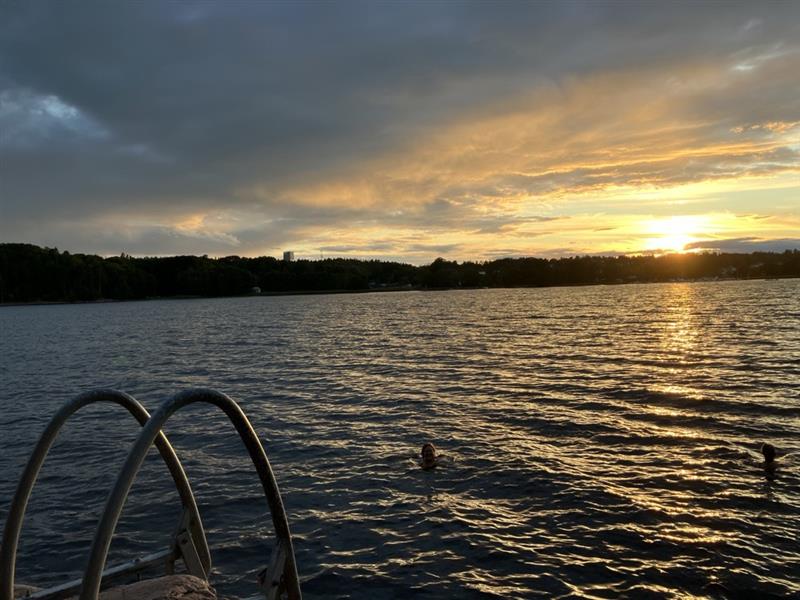
Dr. Tafue Lusama, a Tuvaluan Indigenous man, spoke to a whole of life philosophy that recognizes the interrelatedness of all things. He highlighted the special knowledge that children have about the lands and waters and encouraged the use of cultural indicators of biodiversity and water quality in addition to technical western scientific monitoring. He was also the only speaker I heard who referenced the experience of being in the water, saying, “You have only to immerse yourself to be refreshed.” As a person who ended every day of the conference by swimming in the 17°C water of the Baltic Sea, I wholeheartedly agree!
In each Indigenous-led session, some version of the opening quote was repeated: “Early, full and effective participation by Indigenous Peoples in governance and decision-making for environmental management, cultural heritage protection, and climate change is essential to enabling a sustainable future.”
While attendees listened attentively and applauded enthusiastically, the question remains: will they go back to their roles in project management, engineering and conservation with good intentions alone or will they offer early, full and effective participation to Indigenous communities that are impacted by their projects?
Powerful words spoken by Indigenous Hawaiian KaiLei’a Duriano are still ringing in my ears:
You have to be vulnerable and willing to risk… When you ask us, we are risking everything. I am pouring my entire cup into this larger cup, and if you are not willing to risk even a drop, I challenge you to reevaluate your role in working with Indigenous communities because it isn’t a project for us—it is a ripple into our tidal waves that we feel for generations to come.
Kailei’a duriano
What kind of ripples are you creating?
Beyond the Binary: Celebrating Trans, Non-Binary, & Gender-Expansive Folks on International Women’s Day
Beyond the Binary: Celebrating Trans, Non-Binary, & Gender-Expansive Folks on International Women’s Day
March 7, 2025
Emma Cowman (she/they)
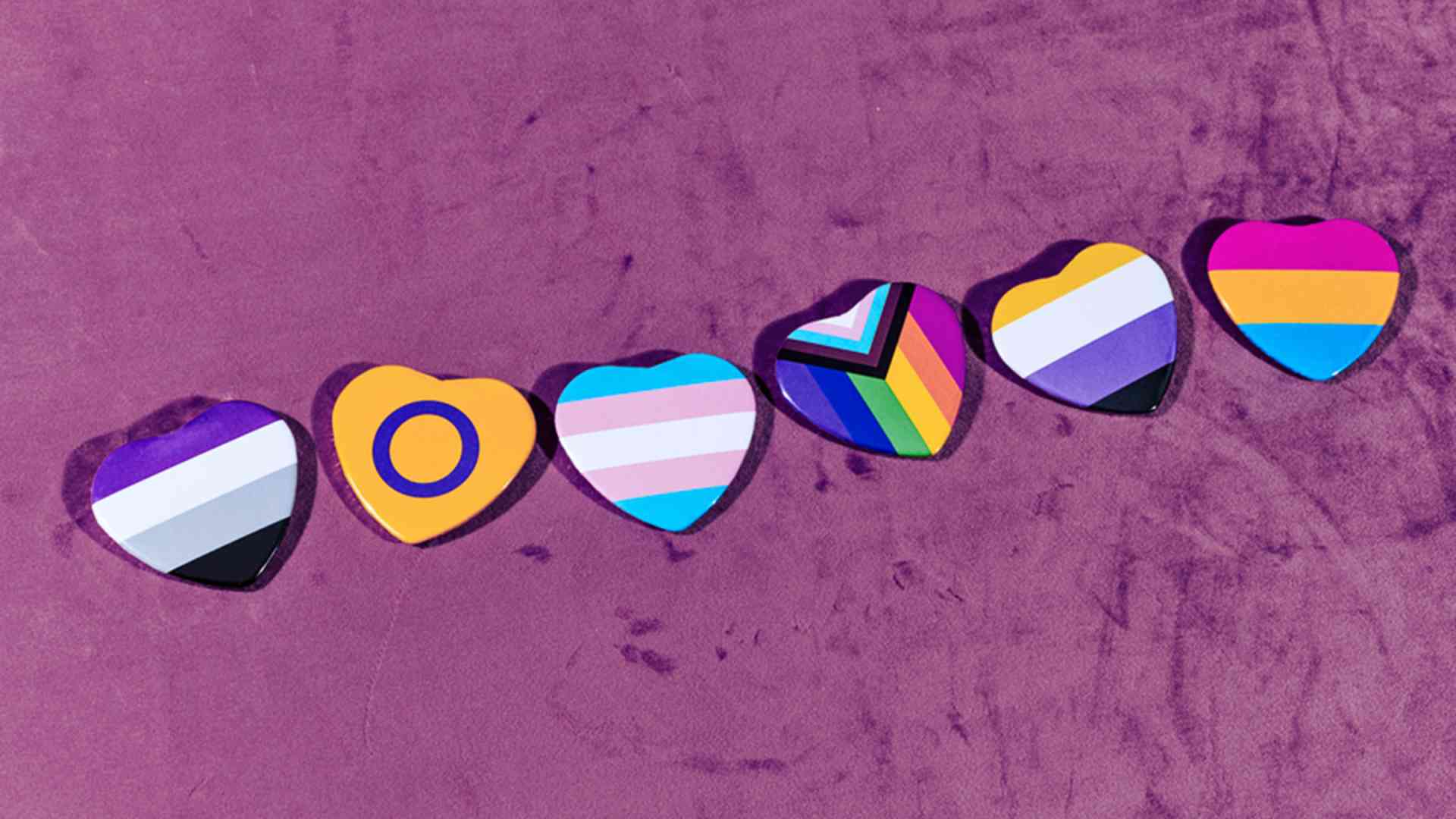
Image: Juan Moyano / Stocksy United
International Women’s Day (IWD) is a day to celebrate the social, economic, cultural, and political achievements of women. This is a day to celebrate the resilience and accomplishments of those oppressed under patriarchal systems, while serving as a reminder of the ongoing global struggles for gender equity and justice. However, this day of celebration has historically centered on the experiences of cisgender women, often excluding or disenfranchising trans, non-binary, and gender-expansive folks, who also experience misogyny, gender-based violence, and discrimination under patriarchal systems.
With our neighbours in the U.S. outwardly attacking trans rights through policy and legislative changes, it is imperative to recognize and uplift trans folk this IWD. These legislative assaults – including restrictions on gender-affirming care, bathroom access, legal gender recognition, and the removal of gender identity from state civil rights protections – threaten the dignity and safety of trans individuals.
However, these attacks are not just a U.S. issue. Across the world, trans communities are fighting for their basic human rights in the face of state-sanctioned violence, exclusion, and systemic barriers to healthcare, education, and legal recognition. In Canada, while trans and non-binary people are recognized and protected under Canadian law, the current Conservative Party opposition leader, Pierre Poilievre has stated that he is only aware of two genders (male and female). Furthermore, provincial governments across the country are attacking trans, non-binary, and gender-expansive youth through pronoun and name laws in Saskatchewan, Alberta, and New Brunswick schools.
Trans Rights are Human Rights
At its core, the fight for gender equality is a human rights issue. The Universal Declaration of Human Rights affirms that all individuals, regardless of gender identity, are entitled to dignity, freedom, and equality. Further, international human rights law protects 2SLGBTQIA+ people from discrimination and violence. Trans people have the right to legal recognition of their gender identity, the right to change their gender in official documents, and the right to access education, employment, and healthcare.
Despite this, trans, non-binary, and gender-expansive folks experience discrimination and trans misogyny in healthcare, employment, education, and housing. They are also at a higher risk of experiencing hate-motivated violence, including physical and sexual assault.
The failure to fully recognize trans rights as human rights reinforces cycles of marginalization, violence, and state-sanctioned discrimination. When governments pass laws that restrict gender-affirming care, erase legal gender recognition, or criminalize trans existence, they are not just enacting policy – but they are violating the basic human dignity and rights of trans individuals. These actions send a dangerous message that trans lives are disposable, further legitimizing social stigma and violence against trans communities.
By affirming that trans rights are human rights, we acknowledge that true gender equality cannot be achieved without the full inclusion, protection, and empowerment of trans, non-binary, and gender-expansive individuals. Human rights belong to everyone – not just those who conform to rigid, binary understandings of gender. Ensuring that trans people have access to the same freedoms, opportunities, and protections as everyone else is not just an act of solidarity, but a necessary step toward building a more just and equitable world.
This International Women’s Day…
This IWD, we must honour trans, non-binary, and gender-expansive folks who have long been at the forefront of feminist, 2SLGBTQIA+, and social justice movements, even when they are being erased from these narratives. From Marsha P. Johnson and Sylvia Rivera in the fight for queer and trans liberation, to contemporary leaders like Raquel Willis, Imara Jones, and Tourmaline, trans activists have been pivotal in challenging systemic oppression, advocating for bodily autonomy, and demanding gender justice for all. As we mark IWD, we must ensure that trans, non-binary, and gender-expansive individuals are not just included in the conversation but actively centered in the fight for gender justice and freedom from patriarchal oppression.
International Women’s Day is a call to action to dismantle the oppressive structures that harm all women – cis and trans alike – alongside trans men, non-binary, and gender-expansive individuals. This IWD must be a day that centers and celebrates the resilience, contributions, and struggles of trans, non-binary, and gender-expansive people worldwide. At the same time, we emphasize the need for continued advocacy to challenge the rising gender essentialist rhetoric and legislation. By recognizing the intersections of gender oppression, we strengthen the collective fight for liberation, autonomy, and justice for all.
By: Emma Cowman (she/they)
Reflecting on a Decade of Pro-Choice Student Activism at the University of Manitoba’s Fort Garry Campus
Reflecting on a Decade of Pro-Choice Student Activism at the University of Manitoba’s Fort Garry Campus
March 7, 2025
Hannah Belec (she/her)
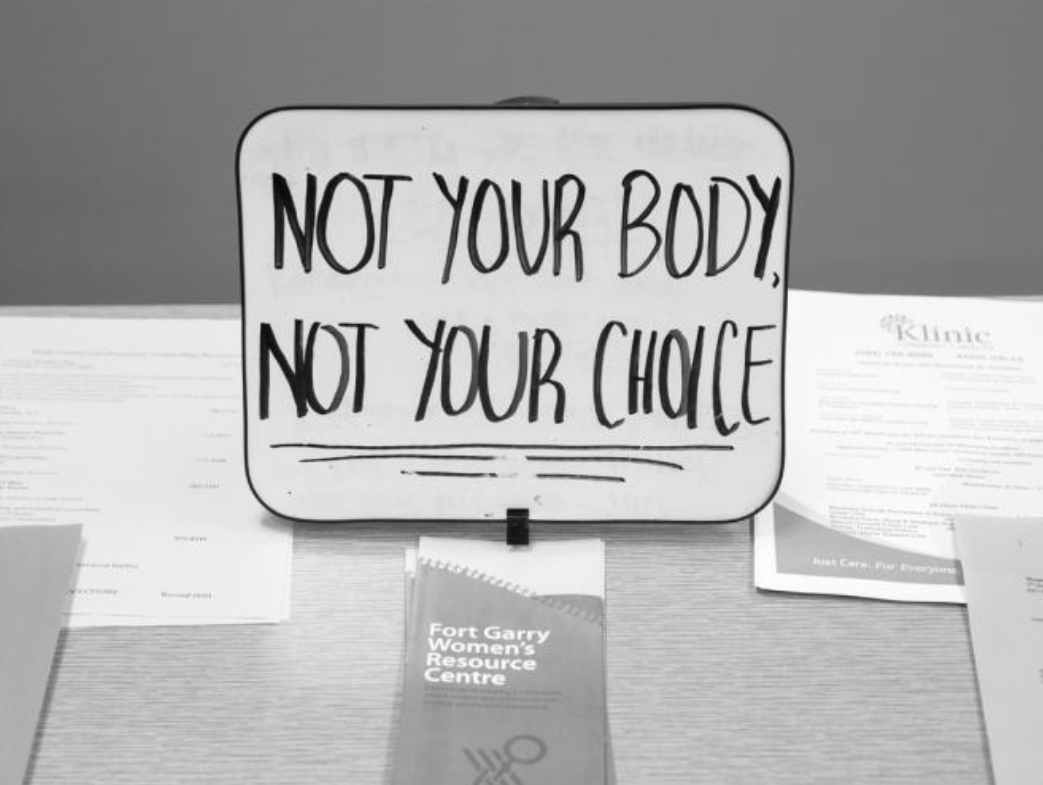
Warning: This photo essay describes the use of abortion imagery and anti-choice rhetoric. All abortion imagery in the featured photos has been covered
“My or your freedom should not infringe on someone else’s freedom.”
– Kemlin Nembhard, Executive Director of the Women’s Health Clinic at “My Body, My Choice, Our Struggle: A Conversation on Reproductive Justice.”
“If you cannot control your own body, you cannot control your life.”
– Linda Taylor, Founding Board Member of the Women’s Health Clinic at “My Body, My Choice, Our Struggle: A Conversation on Reproductive Justice.”
Introduction
In honour of International Women’s Day, this photo essay highlights and commends University of Manitoba (UM) students who have, for more than a decade, counterprotested and launched initiatives against anti-choice groups on UM’s Fort Garry Campus (FGC). These students have challenged harmful anti-choice narratives and imagery, advocated for a safer campus, and pushed for improved access to reproductive education and healthcare. They have strived to ensure that fellow UM students can make informed choices about their bodies.
However, this photo essay reveals that, unlike UM students, UM administration has remained passive in addressing anti-choice groups on UM’s FGC. UM administration must act against anti-choice groups and establish policies, such as enforcing an abortion protest buffer zone, to create a safe and supportive campus environment for all UM students.
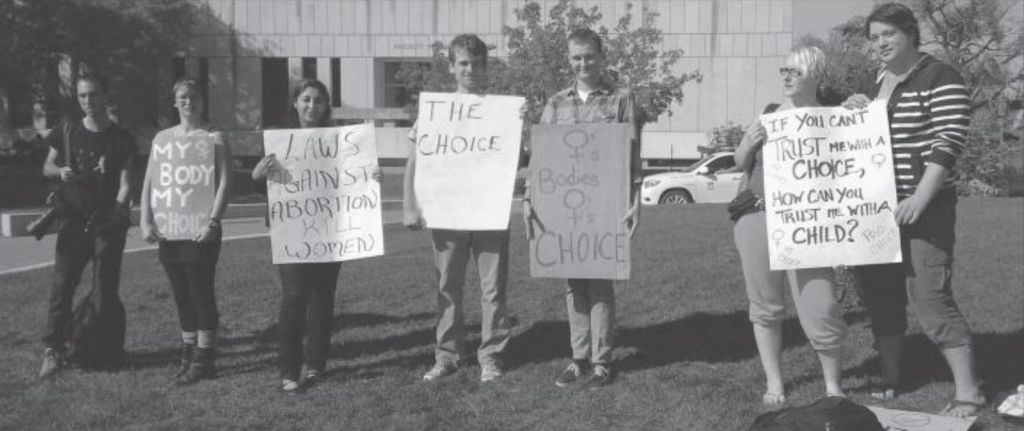
Photo by Fraser Nelund and article by Quinn Richert. Abortion debate front and centre at the U of M: Student group compares abortion with graphic genocide imagery. The Manitoban. October 2, 2013. Available at: https://issuu.com/themanitoban/docs/manitoban2oct2013.
At the start of the 2013-2014 academic year, the anti-choice student group UM Students for a Culture of Life (UMSCL), with permission from UM administration, set up a graphic display that equated the Holocaust and Rwandan Genocide with abortion. In response, a group of UM students staged a counterprotest to challenge the display’s dangerous and misleading messaging.
Andrew Woolford, a UM Professor of Sociology, and Genocide Scholar, spoke in solidarity with the student counter-protesters. Speaking to The Manitoban, he criticized the display stating, “it does little to foster intelligent debate when everyone who supports [the] right to choose is placed in the position of being a genocide denier or genocidaire.”
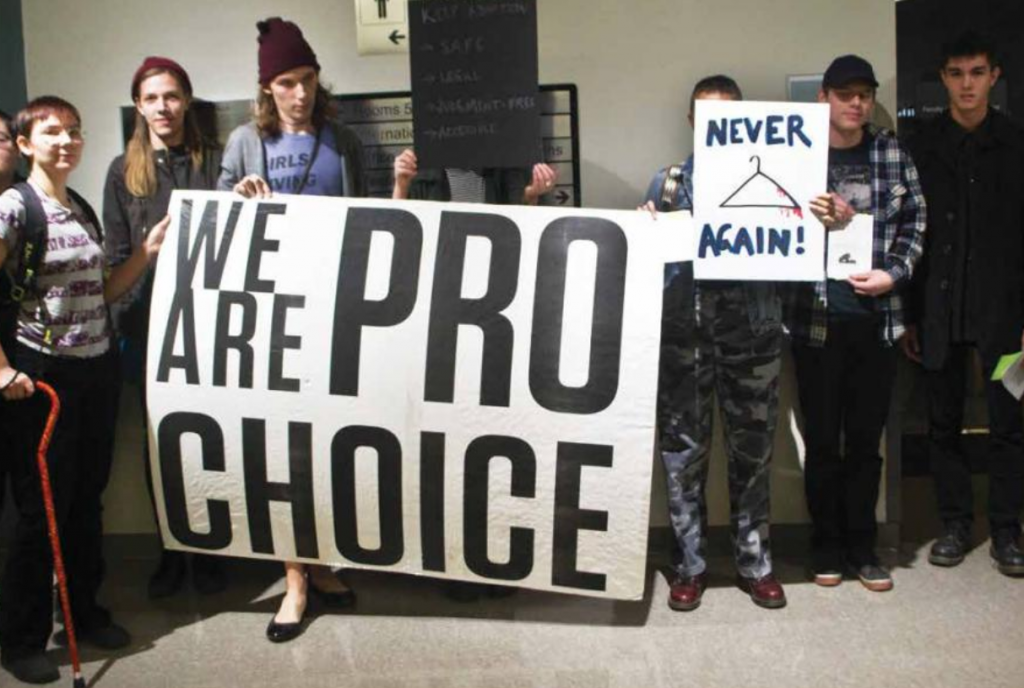
Photo by Chantal Zdan and article by Diana Ubokudom. Pro-life student group workshop met with protest: Students express disapproval of University of Manitoba Students for a Culture of Life. The Manitoban. October 18, 2017. Available at: https://issuu.com/themanitoban/docs/09_2017_oct_18_web.
On October 12th, 2017, UMSCL hosted a “Pro-Life 101” workshop on the UM’s FGC to advance their pro-life agenda with attendees. However, the event was disrupted by pro-choice UM students, seen in the image above. The students distributed reproductive health pamphlets and shouted pro-choice sayings to workshop attendees.
One of the pro-choice students, Maya Martinez, shared with The Manitoban that the “[pro-choice students] think that [UMSCL] intimidate [students] on campus who have had abortions or are looking to have abortions.”
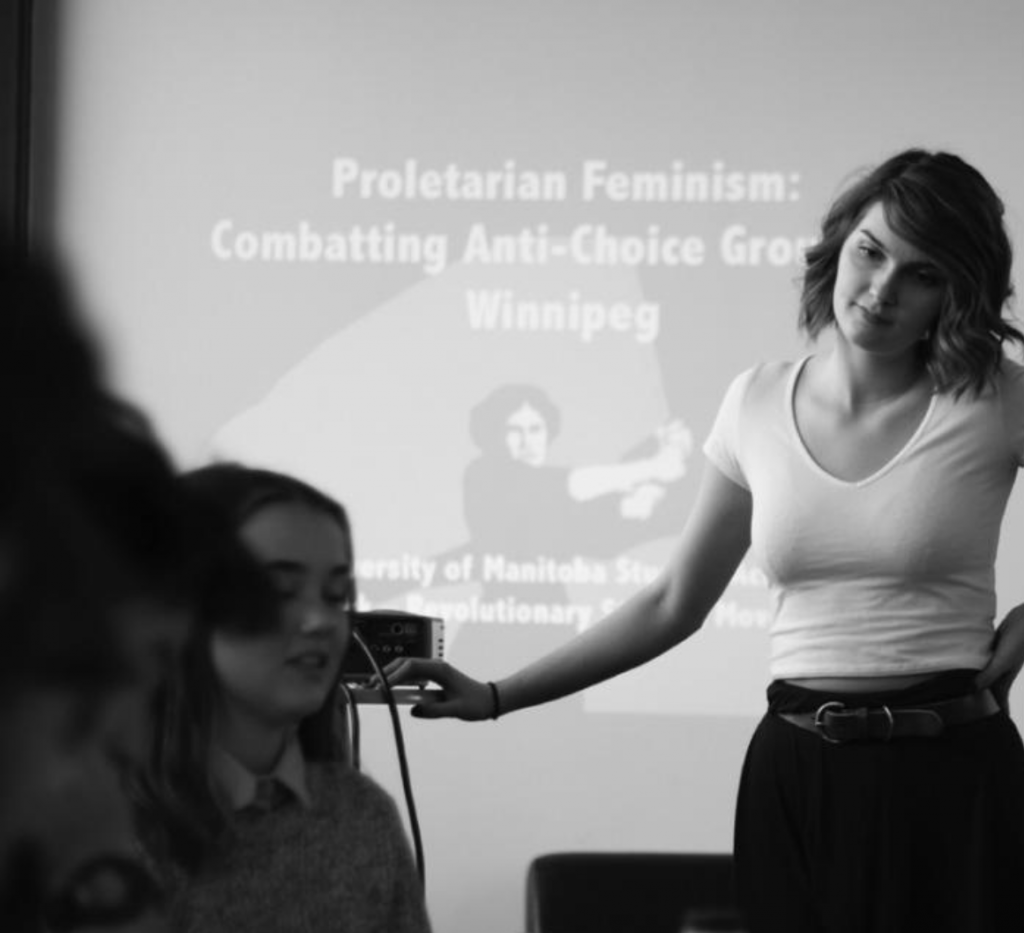
Photo by Quincy Houdayer and article by Shaden Abusaleh. Anti-abortion group asked to leave Fort Garry campus: UMSAN-RSM holds workshop on combating “anti-choice” groups. The Manitoban. February 7, 2018. Available at: https://issuu.com/themanitoban/docs/22_2018_feb_7_web.
Due to the presence of UMSCL and the Canadian Coalition for Bio-Ethical Reform (CCBR) on UM’s FGC, the UM Student Action Network – Revolutionary Student Movement (UMSAN-RSM) hosted a workshop on February 1st, 2017, called “Proletarian Feminism: Combatting Anti-Choice Groups in Winnipeg.”
Elizabeth McMechan, a UMSAN-RSM member and one of the event’s organizers, said that “a lot of [anti-choice rhetoric] is inherently misogynistic and wrong and [she doesn’t] think that University of Manitoba students should be subject to that when they’re trying to be in safe space to get their education.” McMechan further explained that UMSAN-RSM was committed to limiting the presence of anti-choice groups on UM’s FGC.
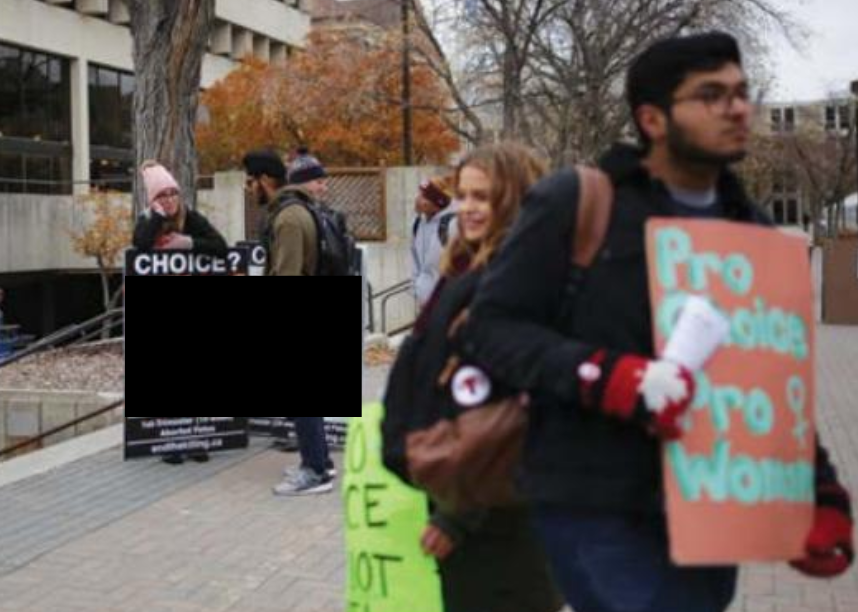
Photo by Sahar Azizkhani and article by Malak Abas. Pro-life campaign sparks protest outside UC: Dispute over reproductive rights debate and its place in public spaces. The Manitoban. October 24, 2018. Available at: https://issuu.com/themanitoban/docs/12_2018_october_24_online_.
On October 22nd, 2018, UM students organized a counterprotest in front of the University of Manitoba Students’ Union (UMSU) University Centre where members of the CCBR displayed images of aborted fetuses and attempted to engage passersby in pro-life discussions.
Shannon Furness, who was involved in the counterprotest and the UM Arts Student Body Council (ASBC) Women’s Representative at the time, explained to The Manitoban that “the demographic that most get abortions is 18 to 24, so [the CCBR] are here for a reason… regardless of if [anti-choice groups] are actually directly restricting our reproductive rights – which they’re not at this point – it still can impact [one’s] right to choose… it can make them feel victimized, vulnerable, or ashamed.”
Another student who participated in the counterprotest, Elizabeth McMechan from UMSAN-RSM, stated that she believes “it’s important that the university make a statement about whether or not they’re going to support a student’s right to bodily autonomy.”
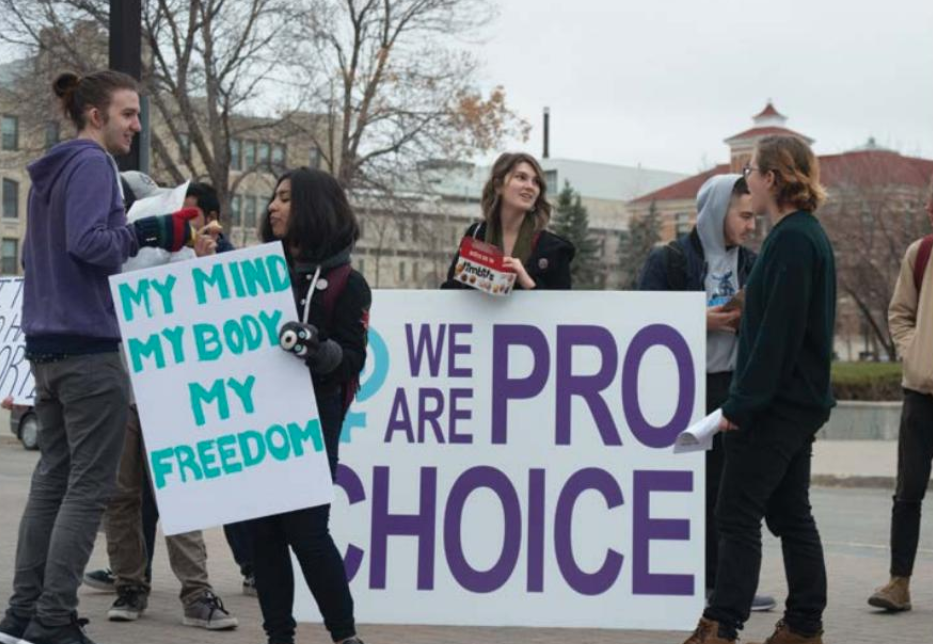
Photo by Alexander Decebal-Cuza and article by Malak Abas. UMSU, ASBC advance motions on pro-life groups: Councils will vote to oppose “coercion” by reproductive rights groups; UMSU motions support reproductive rights: Board passes amendments to position statement, safe environment policy. The Manitoban. October 31 and November 7, 2018. Available at: https://issuu.com/themanitoban/docs/13_2018_october_31_online_ and https://issuu.com/themanitoban/docs/14_2018_november_7_online_.
In response to concerns raised by UM students about the presence of the CCBR and UMSCL on UM’s FGC, UMSU’s Board of Directors approved significant amendments to UMSU’s Safe Environment Policy and Equitable Campus Position Statement on November 5th, 2018.
Motion 0428A updated the Equitable Campus Position Statement to affirm UMSU’s support for “one’s right to freedom of reproductive choice; and one’s right to be free from coercion or attempted coercion with respect to making reproductive choices.”An additional sub-clause clarified that UMSU does not support “any act of coercion or attempted coercion with respect to making reproductive choices” or “the dissemination of graphic material or information that is misleading or false as part of any event/activity or within the group/club or association.”
Motion 0428B revised the Safe Environment Policy to explicitly include “any act of coercion or attempted coercion with respect to making reproductive choices”under the definition of “discriminatory or harassing behaviours and actions.”
Concurrently, ASBC introduced a motion that aimed to prevent the display of “graphic images and the targeting of vulnerable individuals” by the CCBR, UMSCL, and other anti-choice groups in Faculty of Arts buildings.
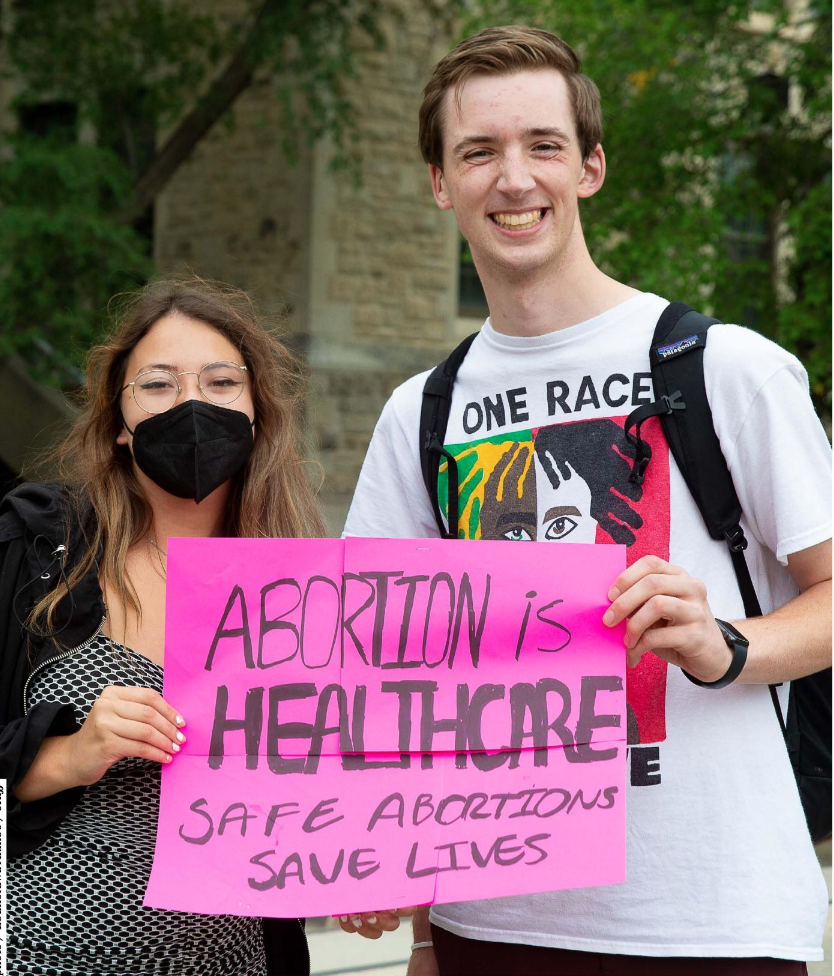
Photo by Ebunoluwa Akinbo and article by Colton McKillop. Anti-abortion group CCBR holds rally on campus: Graphic images of aborted fetuses met with counter-protest. The Manitoban. September 14, 2022. Available at: https://issuu.com/themanitoban/docs/109_05_sep14_2022.
In less than 24 hours, the UMSU Women’s Centre (WC) and Justice for Women Manitoba (JWM) organized a student counterprotest in response to the CCBR’s anti-choice presence on UM’s FGC in September 2022.
Jessica Gibson, President of JWM at the time, condemned the CCBR’s use of images of aborted fetuses, calling them “triggering and retraumatizing.”
UMSU also issued a statement on Instagram, emphasizing its commitment to student well-being: As “a union meant to support our student body and protect them from harm… [UMSU] cannot sit idly by when some attempt to shame our students for making personal choices about their own lives and futures.”
Gibson urged UM administration to take more decisive action to protect students from distressing material and anti-choice demonstrations on campus, arguing that the university’s existing warning posters were insufficient.
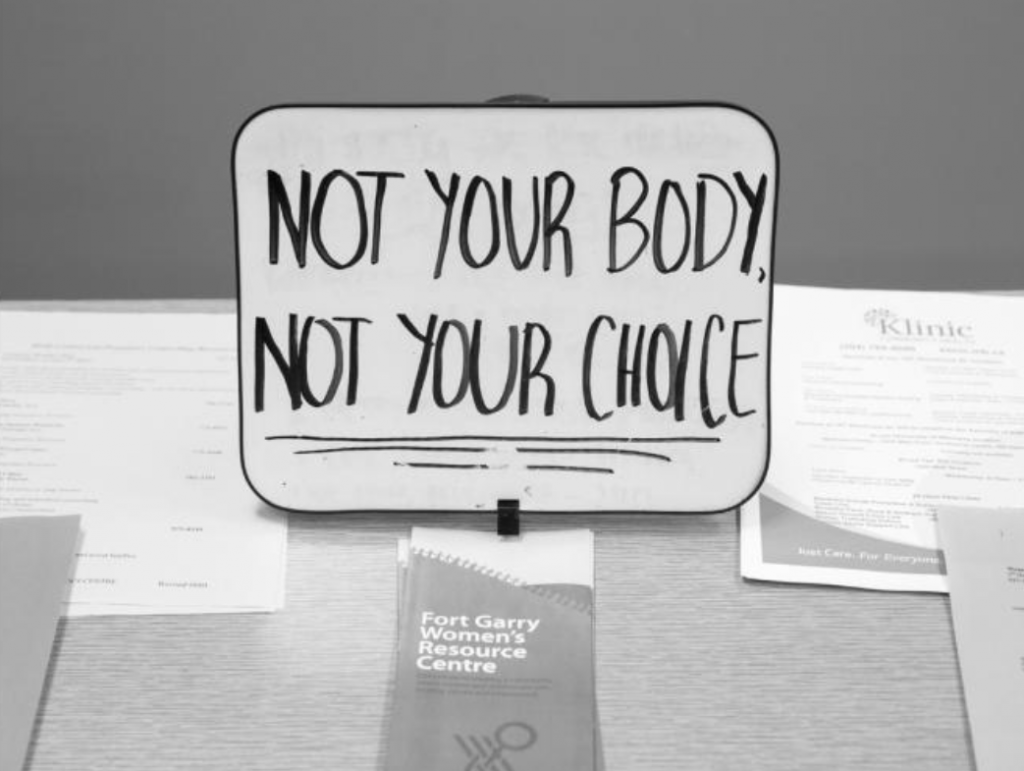
Photo by Ebunoluwa Akinbo and article by Alicia Rose. Student groups hold pro-choice initiative: Event comes as a response to anti-abortion group presence on campus. The Manitoban. April 5, 2023. Available at: https://issuu.com/themanitoban/docs/109_28_apr05_2023.
Taking an approach beyond traditional pro-choice counterprotests, the UMSU WC, JWM, and ASBC launched an initiative to support students during anti-choice demonstrations on the UM’s FGC in late March and early April 2023.
This initiative included distributing reproductive health resources and extending the UMSU WC’s hours to provide a safe space where students could seek support and information. Designed to minimize the negative mental health impacts of direct engagement with anti-choice demonstrators, who often use graphic imagery and start inflammatory debates, this initiative prioritized student well-being while promoting informed choice.
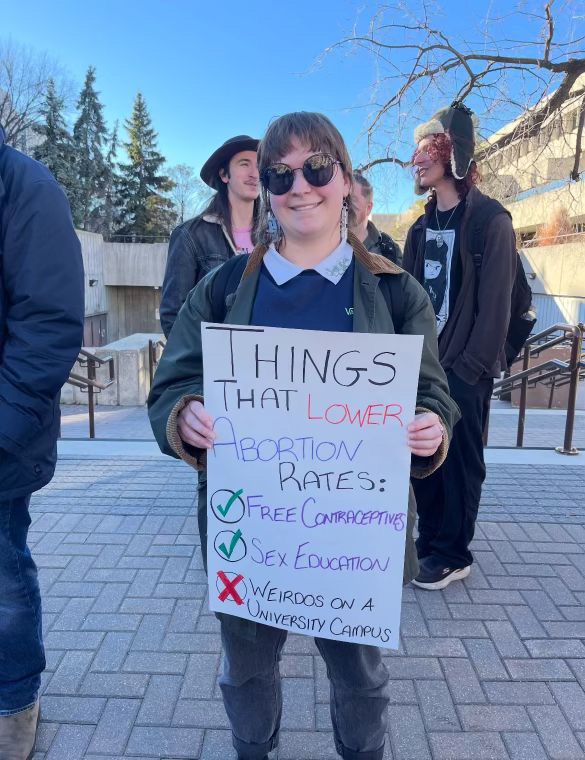
Photo courtesy of the UMSU Women’s Centre.
On November 9th, 2024, the UMSU WC held a counterprotest against an anti-choice group outside UMSU University Centre. This anti-choice demonstration and counterprotest came just days after the re-election of U.S. President Donald Trump, whose hand-selected Supreme Court Justices overturned Roe v. Wade in 2022. Since his re-election, Trump’s administration has only continued to threaten reproductive rights in the U.S., impacting many American UM students.
In conversation with Brie Willoughby, the UM student pictured above, they said they are “a firm believer that everyone has a fundamental right to control their own body and make decisions about what happens to it.”
Willoughby expressed frustration with anti-choice groups who come to UM’s FGC with “triggering and falsified images to essentially demonstrate that people don’t deserve to decide whether or not to be pregnant.”
Upon hearing that the UMSU WC was holding a counter-protest, Willoughby “immediately knew [they] had to be part of it.”
Overall, Willoughby was “incredibly heartened by how many people showed up to demonstrate, that [UM] students do not agree with [anti-choice demonstrators], and that [UM students] fiercely defend the right to decide what happens to one’s body.”
Conclusion
For over a decade, pro-choice student activists on UM’s FGC have driven change and worked to protect the well-being and reproductive autonomy of the UM student community. However, the responsibility of safeguarding the UM student community should not rest solely on students. It is time for UM administration to take action against anti-choice groups on UM’s FGC, ensuring that all students feel safe, supported, and empowered in their education and reproductive choices.
By: Hannah Belec (she/her)
Environmental Impact of Period Management Options
Environmental Impact of Period Management Options
May 31, 2024
Chloe Vickar (she/her)
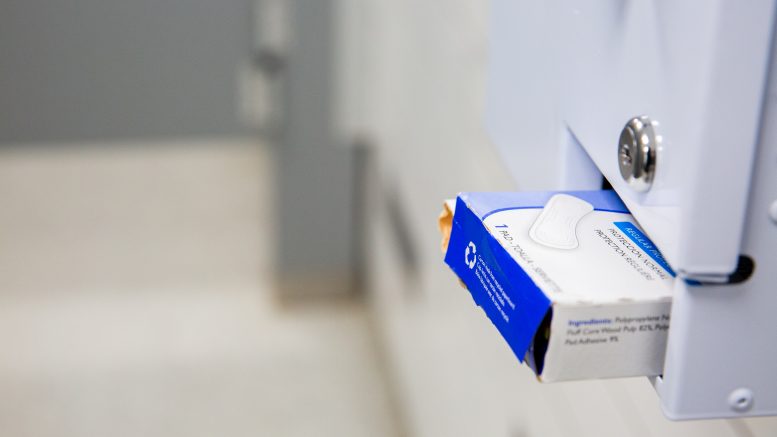
Image: Ebunoluwa Akinbo
Although period management options have improved significantly in the last half century, there is still work to be done to improve period products for the well-being of those who use them, and the well-being of the environment. As we work towards implementing menstrual justice in our communities, we must also prioritize the environmental cost of menstruating.
The environmental impact of period products can be measured by looking at the use of raw materials, energy, and water during the manufacturing processes, the makeup of the components of the products (plastic versus cotton, for example), the packaging of the products, and the total quantity of how many products are used and disposed of globally. However, there is little available literature on the exact environmental impact of disposable period products.
In addition to pads, tampons create significant waste. In the United States, approximately 12 billion pads and 7 million tampons are used each year. The plastic applicators are often marketed as recyclable; however, these pieces are rarely actually recycled. The presence of blood/organic matter disqualifies the applicators from being eligible to recycle in most jurisdictions. Further, as much as 400 pounds of packaging from period products is discarded for each person that menstruators in their lifetime.
Many reusable period products are available as alternatives to disposable pads and tampons. Menstrual cups, discs, reusable pads, and period underwear are among the most popular. Cups and discs are worn internally and made of medical grade silicone, or other body-safe ingredients like TPE, and can be washed and reused for up to 10 years, depending on the brand and the user. In addition to their environmental benefits, cups and discs often hold more menstrual blood than pads and tampons. There are many options for shape, size, and capacity, depending on the menstruator’s anatomy and flow.
Period underwear is increasing in popularity in recent years. It features an absorbent gusset and can be washed and reused for years. Period underwear often holds less menstrual blood than cups or discs but can be worn as backup for leaks in addition to an internal product, or by itself during spotting or for those with a light flow.
There are options for disposable pads and tampons that have lighter environmental footprints than plastic-based products. Pads and tampons made of cotton are healthier for the person using them and for the environment.
Reusable products are not suitable for all bodies, lifestyles, and circumstances, for example due to lack of resources, education, or personal preference. While reusable period products can last many years, they have higher upfront costs than disposable products. Further, internal reusable options such as cups and discs may not work well for all bodies, as each menstruator has different preferences based on their individual needs. Reusable pads are a great option for reducing waste, however one must be able carry the used pad with them until they can be laundered. Therefore, healthier disposable options made from organic cotton are important.
This savings calculator from Winnipeg-based reusable period product company Tree Hugger Cloth Pads illustrates financial and environmental savings from switching to reusable cloth pads.
Environmental impact must be taken into consideration when conceptualizing period products, however disposable options continue to be necessary. The waste associated with disposable products cannot be used as an argument to discourage the importance of free period products. We can advocate for accessibility of products, including disposable and reusable products, so that all menstruators have safe and reliable products.
For more information about the environmental impact of period products, check out these resources:
https://www.washingtonpost.com/wellness/2023/09/12/period-products-absorption-study-blood
Hand, J., Hwang, C., Vogel, W., Lopez, C., & Hwang, S. (2023). An exploration of market organic sanitary products for improving menstrual health and environmental impact. Journal of Water, Sanitation, and Hygiene for Development, 13(2), 63–77. https://doi.org/10.2166/washdev.2023.020
Harrison, M. E., & Tyson, N. (2023). Menstruation: Environmental impact and need for global health equity. International Journal of Gynecology and Obstetrics, 160(2), 378–382. https://doi.org/10.1002/ijgo.14311
https://www.treehuggerclothpads.com
https://www.treehuggerclothpads.com/pages/savings-calculator
May 28th is menstrual hygiene day, and this year, the theme is “Together for a #PeriodFriendlyWorld.” While this observance was originally framed as menstrual hygiene – we follow the lead of the World Health Organization, who calls for menstrual health to be recognized, framed, and addressed as a human rights issue, not a hygiene issue. Framing menstruation as such is a reflection of the taboo and stigma around periods. The labelling of period supplies as “feminine hygiene products” is incorrect since as Dr. Jen Gunther explains “needing them is not a sign of being feminine – it’s a sign that you need something to catch blood – and they’re not hygiene products because menstruating is not unhygienic.”
In 2023-2024, the Centre for Human Rights Research at the University of Manitoba has worked on the “Period Poverty & Equity, On Campus and Beyond” project to assess access to period supplies for the University of Manitoba community and to work towards menstrual equity, on campus and in the community. This series of essays is part of the Period Poverty & Equity, On Campus and Beyond project and aims to explore issues of menstrual justice that are often overlooked.
Menstruation and Gender: Beyond Cisgender
Menstruation and Gender: Beyond Cisgender
May 28, 2024
Mikayla Hunter (she/they)
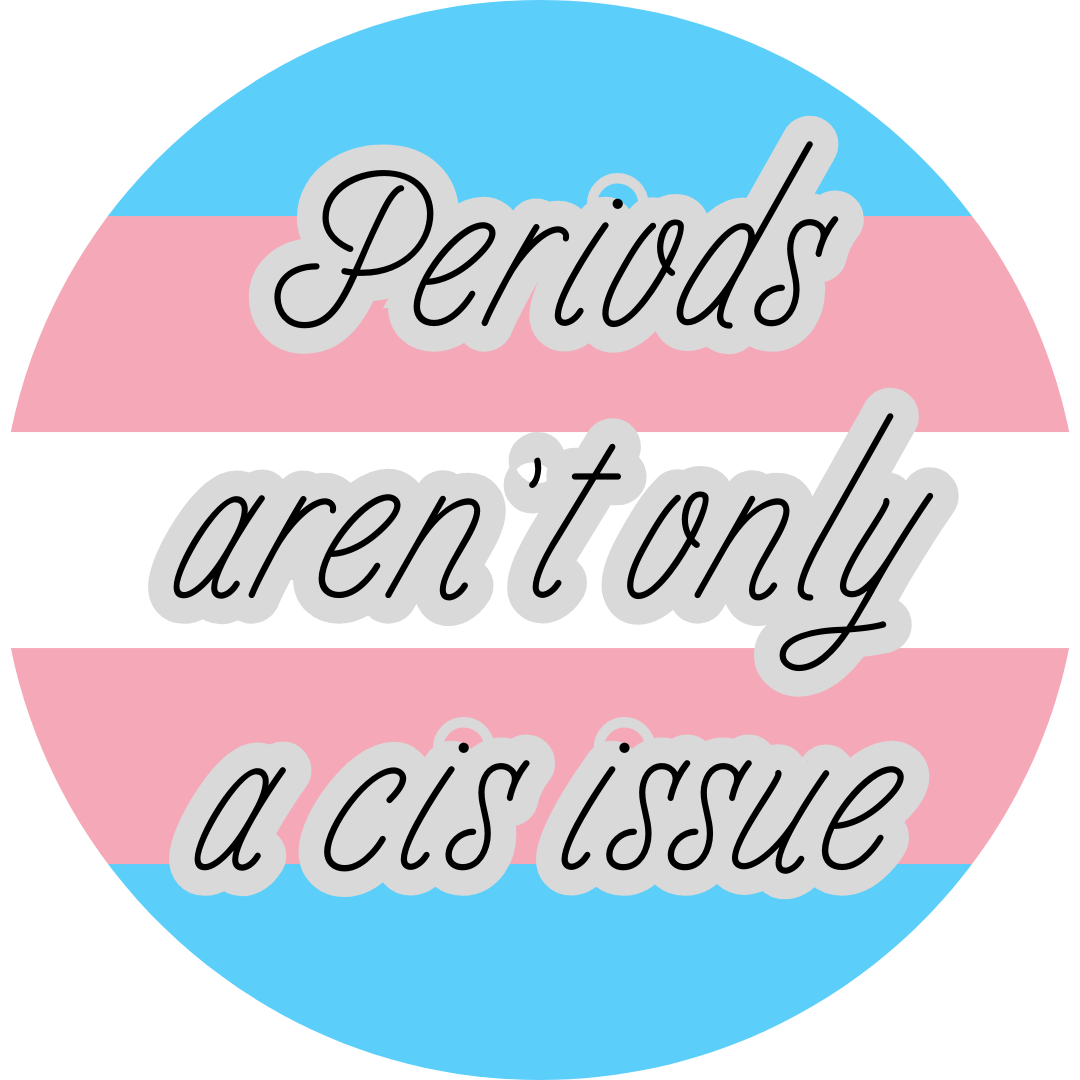
Image by Mikayla Hunter
It is not only cisgender women who menstruate. For some, this idea may be something they are already aware of and understand to be true. For others, it may be a little more difficult. To understand that menstruation is not an experience specific to women, we must first understand what we mean by gender.
The term cisgender refers to a person whose gender identity aligns with the sex they were assigned at birth.1 Transgender is a term for people whose gender identity does not align with the sex they were assigned at birth.1 It is important to note that both ‘cis’ and ‘trans’ are simply prefixes that add additional information to a word or an idea, and neither of these terms are slurs. For example, we can refer to a book as a hardcover book to give more information about the book that we are talking about. Cis is a prefix that means ‘on the same side as’ and trans means ‘on the other side of’. This means that a cisgender woman is a woman whose gender identity is ‘on the same side as’ the sex she was assigned at birth. A transgender man is a man whose gender identity is ‘on the other side of’ the sex he was assigned at birth. With these ideas in mind, we can understand that both cisgender women and transgender men may have a uterus and experience menstruation. However, it is not just cisgender women and transgender men who may have these experiences.
Gender diverse people have a wide range of gender identities and/or gender expressions that do not conform to socially defined gender norms of men and women.2 There are many terms and identities that people may use to describe themselves including non-binary, agender, genderqueer, and gender non-conforming to name a few. Gender diversity does not look a specific way, and the experiences of gender diverse people can (and do) vary. For example, not every gender diverse person will dress androgynously and not all of them will experience menstruation. However, some of them will. Similar to how both cisgender women and transgender men can experience menstruation, so can gender diverse people. A person who menstruates doesn’t look any one specific way or identify as a woman.
Importantly, menstruation can cause gender dysphoria for transgender and gender diverse people. Gender dysphoria is the experience of discomfort or distress because there is a mismatch between a person’s sex assigned at birth and their gender identity.3 For some transgender and gender diverse people, they may undergo procedures such as hysterectomy to relieve gender dysphoria and as a part of their gender journey. However, not everyone has access to these surgical procedures for a variety of reasons and so, menstruation can be all the more difficult for transgender and gender diverse people.

Femininity and menstruation do not go hand-in-hand. A person’s gender identity is their internal sense of gender, or lack thereof. The biological function of our bodies is not directly tied to our gender identities. And so, saying that only women menstruate is incorrect. As Kimberlé Crenshaw explains,4 when policies that support women only support women and policies that support Black, Indigenous, and People of Colour (BIPOC) people only support BIPOC men, BIPOC women are not supported by either policy. When we consider the idea of menstrual equity, we need to ensure that all bodies that menstruate are included and not just cisgender women. Otherwise, we haven’t achieved menstrual equity at all if people are being left out of advocacy and policy changes.
References
[1] Rainbow Center. (2018). Rainbow Center’s LGBTQIA+ dictionary. The University of Connecticut.
[2] https://www.dictionary.com/browse/gender-diverse
[3] https://www.stonewall.org.uk/list-lgbtq-terms
[4] https://www.youtube.com/watch?v=ViDtnfQ9FHc
May 28th is menstrual hygiene day, and this year, the theme is “Together for a #PeriodFriendlyWorld.” While this observance was originally framed as menstrual hygiene – we follow the lead of the World Health Organization, who calls for menstrual health to be recognized, framed, and addressed as a human rights issue, not a hygiene issue. Framing menstruation as such is a reflection of the taboo and stigma around periods. The labelling of period supplies as “feminine hygiene products” is incorrect since as Dr. Jen Gunther explains “needing them is not a sign of being feminine – it’s a sign that you need something to catch blood – and they’re not hygiene products because menstruating is not unhygienic.”
In 2023-2024, the Centre for Human Rights Research at the University of Manitoba has worked on the “Period Poverty & Equity, On Campus and Beyond” project to assess access to period supplies for the University of Manitoba community and to work towards menstrual equity, on campus and in the community. This series of essays is part of the Period Poverty & Equity, On Campus and Beyond project and aims to explore issues of menstrual justice that are often overlooked.
Indigenous struggles toward period equity
Indigenous struggles toward period equity
May 29, 2024
Bethel Alemaio (she/her)
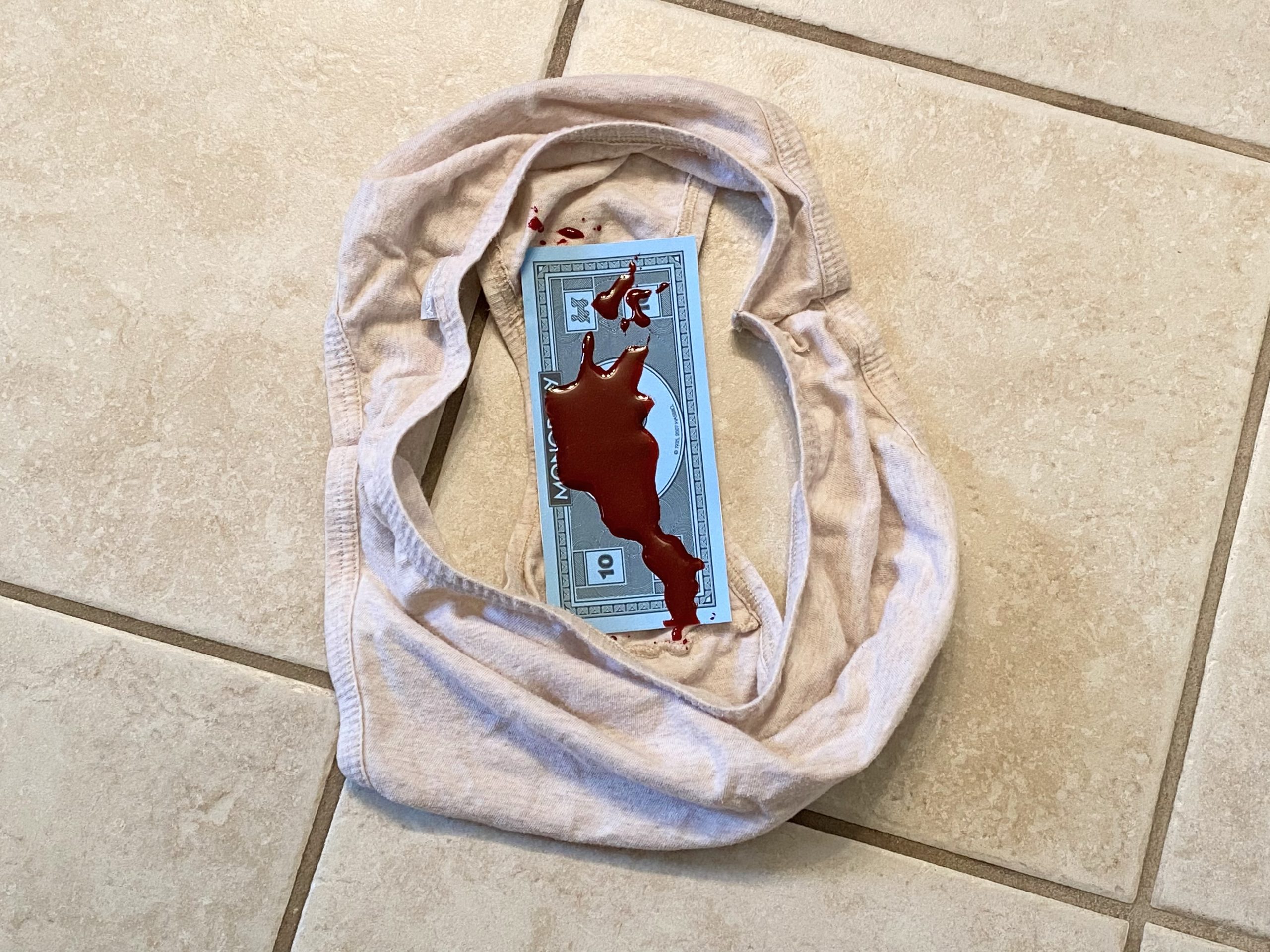
Image: Money is Cheaper, Period. By Lauren C.
Many Canadians struggle to gain equitable access to menstrual products. Plan International Canada’s Menstruation in Canada Views and Realities reveals the consequences of unaffordable and inaccessible menstrual products among youth and adults. One in five (22%) of the respondents ration their products, and this number rises to 33% for those with household incomes less than $50,000 (Plan International Canada 2022). A recent report focusing on menstrual needs in northern communities noted that 74% of Indigenous respondents in remote communities and 55% of Indigenous respondents in non-remote communities “sometimes” or “often” have issues accessing menstrual products (Lane 2024). Resulting from this, in recent years, Indigenous leaders nationally have fought for easier access to period products (Toory 2022).
Sol Mamakwa, MPP of northern Ontario, is one such person. In 2021, after Shoppers Drug Mart announced its plan to donate menstrual products to public schools, 120 federally funded First Nations schools were excluded from this distribution. Mamakwa was outspoken about the province’s discriminatory practices, which violated Jordan Principle. Within this policy, it is mandated that the needs of First Nations Children to access “products, services, and supports” (Indigenous Services Canada, 2024) requires the collaboration of both the federal and provincial governments in a timely manner. Mamakwa further indicates his disappointment as the products were a private donation and did not require the spending of provincial funding.
Moon Time Connections, a national organization dedicated to providing menstrual products to Indigenous peoples throughout Turtle Island, shares Mamakwa’s concern. Working with the Ontario chapter of Moon Time Connections, Veronica Brown recognizes the government’s actions as a “colonial barrier” (McGillivray 2021) to equitable access to period products.
Nichole White created Moon Time Connections because she discovered Indigenous students learning in remote and rural areas were missing school due to a lack of access to menstrual products. The first chapter was created in Saskatchewan, previously known as Moon Sisters, and the organization expanded to Ontario, Manitoba, and British Columbia. They actively work toward period equity in collaboration with 120 northern Indigenous Communities from coast to coast.
References
Lane, Heather. 2024. “An Assessment of Menstrual-Related Needs in Northern Communities.” Moon Time Connections. True North Aid. https://truenorthaid.ca/wp-content/uploads/2024/03/An-Assessment-of-Menstrual-Related-Needs-in-Northern-Communities-FINAL.pdf.
McGillivray, Kate. 2021. “MPP Calls out Province’s Free Menstrual Products Plan for Not Including First Nations Schools.” CBC News, October 23, 2021. https://www.cbc.ca/news/canada/toronto/mpp-calls-out-province-s-free-menstrual-products-plan-for-not-including-first-nations-schools-1.6219813.
Plan International Canada. 2022. “Menstruation in Canada – Views and Realities.” Plan International. https://www.multivu.com/players/English/9052951-menstrual-health-day-2022/docs/ViewsandRealities_1653434611799-556425632.pdf.
Toory, Leisha. 2022. “Menstrual Health Is a Public Health Crisis for Indigenous Youth.” Toronto Star, October 13, 2022. https://www.thestar.com/opinion/contributors/menstrual-health-is-a-public-health-crisis-for-indigenous-youth/article_d8f3098b-1a61-52b7-a9c1-a8bdb9dc926d.html.
May 28th is menstrual hygiene day, and this year, the theme is “Together for a #PeriodFriendlyWorld.” While this observance was originally framed as menstrual hygiene – we follow the lead of the World Health Organization, who calls for menstrual health to be recognized, framed, and addressed as a human rights issue, not a hygiene issue. Framing menstruation as such is a reflection of the taboo and stigma around periods. The labelling of period supplies as “feminine hygiene products” is incorrect since as Dr. Jen Gunther explains “needing them is not a sign of being feminine – it’s a sign that you need something to catch blood – and they’re not hygiene products because menstruating is not unhygienic.”
In 2023-2024, the Centre for Human Rights Research at the University of Manitoba has worked on the “Period Poverty & Equity, On Campus and Beyond” project to assess access to period supplies for the University of Manitoba community and to work towards menstrual equity, on campus and in the community. This series of essays is part of the Period Poverty & Equity, On Campus and Beyond project and aims to explore issues of menstrual justice that are often overlooked.
Access to Menstrual Products in Federally Regulated Prisons in Canada
Access to Menstrual Products in Federally Regulated Prisons in Canada
May 30, 2024
Hannah Belec (she/her)

Image: iStock Photo
In December 2023, Employment and Social Development Canada announced that federally regulated employers must now provide pads and tampons to all employees in an accessible location at no cost. The press release from December 15th states that “menstruation is a fact of life” and pads and tampons are “basic necessities.”[1] Yet, current access to menstrual hygiene products in other federally regulated institutions, specifically prisons, certainly does not reflect the Canadian government’s apparent acceptance that “menstruation is a fact of life” and that both pads and tampons are “basic necessities.”[2]
In 2018, Public Safety Canada stated that there were approximately 676 federally incarcerated women.[3] These women make up between 7% and 8% of the total federal offender population and are the fastest-growing federal offender population.[4] For example, despite the total number of federally incarcerated offenders minimally increasing by 0.3% in the past ten years, the number of federally incarcerated women has increased by 20%.[5] Moreover, according to a 2022 study by Corrections Services Canada, there are approximately 21 openly trans-men and 17 individuals who openly identify as gender fluid, gender non-conforming/non-binary, intersex, two-spirited, or unspecified.[6] So, these statistics suggest that there are currently between 700 to 800 federally incarcerated offenders, residing in prisons designated for women and prisons designated for men, who may require menstrual hygiene products at some point during their incarceration, if not regularly – and this number will only continue to increase if the upward trend of federally incarcerated women continues.
In compliance with the United Nations Rules for the Treatment of Women Prisoners and Non-Custodial Measures for Women Offenders, or the Bangkok Rules, Canadian federal prisons provide “facilities and materials required to meet women’s specific hygiene needs, including sanitary towels provided free of charge.”[7] However, some prisons designated for women do not provide tampons free of charge, only pads. For example, in a 2017 report conducted by the Senate on womens’ experience in Canadian prisons, incarcerated women at Joliette Prison in Quebec stated that they had to purchase tampons from the canteen if they wanted them, as they were only provided one kind of sanitary pad.[8] The need to buy tampons is a barrier to menstrual equity in Canadian prisons despite the Canadian government stating that pads and tampons are a basic necessity.
Even if a Canadian prison provides both tampons and pads free of charge, many inmates complain that they are not provided enough. On average, menstruators use about 3-6 pads or tampons daily, so three tampons may not be enough for one day, depending on an individual’s flow.[9] Yet, one inmate participant in Dr. Martha Paynter’s reproductive justice workshop exclaimed, “Bring a box! Why don’t they bring a box? You ask for tampons, and they bring you three. We don’t want to ask the male staff for tampons.”[10] Another inmate participant stated that it was “degrading” to ask for more menstrual hygiene products.[11] For incarcerated trans-men and non-binary, two-spirit, or intersex offenders who menstruate, their reluctance to ask male or female staff for menstrual hygiene products is likely exacerbated by feelings of fear, shame, and gender dysphoria. So, all federally incarcerated offenders need free and easily accessible pads and tampons, just like federal employees, to ensure their menstrual hygiene needs are addressed, and their dignity or safety is not compromised.
These economic and gender-specific barriers to menstrual equity in Canadian prisons contradict the government’s assertion that “menstruation is a fact of life” and that both pads and tampons are “basic necessities.”[2] Just like employees of the federal government, all federally incarcerated offenders, in both prisons designated for men and prisons designated for women, need free and easily accessible pads and tampons. This International Women’s Day (March 8th) and Menstrual Hygiene Day (May 28th), let’s advocate for free and accessible menstrual hygiene products in federally regulated prisons alongside federally regulated workplaces – because offenders are humans with rights that must be protected.
References
[3] https://www.publicsafety.gc.ca/cnt/rsrcs/pblctns/ccrso-2018/ccrso-2018-en.pdf
[4] https://www.justice.gc.ca/eng/cj-jp/state-etat/2021rpt-rap2021/pdf/SOCJS_2020_en.pdf
[5] https://www.justice.gc.ca/eng/cj-jp/state-etat/2021rpt-rap2021/pdf/SOCJS_2020_en.pdf
[6] https://publications.gc.ca/collections/collection_2022/scc-csc/PS83-3-442-eng.pdf
[8] https://sencanada.ca/en/sencaplus/news/life-on-the-inside-human-rights-in-canadas-prisons/
May 28th is menstrual hygiene day, and this year, the theme is “Together for a #PeriodFriendlyWorld.” While this observance was originally framed as menstrual hygiene – we follow the lead of the World Health Organization, who calls for menstrual health to be recognized, framed, and addressed as a human rights issue, not a hygiene issue. Framing menstruation as such is a reflection of the taboo and stigma around periods. The labelling of period supplies as “feminine hygiene products” is incorrect since as Dr. Jen Gunther explains “needing them is not a sign of being feminine – it’s a sign that you need something to catch blood – and they’re not hygiene products because menstruating is not unhygienic.”
In 2023-2024, the Centre for Human Rights Research at the University of Manitoba has worked on the “Period Poverty & Equity, On Campus and Beyond” project to assess access to period supplies for the University of Manitoba community and to work towards menstrual equity, on campus and in the community. This series of essays is part of the Period Poverty & Equity, On Campus and Beyond project and aims to explore issues of menstrual justice that are often overlooked.
Rethinking how we approach research for water justice
Rethinking how we approach research for water justice
May 30, 2024
By: Kiersten Sanderson (she/they)
‘Water and Climate Justice: Advancing Intersectional Approaches’, was held on May 27-28th, 2024 at the University of Manitoba. With funding from the Social Sciences and Humanities Research Council, it was led by Dr. Nicole J. Wilson, Assistant Professor in Environment and Geography and Research Affiliate with the Centre for Human Rights Research. This workshop was supported by the Centre for Human Rights Research, Centre for Earth Observation Science, Decolonizing Water, the UBC Program on Water Governance, and the Household Water Insecurity Experiences (HWISE) – Research Coordination Network. The workshop culminated in an engaging panel on the evening of the May 28th at the Canadian Museum for Human Rights.
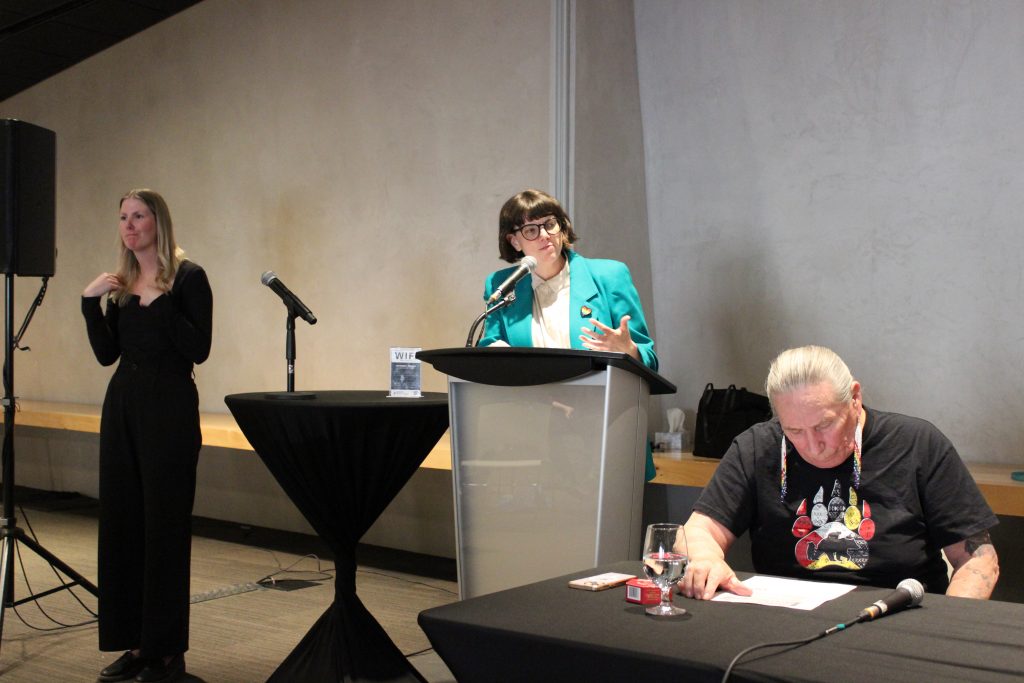
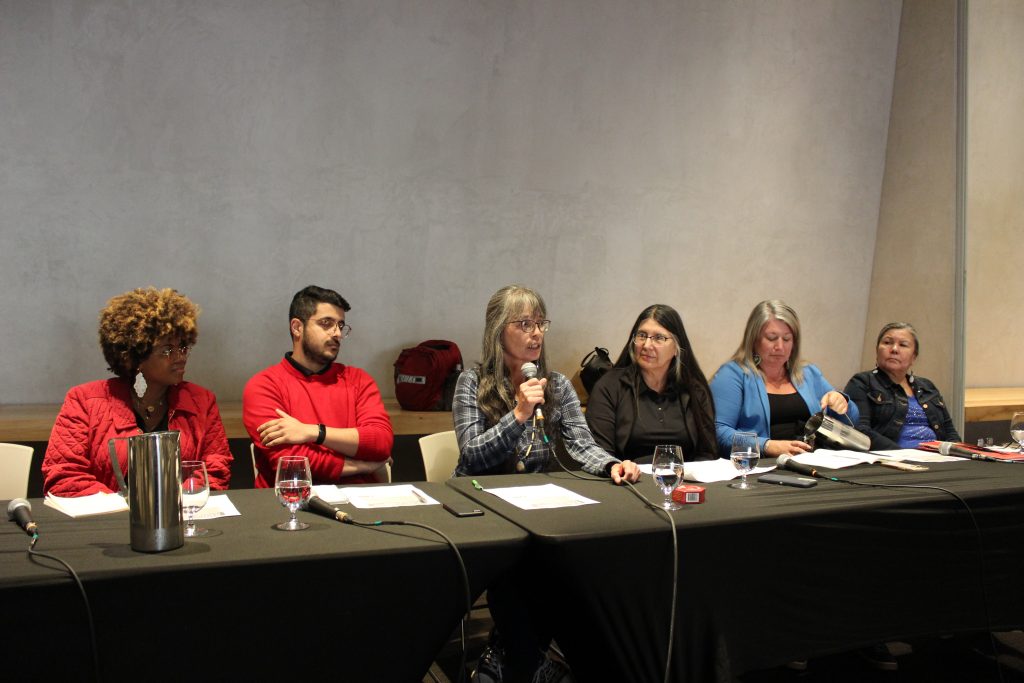
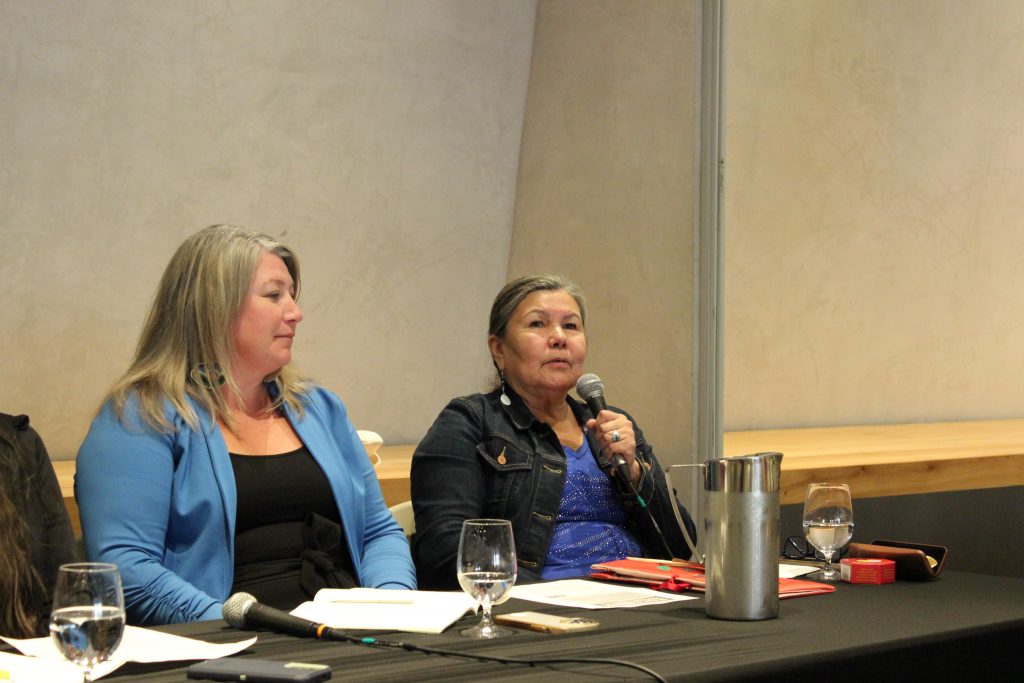
Images: Nick Lupky.
The workshop gathered some of the most incredible and inspiring individuals – scholars, activists, advocates, storytellers – all of whom work in the realm of water and climate justice. An important goal of the two-day workshop was bridging the gap and uniting the diverse disciplines that work on water scholarship. For me, it was this diversity amongst scholars and practitioners represented just how integral the issue was. Many had a background in natural sciences, however there were just as many with humanities and social sciences backgrounds, including history, literature, and governance. A notable observation was that most attendees were women. There was a strong influence and respect towards Indigenous ways of knowledge and philosophies.
I joined the workshop as a Student Research Assistant at the CHRR, working on the newly funded Just Waters project. I was selected as a Research Assistant as part of the Indigenous Summer Student Internship Program. For me, it felt good to return to water justice – to a topic that I’ve always felt passionate about. I’m a part of a generation that has grown up with climate change, water injustices, and inequities all being topics in the curriculum. Throughout high school, I actively participated in our environmental justice student group, which included biannual water testing and sampling at three different sites. Because of my disinterest in the natural sciences, I never considered that I would be able to continue with my interests in academia; the workshop provided me with a chance to meet scholars and professionals who come at the issue from diverse disciplines and perspectives.
Following introductions, together the attendees established themes of knowledge gaps that required further discussion. These four themes included:
- Justice Frameworks
- Procedural Justice
- Unity of Knowledge
- Well-being
This opening exercise was eye-opening. These areas of study don’t exist within silos, the way that we might perceive them to. These issues are as much of social ones as they are scientific. While I might be currently pursuing a career in the legal field there are still ways I can advocate for climate and water justice. There is work to be done, regardless of the educational background one might have. Everyone has a role and a responsibility when it comes to water, and the participation of everyone is integral for our future.
In the months following the workshop, I found myself thinking often of one theme that had been identified by the group – unity of knowledge. The idea was to explore how different areas of study operate in silos, and they remain separate and distinct, with little overlap or little collaboration. This is true for not only the natural sciences and humanities/social sciences, but also western knowledge on water and Indigenous knowledge systems on water. It’s important to integrate all the different forms of knowledge together. This includes how to integrate the natural sciences together with concepts of justice.
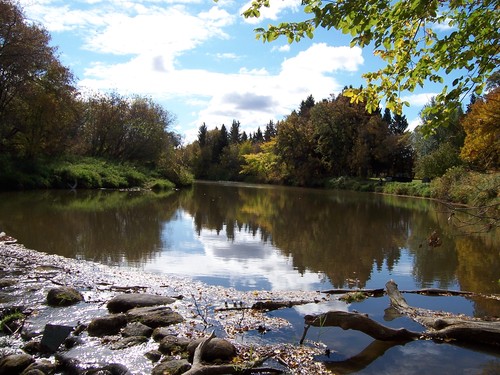
I’ve also been thinking back to my participation in water testing in high school at Whitemud River, Manitoba. While testing the water – we considered questions related to the appearance of water and the recreational usage of the water. At one of the sites, a few students shared that they had swam in the water for years; yet there were many of us who hadn’t even considered this water as being suitable for swimming because of the way we perceived the conditions of the water and the surrounding environment. Within the group, we had different relationships with the water. This is an important attribute to the data we collected. While the tests that we would conduct may provide data about whether the water was good for recreational usage, this is in a context where people had ongoing relationships with that water, and different opinions on what makes the water safe for recreational usage. If the results either we or the lab found it to be unsafe, the cause of the problem could be dealt with. The community could also be made aware so they can make decisions for their well-being. Both the tests we conducted, and the information provided by those with ongoing relationships to the site were valuable to the data we collected.
When we think about bridging these silos, it can happen during water testing. When you go out to collect water samples, the testing could also involve questions about your relationship to the water, or questions rooted in Indigenous ways of knowing. This could include asking those taking samples to consider how the condition of the water makes you feel, to document animals that you might’ve seen, or to answer whether you might swim or drink the water. To me, these questions make sense especially when members that are collecting water samples are a mix of those local to the area and those who are not.
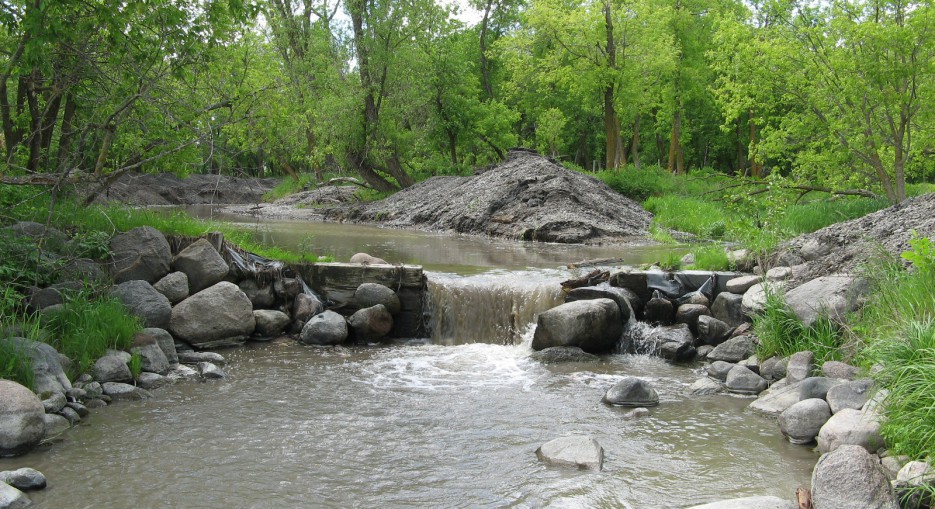
Our relationships to water and the various forms of knowledge about water are all important in addressing the complex challenges of water and climate injustices that we face today. The workshop helped me return to my passion. Climate and water justice need to transition to both prioritizing interdisciplinary work and also valuing and respecting Indigenous knowledge (as much as western science typically is) if we are to address the complexities of water injustices.
Contact Us
We’d love to hear from you.
442 Robson Hall
University of Manitoba
Winnipeg, Manitoba
R3T 2N2 Canada
204-474-6453
Quick Links
Subscribe to our mailing list for periodic updates from the Centre for Human Rights Research, including human rights events listings and employment opportunities (Manitoba based and virtual).
Traditional Territories Acknowledgement
The University of Manitoba campuses are located on the original lands of the Anishinaabeg, Ininiwak, Anisininewuk, Dakota Oyate, Dene and Inuit, and on the National Homeland of the Red River Métis.
Centre for Human Rights Research 2023© · Privacy Policy