
The Interconnections of Water and Menstrual Justice in Canada
February 6, 2025
Emma Cowman

As part of the Just Waters project, researchers, students, and co-resistors from the University of Manitoba, Douglas College, and Moon Time Connections are coming together to explore the interconnections between water and menstrual justice in Canada. Check out this primer to learn more.


Gender-Based Violence and Displacement: The Human Cost of War, Colonialism and the Climate Crisis
Gender-Based Violence and Displacement: The Human Cost of War, Colonialism and the Climate Crisis
May 4, 2026
Joy Chadya, Brenda Gunn, Helga Hamilton, Olga Khamedova, Shirley Robinson, and Alex Wilson
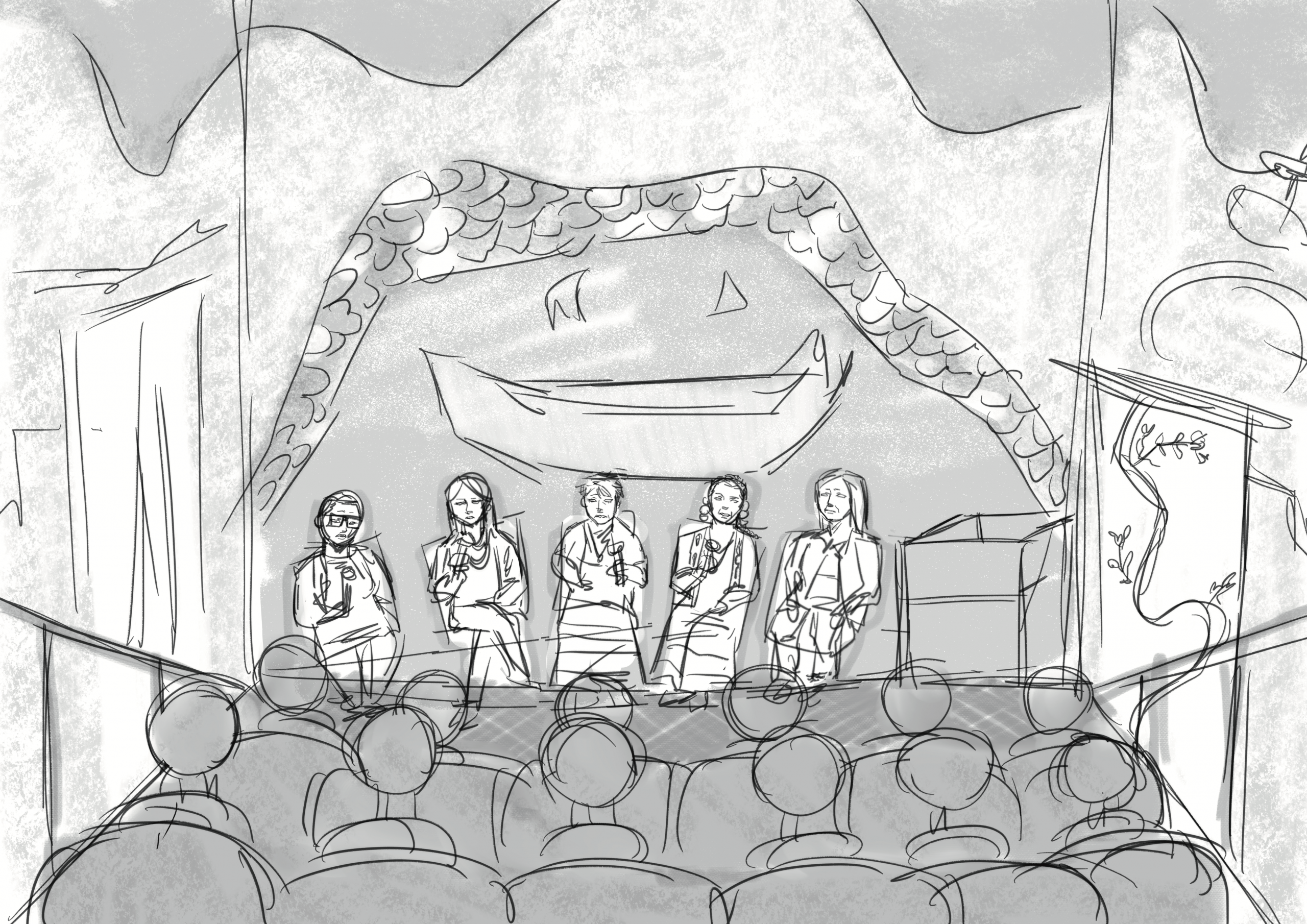
In honour of International Women’s Day, the Centre for Human Rights Research and Giganwenimaanaanig hosted a panel discussion titled “Gender-Based Violence and Displacement: The Human Cost of War, Colonialism, and the Climate Crisis” on Thursday, March 5th. This discussion explored gender-based violence in the context of conflict, structural violence, and displacement, and the ways in which love — for the lands, waters, and for all our relations — can sustain us.
Watch a recording of the panel below.
Artwork by Aubrey Yuol.
Calling for Justice and Re-Imagining Governance – A Final Report
Calling for Justice and Re-Imagining Governance - A Final Report
May 1, 2026
Hope Ace, Sandra DeLaronde, Adele Perry, Pauline Tennent, Kiera Ladner, Shawna Ferris, Ashley Daniels, Kyra Campbell, and Brenda Gunn
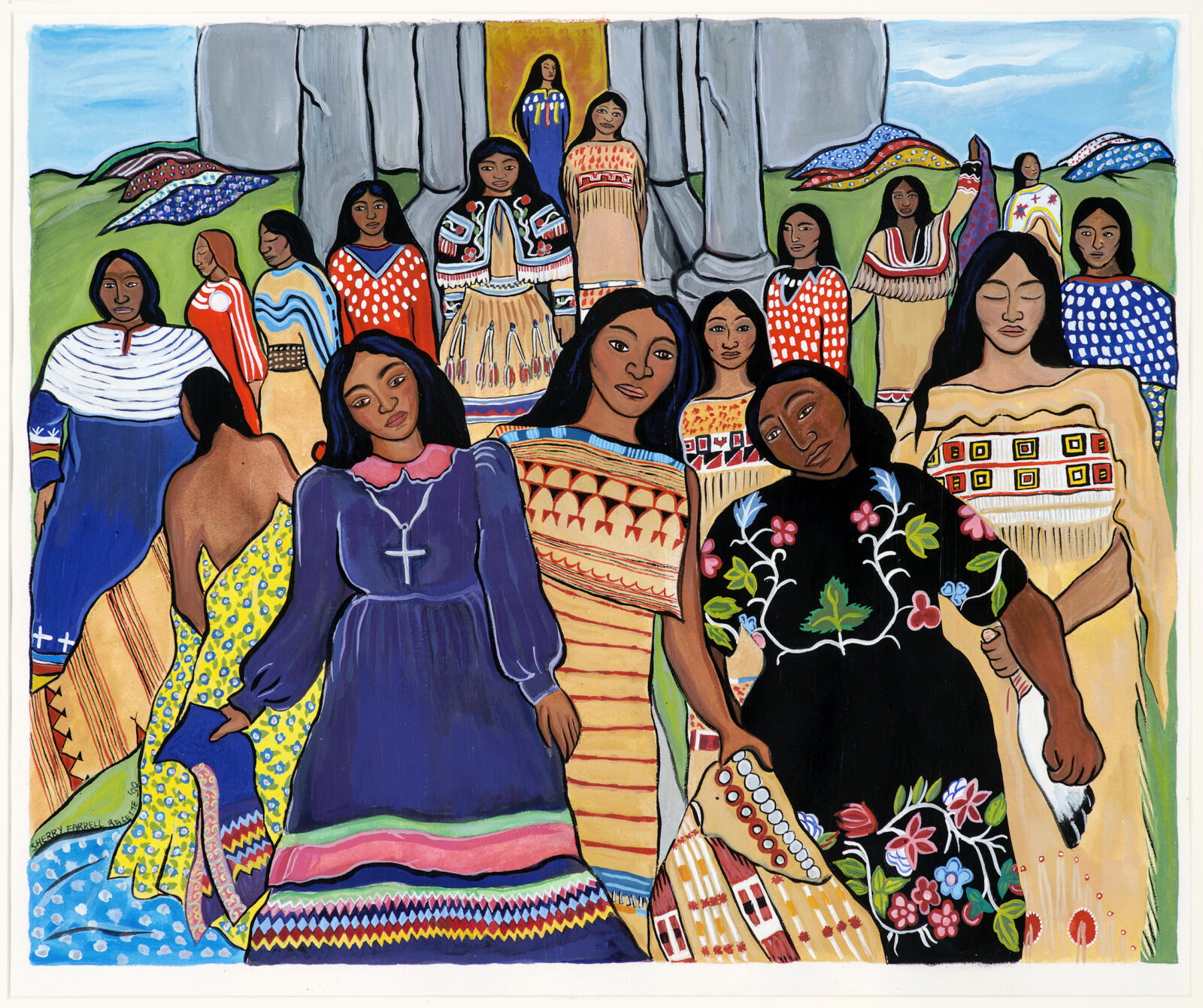
Inspired by and responding directly to the Calls for Justice offered in the National Inquiry on Murdered and Missing Indigenous Women and Girls Final Report, in particular Call 1.4 which demands “urgent and special measures to ensure that Indigenous women, girls and 2SLGBTQQIA people are represented in… governance and leadership,” the “Calling for Justice and Re-Imagining Governance” project contributes to the ongoing work of Indigenous women, girls, Two-Spirit, and gender-diverse kin who are actively working to stop a genocide through their leadership and governance. The aim of this project is to propose new systems of governance and expressions of self determination which centre gendered realities. This report synthesizes the key findings from the project.
bell hooks mural
April 1, 2026
Bruno de Oliveira Jayme
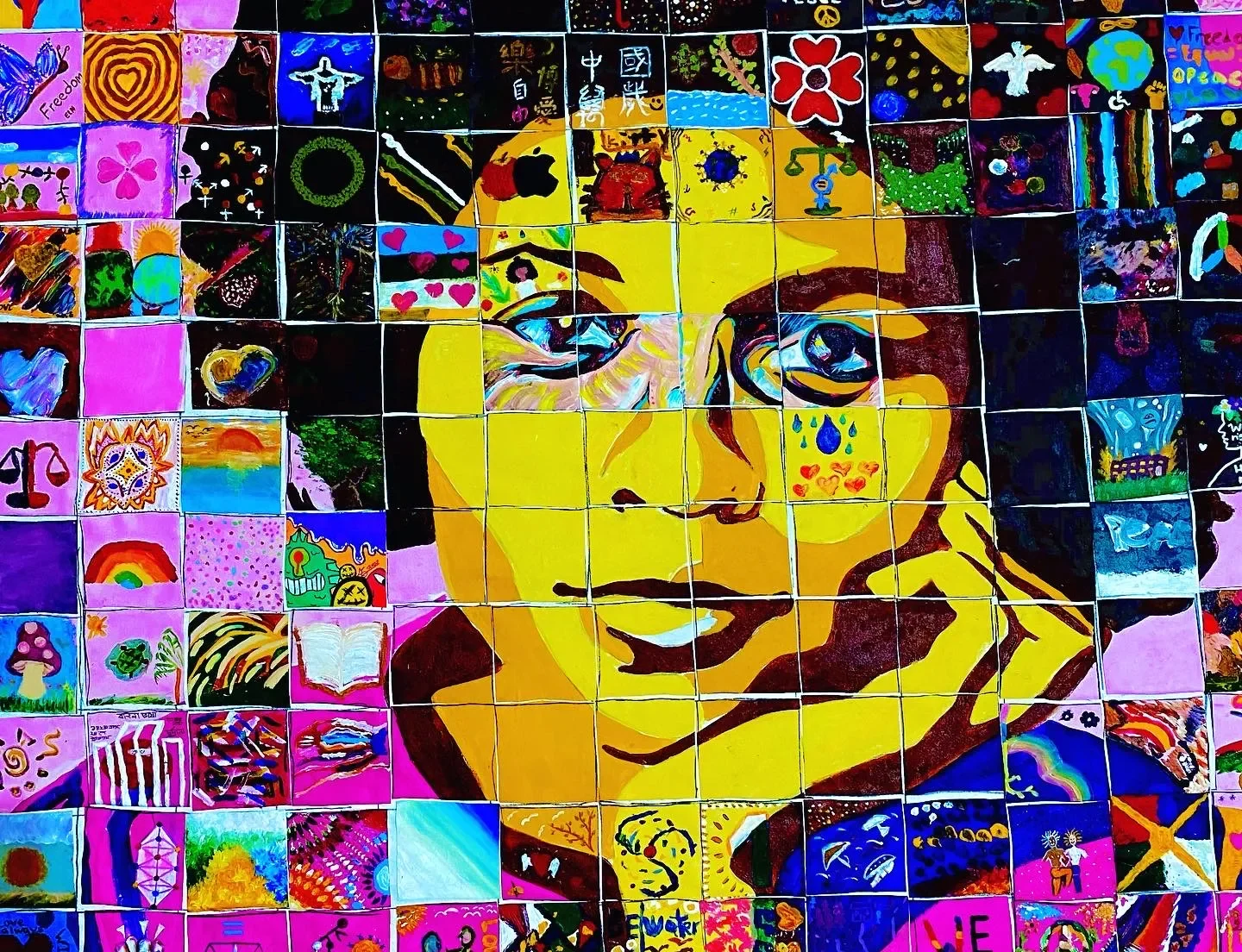
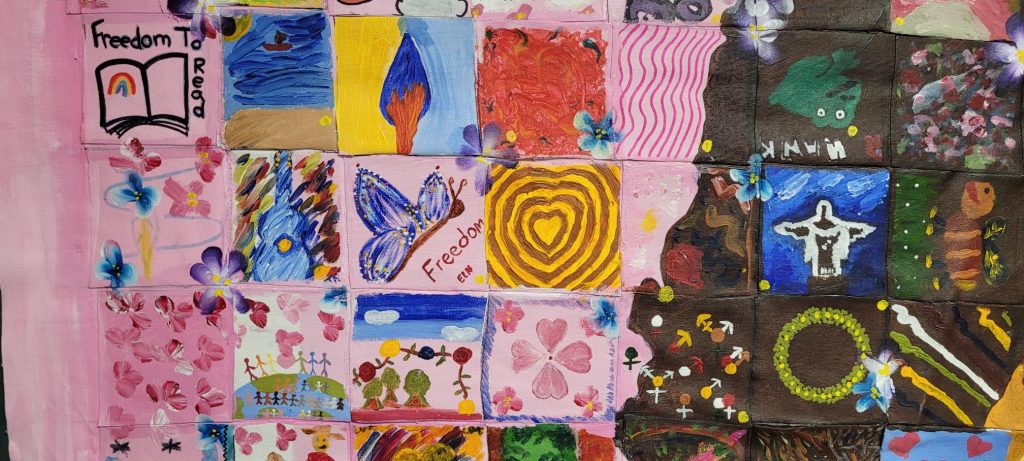
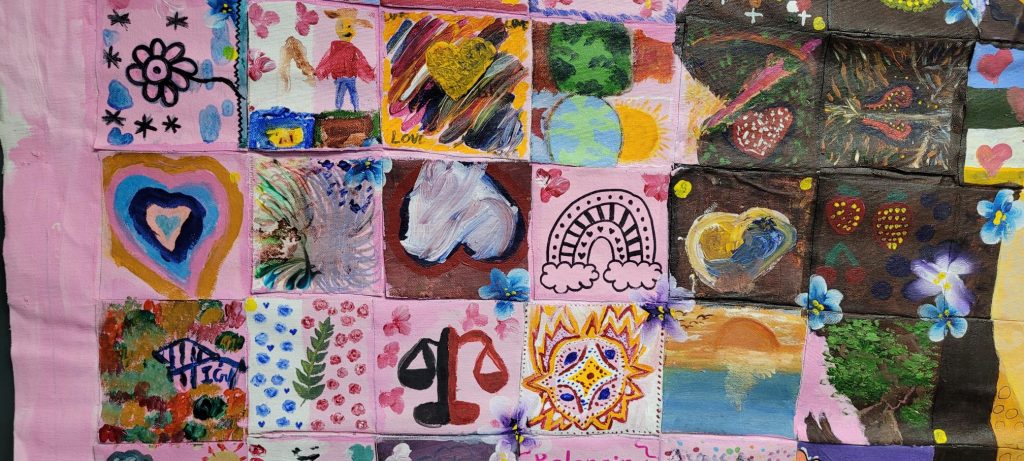
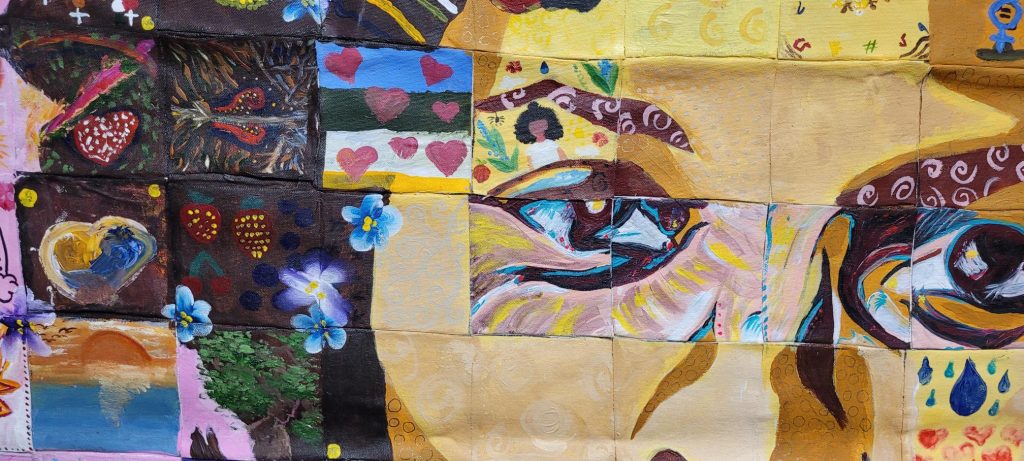
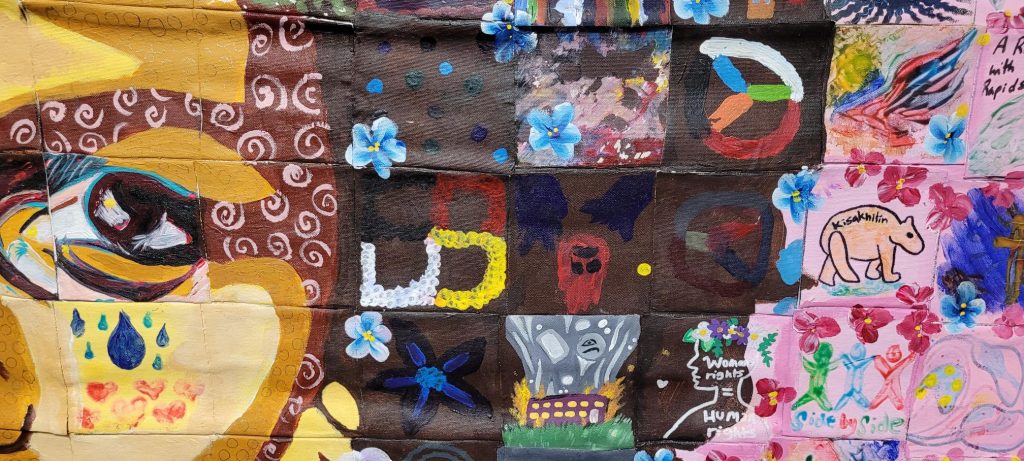
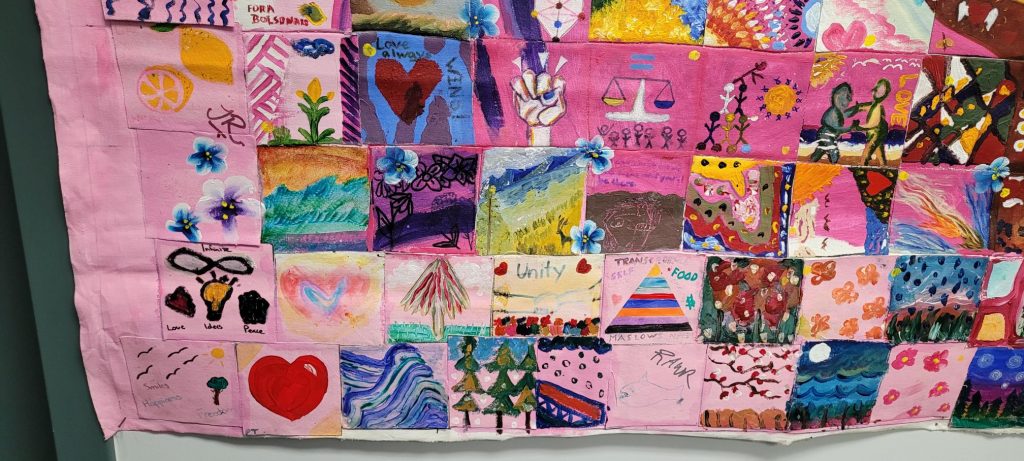
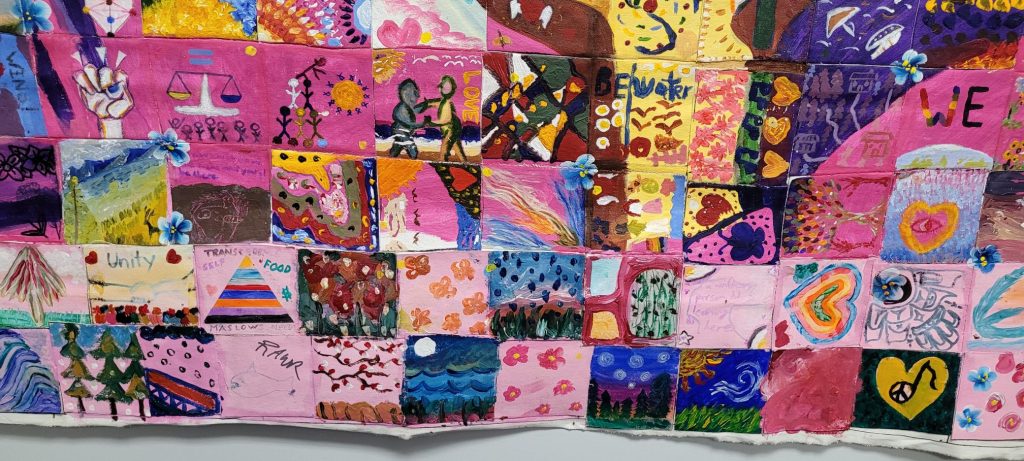
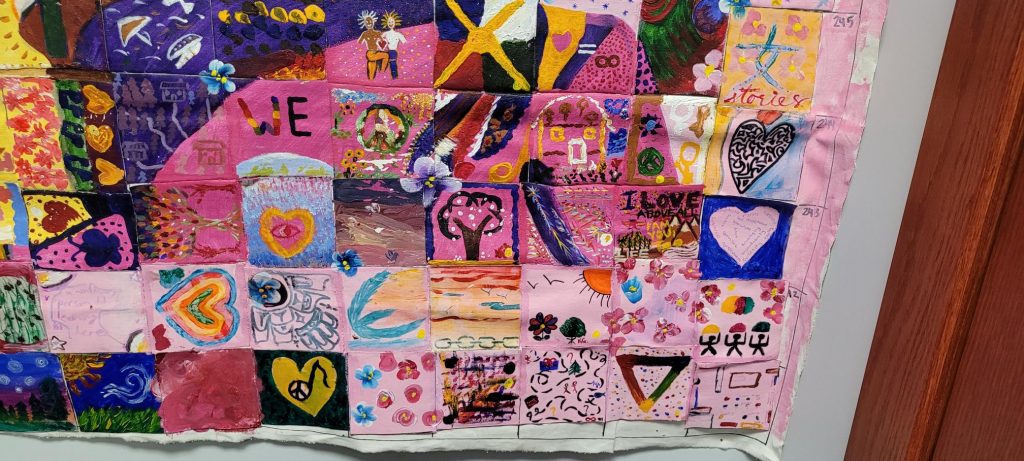
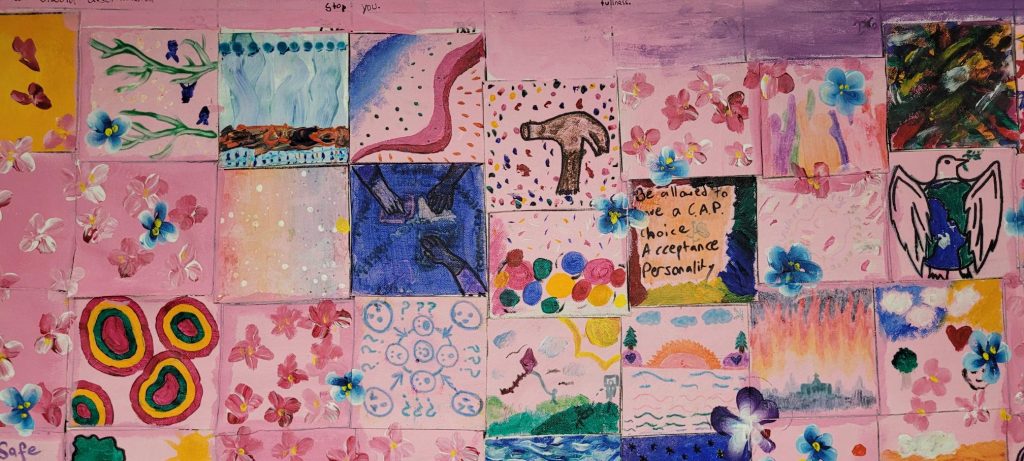
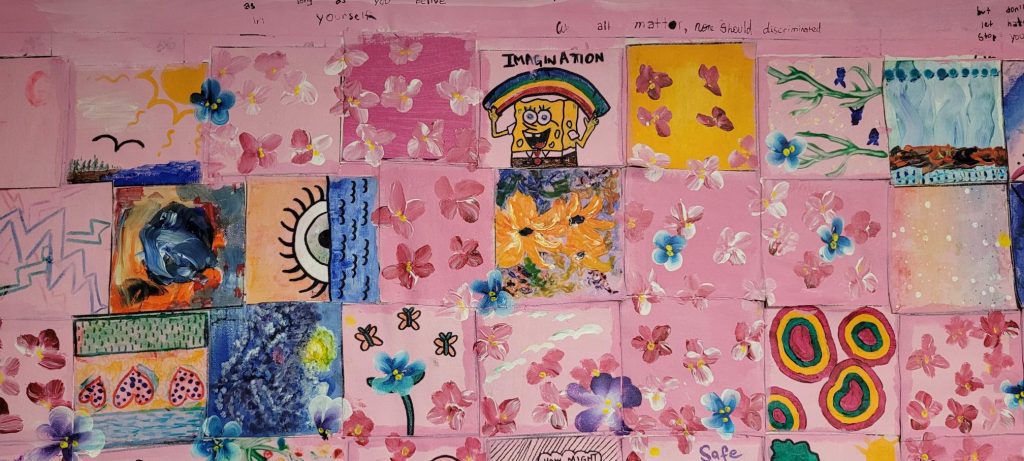
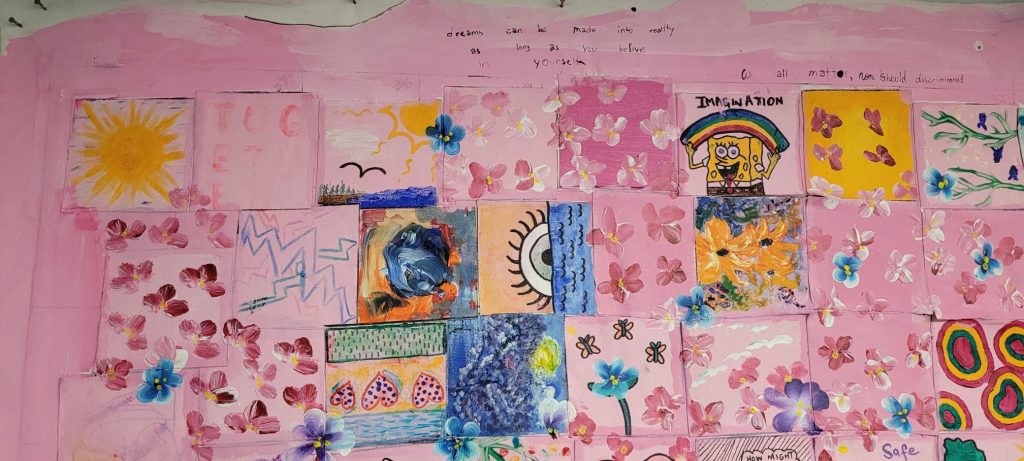
About the Artwork
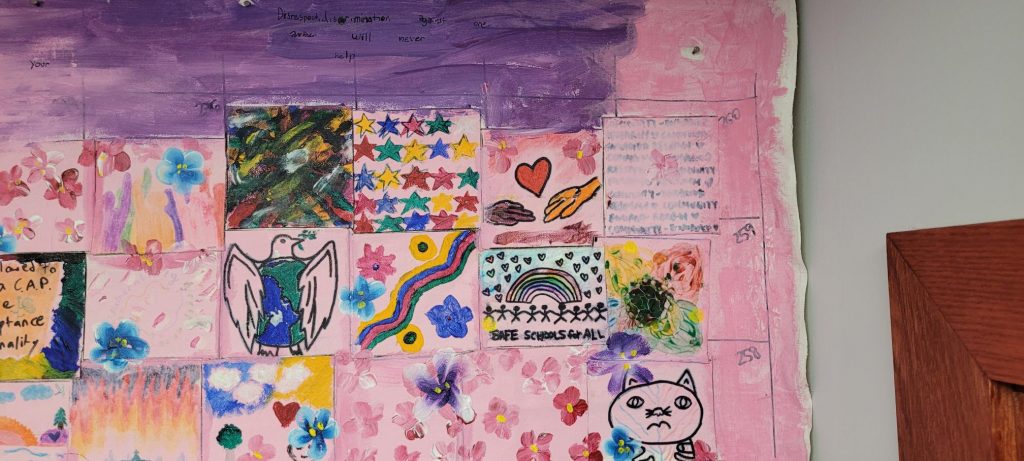
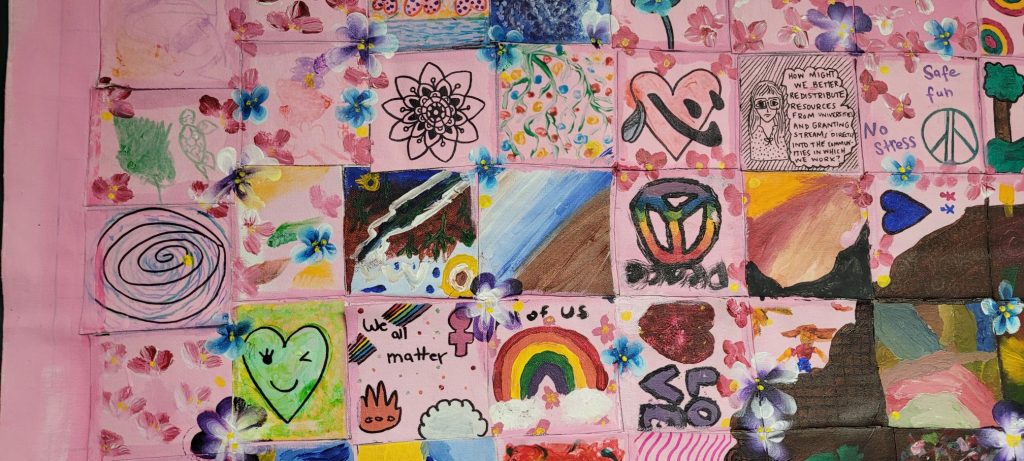
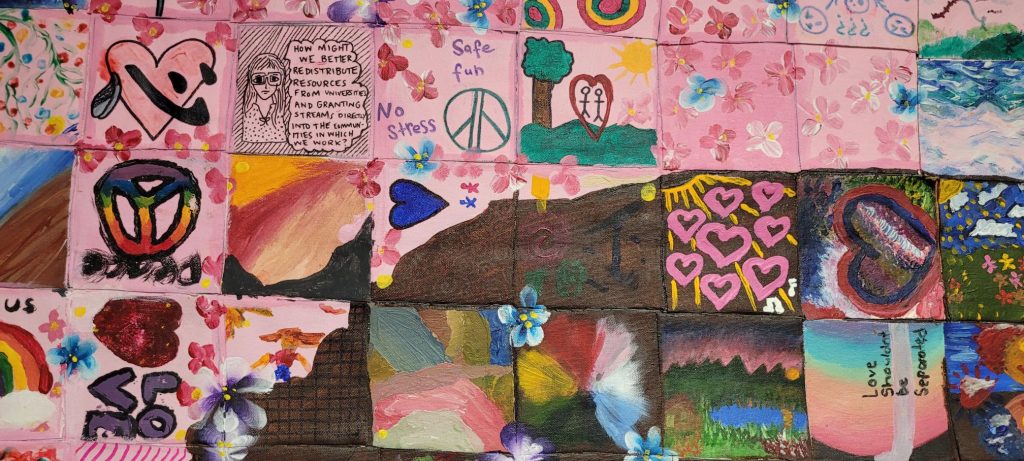
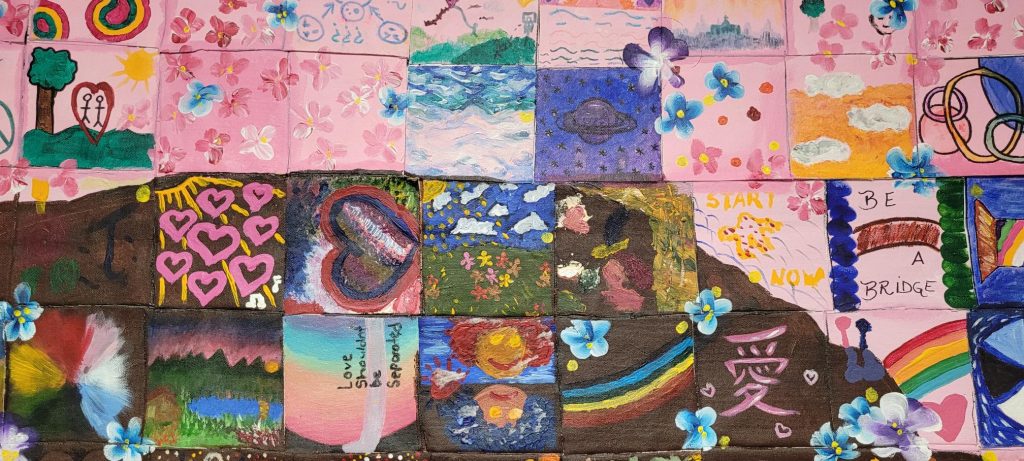
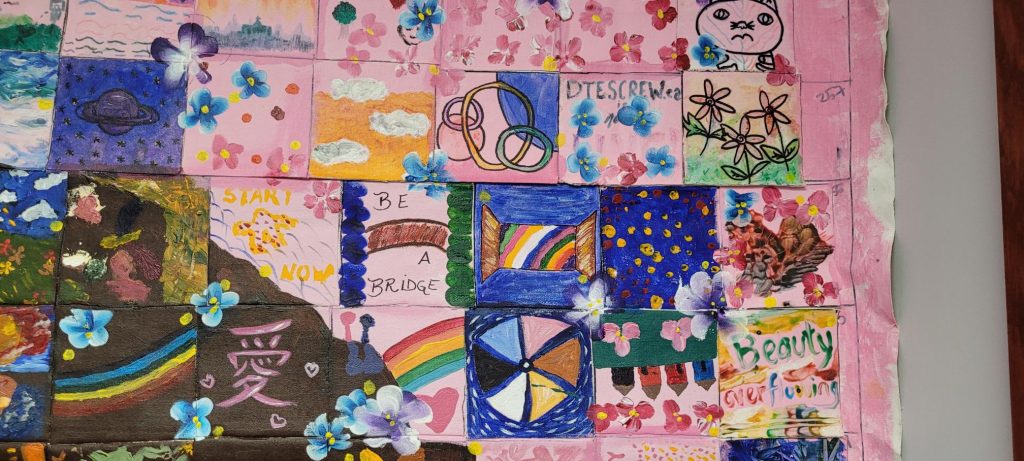
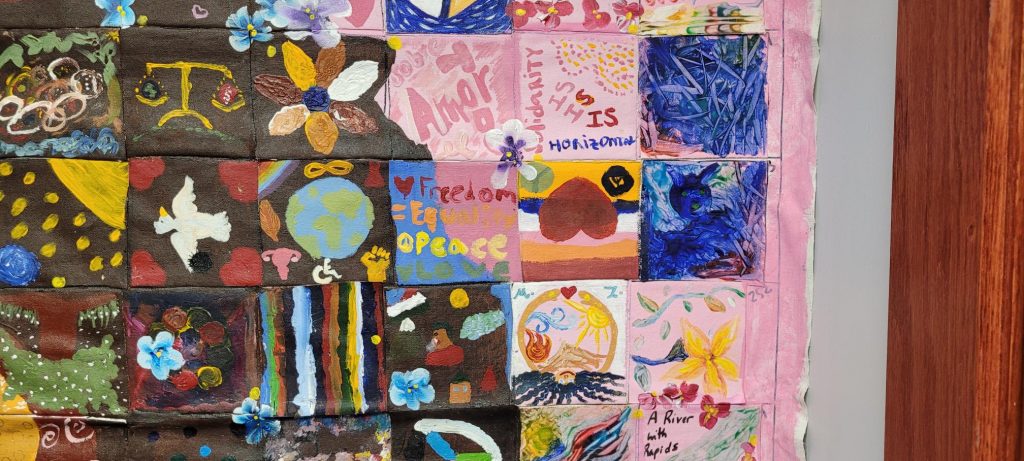
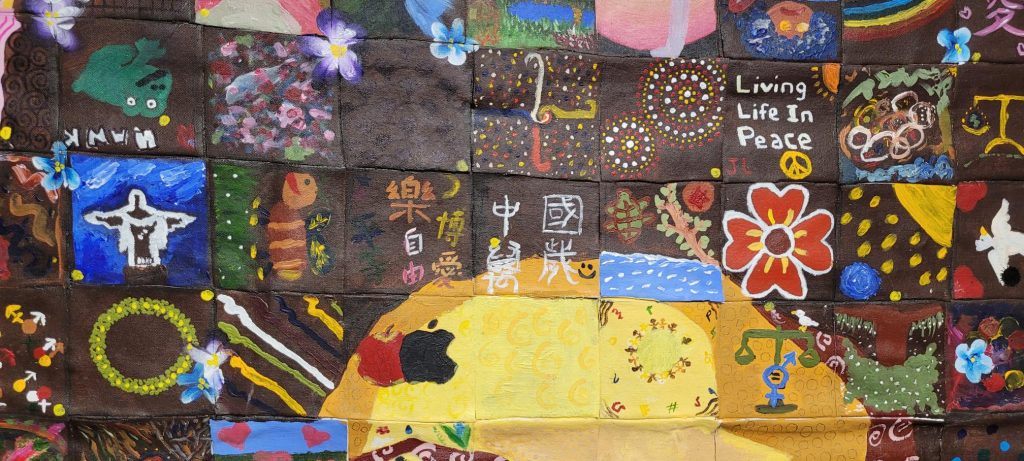
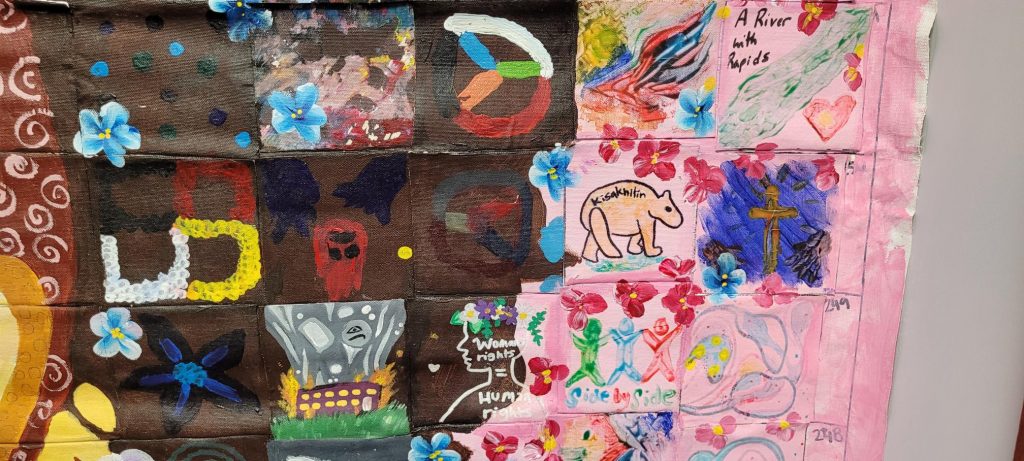
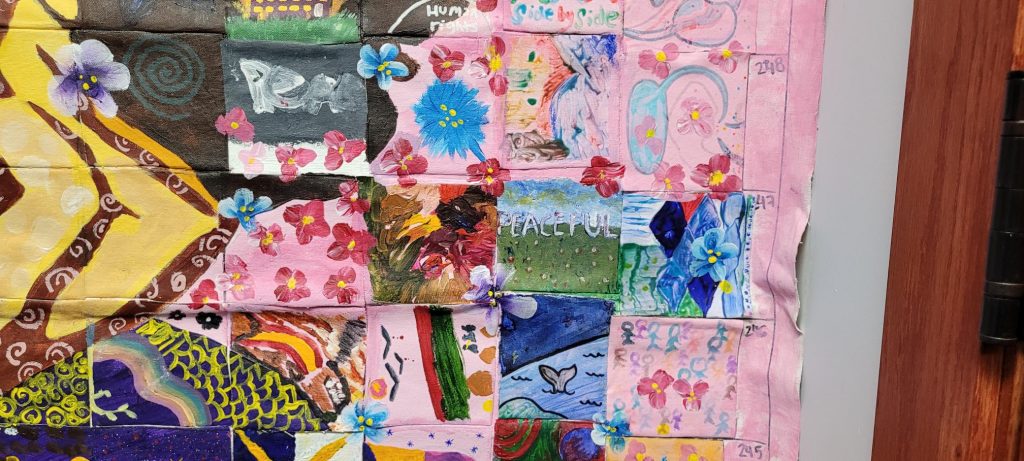
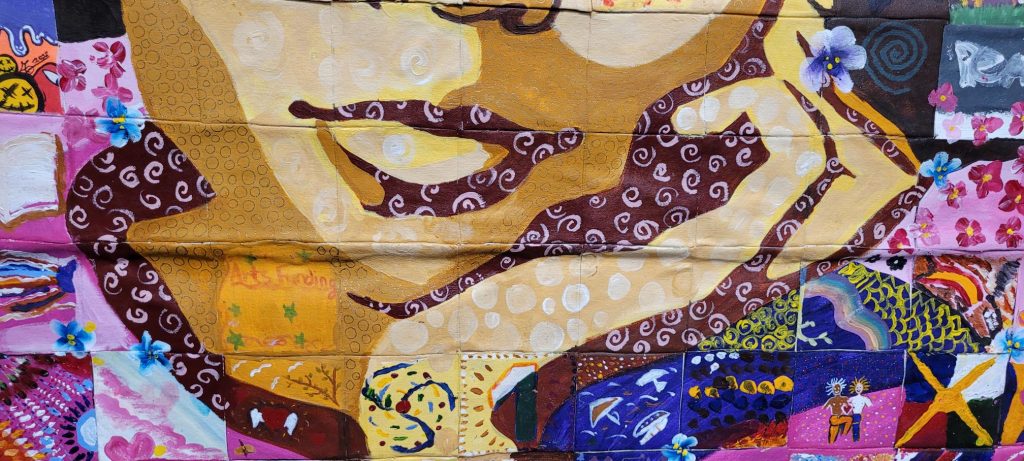
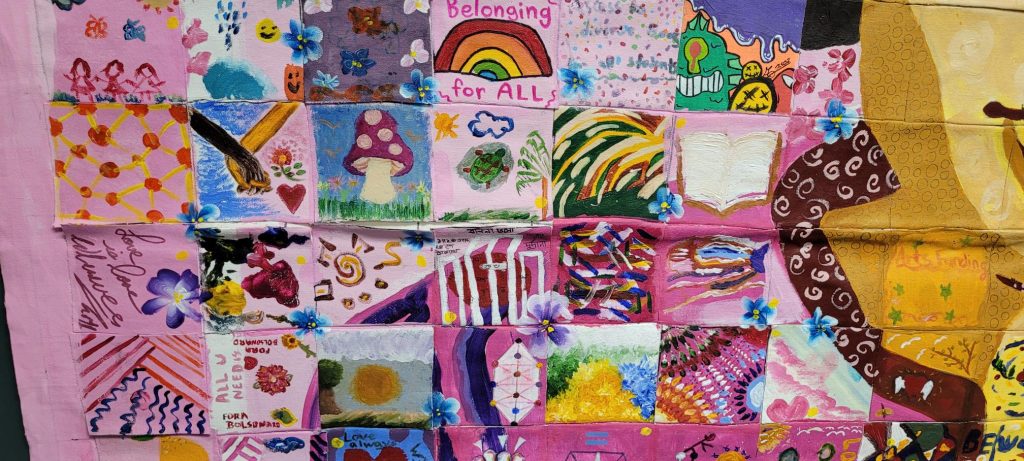
This mural was created by Dr. Bruno de Oliveira Jayme as a collective art piece from his travels around the world. The mural reflects Dr. de Oliveira Jayme’s teaching pedagogy, which uses art as a way of learning about issues in social justice alongside one another. Each piece of the artwork was made by event participants who were given a 10×10-inch piece of canvas to paint or write on as guided by a prompt. To learn more about the making of the mosaic, read a chapter from Dr. de Oliveira Jayme on The Emerald Handbook on Teaching Global Competencies published in 2026 on the creation of the mosaic.
The mural is now displayed in the office of the Department of Women’s and Gender Studies at the University of Manitoba.
…people come to the events… and they receive a 10 by 10 little square, not very intimidating. Because when you ask adults to paint something, to make art, it’s scary… But when you ask them to paint something in a little scary, it’s not that intimidating because it’s not very big. And I give them a prompt. And so they did, and once they did, we assembled the pieces together. And a larger collective image formed. But it was so not scary because it was just a small piece that they were able to tell their stories through that little square. It’s so important for the collective because if one square is missing… the whole story is going to be compromised. So that’s what I’m saying. Art helps us have these difficult conversations in a light manner. The idea of community is very important… Community is an art of its own.”
Bruno de Oliveira Jayme, Humans, On Rights (March 2026)
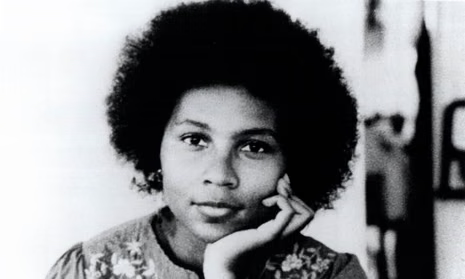
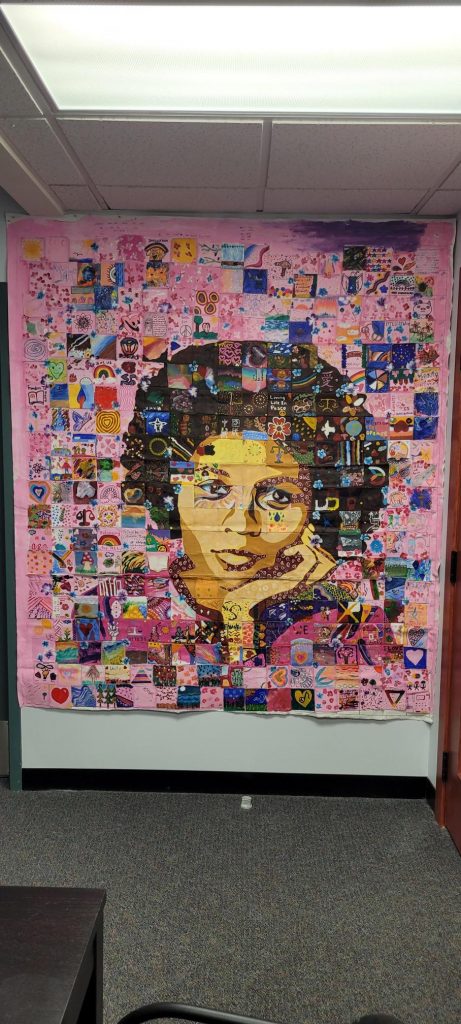
bell hooks (1952-2021)
Author, Feminist, Activist and Scholar
From the National Museum of African American History and Culture
Born Gloria Jean Watkins to working-class parents in 1952, bell hooks grew up in the segregated city of Hopkinsville, Kentucky. Her interest in poetry began at a young age as she recited the likes of Gwendolyn Brooks, Langston Hughes and Elizabeth Barrett Browning for her church community.
Despite having work published in her Sunday school magazine, hooks did not always receive praise for her writing. Always ridiculed for “talking back,” or in her perspective, daring to speak to an adult as an equal, hooks developed a sense of defiance about her. As she pursued writing, she decided to take the name “bell hooks” after her great-grandmother, Bell Blair Hooks, who was known to have sharp opinions. She chose to spell her name in lowercase to shift attention toward her ideas rather than toward her identity.
hooks received her bachelor’s degree from Stanford University and was just 19 when she began working on the draft for her first book, Ain’t I a Woman: Black Women and Feminism. After receiving her master’s degree at the University of Wisconsin-Madison and her doctorate at the University of California, Santa Cruz, hooks published her book in 1981.
Ain’t I a Woman: Black Women and Feminism began a long literary career for hooks. She went on to publish over 40 books, and she won the National Book Award for Fiction and the Pulitzer Prize for Poetry. In her book, Remembered Rapture: The Writer at Work, hooks writes, “Writing is my passion. It is a way to experience the ecstatic. The root understanding of the word ecstasy—“to stand outside”—comes to me in those moments when I am immersed so deeply in the act of thinking and writing that everything else, even flesh, falls away.” Her most notable works, including 1994’s Teaching to Transgress: Education as the Practice of Freedom and 2000’s All About Love: New Visions, further influenced generations of feminists, educators and artists to approach their work with love and purposefulness.
After teaching at Yale, UC Santa Cruz, Oberlin College and San Francisco State University, hooks joined Berea College in Kentucky as a “Distinguished Professor in Residence” in 2004. In 2010, Berea College opened the bell hooks Institute, which serves as a center for hooks’ poems, novels and personal artifacts.
Creating over 70 pieces of published work ranging from films to children’s books, hooks will be remembered as a force in feminist theory and in cultural criticism. Inspiring a multitude of Black and women writers after her, hooks displayed to the world that the best way to make an impact is by “talking back.” And she desired that all people, female and male, be liberated from sexist patterns, domination and oppression.”
Read more of bell hooks’ work
- Ain’t I a Woman: Black Women and Feminism (2006)
- All About Love: New Visions (2001)
- Appalachian Elegy: Poetry and Place (2012)
- Art on My Mind: Visual Politics (1995)
- Belonging: A Culture of Place (2009)
- Black Looks: Race and Representation (1992)
- Bone Black: Memories of Girlhood (1997)
- Breaking Bread: Insurgent Black Intellectual Life (1991)
- Communion: The Female Search for Love (2002)
- Feminism is for Everybody: Passionate Politics (2000)
- Feminist Theory: From Margin to Center (1984)
- Killing Rage: Ending Racism (1995)
- Outlaw Culture: Resisting Representations (1994)
- Reel to Real: Race, Class, and Sex at the Movies (2008)
- Remembered Rapture: The Writer at Work (1999)
- Rock my Soul: Black People and Self-Esteem (2004)
- Salvation: Black People and Love (2001)
- Sisters of the Yam: Black Women and Self-Recovery (1994)
- Talking Back: Thinking Feminist, Thinking Black (1989)
- Teaching Community: A Pedagogy of Hope (2003)
- Teaching Critical Thinking: Practical Wisdom (2009)
- Teaching to Transgress: Education as the Practice of Freedom (1994)
- The Will to Change: Men, Masculinity, and Love (2004)
- We Real Cool: Black Men and Masculinity (2003)
- When Angels Speak of Love (2007)
- Where We Stand: Class Matters (2000)
- A Woman’s Mourning Song (1993)
- Wounds of Passion: A Writing Life (1999)
- Yearning: Race, Gender, and Cultural Politics (1990)
Embracing Water Generosity and Justice as Hope for Women’s Rights
Embracing Water Generosity and Justice as Hope for Women’s Rights
Jennifer Chinoye Amadi with contributions from Sarah Deckert and Pauline Tennent
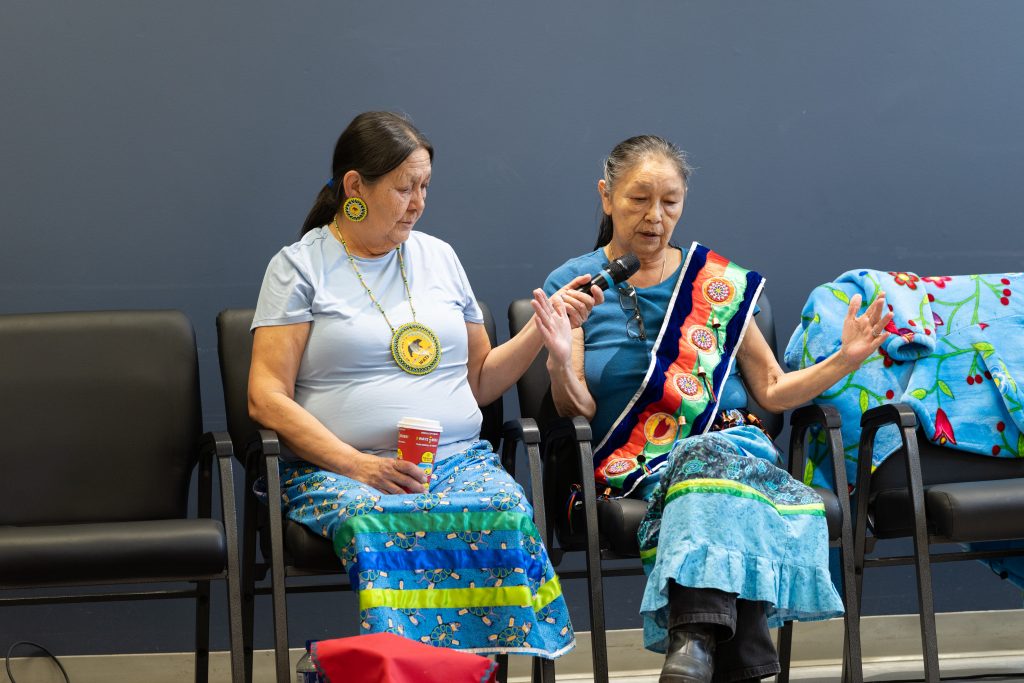
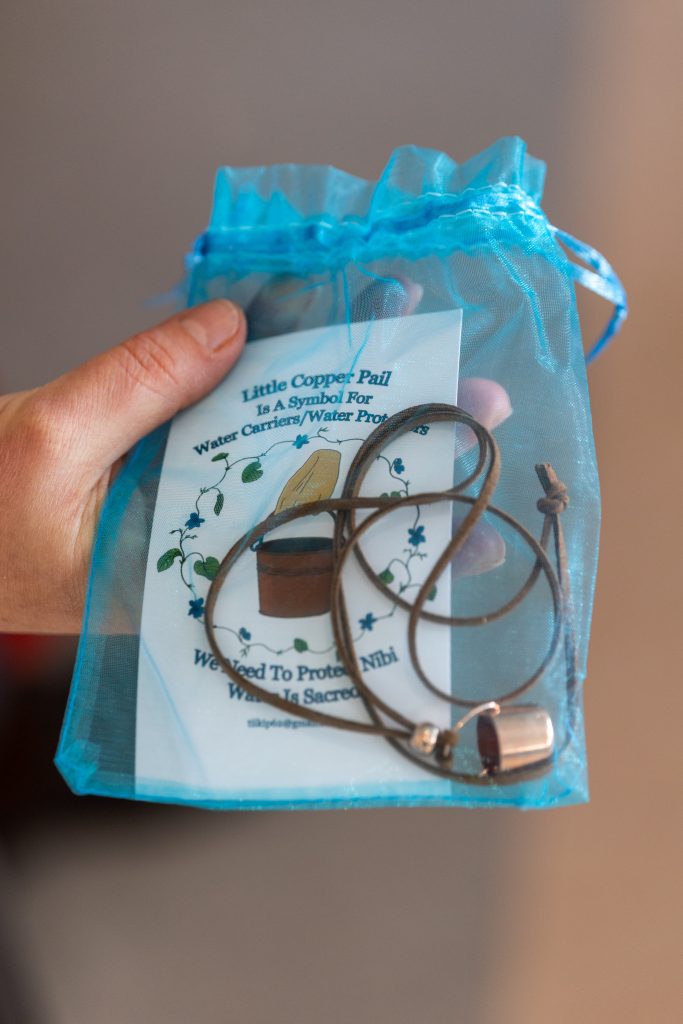
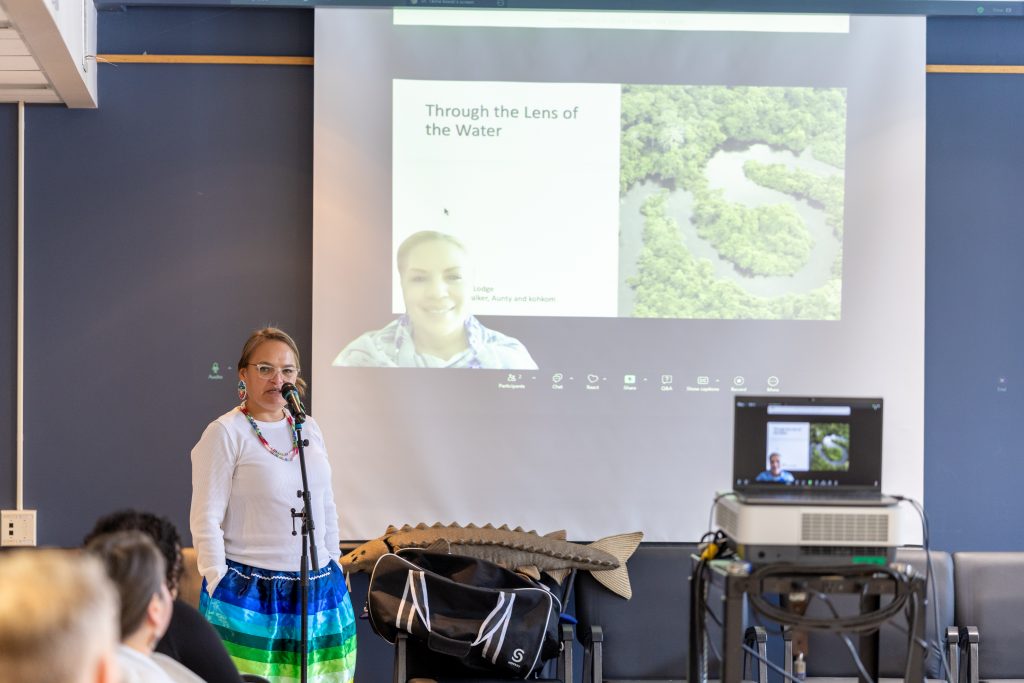
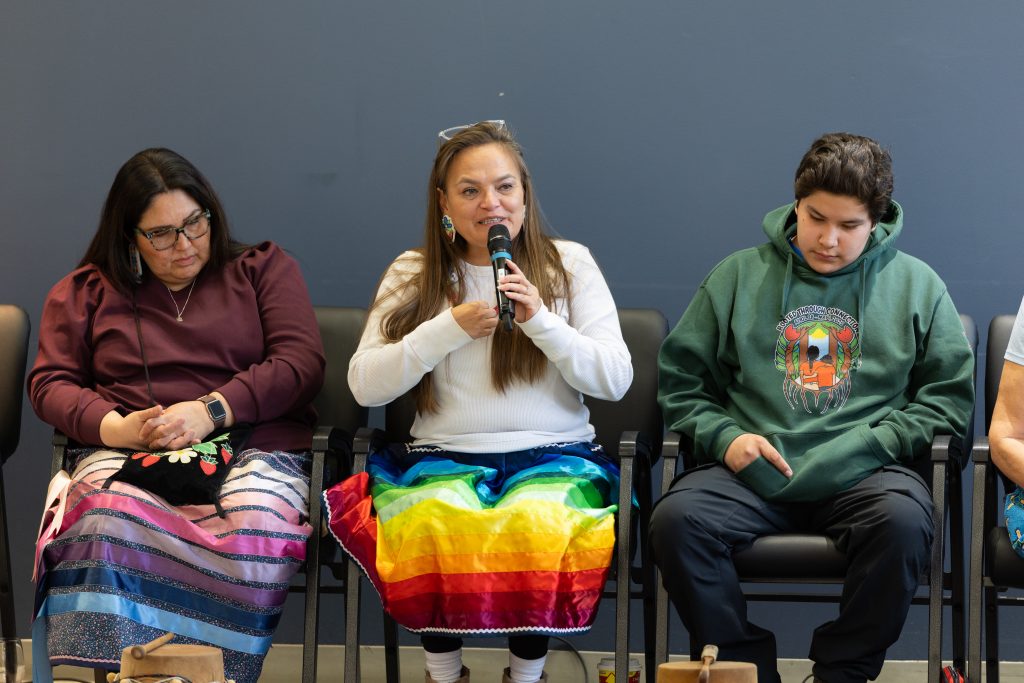
On March 17, 2026, Just Waters hosted an event titled “Respecting That Which Gives Us Life.” We were privileged to take part in a water ceremony and to learn from Nookomis Hilda Atkinson and Nookomis Louise Pierre, Roseau River Anishinaabe First Nation. Joined by their children and grandchildren, we saw these younger generations taking up sacred responsibilities to the water.
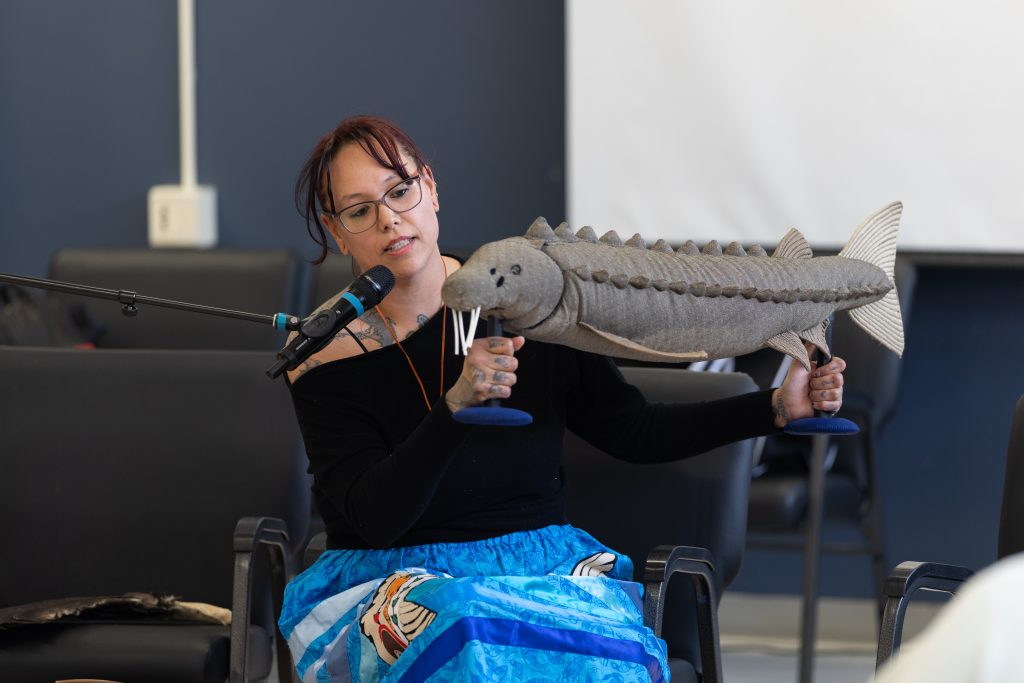
In the afternoon, Dr. Tasha Beeds spoke powerfully about her experiences participating in water walks across Canada and the United States and raising awareness about the condition of our water systems. Taylor Galvin and Kookum Nameo engaged us with stories and teachings about the sturgeon and we learned how Manitoba Hydro is impacting the sturgeon. Taylor and Kookum Nameo asked us to consider what we could do to protect the waters and the sturgeon.
Just Waters Student Researcher Jennifer Chinoye Amadi shares her reflections on World Water Day and “Respecting That Which Gives Us Life” in the following blog post titled “Embracing Water Generosity and Justice as Hope for Women’s Rights.”
Embracing Water Generosity and Justice as Hope for Women’s Rights
As you reflect on World Water Day, consider water justice as giving back to the water as much as we take from it. Water shields us as embryos and offers us a plethora of grace by supporting our birth into the world. It helps us to clean our bodies, cook our meals, nourish our bodies, and grow our foods. Water can provide us with emotional comfort and mental clarity with its beauty.
Beyond the fundamental and essential benefits that we derive from water, it can keep us safe from raging wildfires and prevent many human and animal displacements that come with fire outbreaks[i]. Think of many other ways water has given to you and continues to give to you. Now think about what happens to the waters when we dump things like refuse and sewage into them. Water, as we know it, is considered an incredibly finite resource and has in different ways become a site of conflict across the world.
While we can agree on the importance of water for human well-being and survival, certain human activities like capitalist initiatives and development agendas can make water unsafe for our use. The impacts of these actions, at worst, affect everyone. However, women and girls suffer differently, and in particular, those living in rural and Indigenous communities around the world bear the heavy burden of unsafe water and inequitable access to water. For example, at Six Nations of the Grand River, an assessment study shows how unsafe water affects maternal mental health.[ii] The study highlights how pregnant women during their post-partum period were not able to access clean running water to protect their newborns from getting infections, and to prepare food for their babies. The impact of water pollution extends to their inability to perform life-affirming spiritual ceremonies during pregnancy and birth, ultimately cutting off their ability to access support for their post-natal recovery with traditional medicines.
Similarly, when there is conflict over water, which is driven most of the time by the capitalist and corporate quest for lucrative ventures, women suffer the most by bearing the negative impact of such initiatives and are not typically consulted in decision-making. One example of this is the binational Arrowhead-Weston project that carries electricity from a dam in Manitoba through Minnesota and Wisconsin.[iii] Women remain the least consulted groups in the decision-making process and in water governance, even when they are most vulnerable to the negative impact of such initiatives. For example, as caregivers, women and girls deal with the exhaustive weight of worry associated with finding clean and safe water for domestic use and hygiene due to faulty water treatment systems.[iv] Actions like this do nothing other than heighten women’s exclusion and oppression and diminish their role in ecological democracy and preservation of water, which gives us life.
The Centre for Human Rights Research at the University of Manitoba, through the Just Waters project, held a water teachings event to remind us that we must respect that which gives us life. As a part of our respectful relationship with water, we owe it our gratitude, to fill it up with life in reciprocity by protecting it and keeping it clean. Speakers at this event described the pain that they experience when they see garbage in the waters, fish killed by pollution, and other harms to the water. This event reminded me to reflect on how I am connected to water, and that whatever I do with water affects every living thing’s well-being and sustenance on Earth. Moreso, I learned that water contains the memories of our ancestors, our grandmothers who came before us, which shifted my perspective on the ripple effects of what we do with and to the waters. I was reminded that our actions to protect waters honor the lives of our ancestors and serve as a tool for transformational change and reclamation, an approach to decolonization through water.
The question of what we are going to do to protect and reciprocate water’s generosity is one we should ask ourselves, as we all have a responsibility to water. Besides coming together for water teachings, we also wanted to leave the event with some commitments to protect waters, both at the individual and institutional levels. This idea was championed by one of the panelists, who work-shopped us into two groups to discuss among ourselves specific and actionable things we can do to foster water reciprocity at our various spaces. Upon reconvening from the group discussions, we agreed that first, at the micro level, as little as resisting the urge to urinate in the river because it is someone else’s home is a good start. This teaching was shared by Knowledge Keeper Ramona Milliea. The concept of discontinuing negligence toward water bodies, a quote from Josephine Mandamin, also resonated with the group.[v]
Secondly, at the meso and macro levels, we will continue engaging our communities to pass down water teachings to seven generations, to rekindle our love for water and reestablish women’s participation in water governance as true guardians of the waters. Additionally, we will deconstruct the colonial way of how we see and use water from a resource to a trust that must be used with mindfulness and reciprocity. Finally, we will reciprocate water’s generosity by standing up to raise awareness because when we all stand tall and together for water, we reassert our positions on water justice, re-enter into a relationship with water, and reconstruct our identity. When we choose generosity to the waters by protecting them, keeping them clean, and upholding them as a sacred trust, we are simultaneously choosing generosity to women. Women, as the traditional guardians of water and the ones who carry life, bear the disproportionate burden of water pollution and conflict. By ensuring water justice and reciprocity, we honour the deep, life-sustaining connection between women and water, reasserting their vital role in ecological democracy and ensuring the well-being of all future generations. Choosing water is also about recognizing the rights and labour that women have always done to care for waters, their work in water governance, and the dignity of women as rights holders.
[i] FN Robinne et al., “Scientists’ warning on extreme wildfire risks to water supply.” Hydrological processes 35, no. 5 (2021): e14086. https://onlinelibrary.wiley.com/doi/full/10.1002/hyp.14086.
[ii] Afroza Sultana et al., “Assessing the impact of water insecurity on maternal mental health at six nations of the Grand River,” Frontiers in Water 4 (2022): 834080,https://www.frontiersin.org/journals/water/articles/10.3389/frwa.2022.834080/full.
[iii] Greta Gaard, “Women, water, energy: An ecofeminist approach,” Organization & Environment 14, no. 2 (2001): 157-172, https://journals-sagepub-com.uml.idm.oclc.org/doi/abs/10.1177/1086026601142002.
[iv] Human Rights Watch, “Make it Safe: Canada’s Obligation to End the First Nations Water Crisis”. June 07, 2016. https://www.hrw.org/report/2016/06/07/make-it-safe/canadas-obligation-end-first-nations-water-crisis
[v] Ayse Gursoz, “Meet Josephine Mandamin (Anishinaabekwe), The “Water Walker,” Mother Earth Water Walk, accessed March 26 2026. https://www.motherearthwaterwalk.com/?p=2845
the places we remember
Just Waters

From June 16 to 18, 2025, a group of scholars,students and artists came together for a writing workshop with Kerri Arsenault and Cory Beizer of The Environmental Storytelling Studio (TESS). Just Waters hosted this workshop to support the creation of an Open Educational Resource that brings together perspectives on water and justice from a diverse set of disciplines. Throughout the workshop, we explored the idea of bringing our whole selves to the writing— the act of being un-disciplined, one could say.
A collection of lightly edited writing exercises, this chapbook acts as a series of snapshots— of places, memories, stories and values that the writers shared with each other throughout the workshop.
About the cover
This fish scale floral has been created digitally versus by hand with physical lake whitefish scales. Using macro photography of an individual flat scale and a cone, the flower is created. This practice moves the creation of fish scale art from the physical to the digital form.
Fish scale art on the cover and inside cover by Erin Konsmo (Red River Métis). https://www.erinkonsmo.com/
Violence Against Women Migrants and Refugees: A Podcast
Violence Against Women Migrants and Refugees: A Podcast
February 23, 2026
GBV-MIG Canada Research Program
This podcast explores the experiences of gender-based violence (GBV) by migrant and refugee women in Canada. As a part of the GBV-MIG Canada Research Program, it aims to show how structural and systemic factors such as policies and legislation shape the violence that migrant and refugee women and girls are likely to experience in Canada.
Episode 1: Migration and Gender-Based Violence (GBV) in Canada with Dr. Lori Wilkinson and Dr. Evie Tastsoglou
In this episode, host Dr. Pauline Tennent speaks with Dr. Lori Wilkinson (University of Manitoba) and Dr. Evie Tastsoglou (Saint Mary’s University) about the GBV-MIG Canada Research Program. In particular, they talk about how the project came to be, and provide important background information about gender-based violence (GBV) experienced by migrant and refugee women in Canada.
Listen now:
Episode 2: Systemic Factors of Gender-Based Violence with Dr. Evie Tastsoglou and Dr. Cathy Holtmann
In the second episode of the podcast, host Dr. Pauline Tennent discusses with Dr. Evie Tastsoglou (Saint Mary’s University) and Dr. Cathy Holtmann (University of New Brunswick) about the underlying systemic factors which shape gender-based violence (GBV) for migrant and refugee women (MRW). Using intersectional feminist and social ecological approaches, this episode explores how inequalities and identities shape the social determinants of health and well-being of MRW.
Listen now:
- Yalcinoz-Ucan, B., Tastsoglou, E., Dawson, M. (2025). Tracing Individual Experiences to Systemic Challenges: The (Re)Production of GBV in Migrant Women’s Experiences in Canada, Frontiers in Sociology, Special Research Topic on Gender and the Continuum of Violence in Migration, edited by Tastsoglou E., Dawson, M., Freedman, J., Holtmann, C. Vol. 10 (Open Access).
- Tastsoglou, E. (2025). Gender-Based Violence in a Migration Context: Health Impacts and Barriers to Healthcare Access and Help Seeking for Migrant and Refugee Women in Canada. Societies, 15(3), 68. https://doi.org/10.3390/soc15030068
- Sisic, M., Tastsoglou, E., Wilkinson, L., Dawson, M., Holtmann, C., Falconer, C. (2024). The Continuum of Gender-Based Violence Experienced by Migrant and Refugee Women in Canada: Perspectives from Key Informants. In Special Topic on “Gender and the Continuum of Violence in Migration,” guest-edited by Tastsoglou, E., Dawson, M., Freedman, J., Holtmann. C. In the journal Sociology, Frontiers
Episode 3: What Can Be Done for Migrant and Refugee Women Survivors of GBV? with Dr. Cathy Holtmann and Dr. Lori Wilkinson
For the final episode of this podcast, Dr. Pauline Tennent speaks with Dr. Lori Wilkinson (University of Manitoba) and Dr. Cathy Holtmann (University of New Brunswick). Together, they ask the important question, “What can be done?”, in response to stories of survival and resilience from migrant and refugee women in living through gender-based violence.
Listen now:
- Holtmann, C., Tastsoglou, E., Dawson, M. Wilkinson, L. (2023). Surviving Gender-Based Violence: A Social Ecological Approach to Migrant and Refugee Women’s Settlement. Canadian Ethnic Studies, Special Issue on Gender and Violence in a Migration and Refugee Context: Agency, Resilience and Resistance, edited by Tastsoglou, E. 55(3), 57-77
- Pallabi, B., Songose, L., Wilkinson, L. (2024). A New School and New Life: Understanding the Experiences of Yazidi Children and Youth. Ethics, Rights, Culture and the Humanization of Refugees Anna Kirova, Michael Frishkopf and Yasmeen Abu-Laban, eds. Edmonton: University of Alberta Press.
About the Project
This podcast is a knowledge mobilization initiative from the project, Violence Against Women Migrants and Refugees: Analyzing Causes and Effective Policy Response from the GBV-MIG Canada Research Program. The project is a partnership of four academics and four academic institutions, including Saint Mary’s University, University of Guelph, University of Manitoba, University of New Brunswick.
Funded by the Canada Institutes of Health Research as one of the international partners in the GBV-MIG Project, a winning project of the Gender-Net Plus Consortium.
Connect with us
- Email: gbv-mig@smu.ca
- Website: https://www.smu.ca/gendernet/welcome.html
- Twitter/X: https://x.com/GBV_MIGCanada
- Bluesky: https://bsky.app/profile/gbv-mig-canada.bsky.social


Abortion in Manitoba: A Feminist Community-Based Approach to Abortion Access Research
Abortion in Manitoba: A Feminist Community-Based Approach to Abortion Access Research
January 28, 2026
Hannah Belec
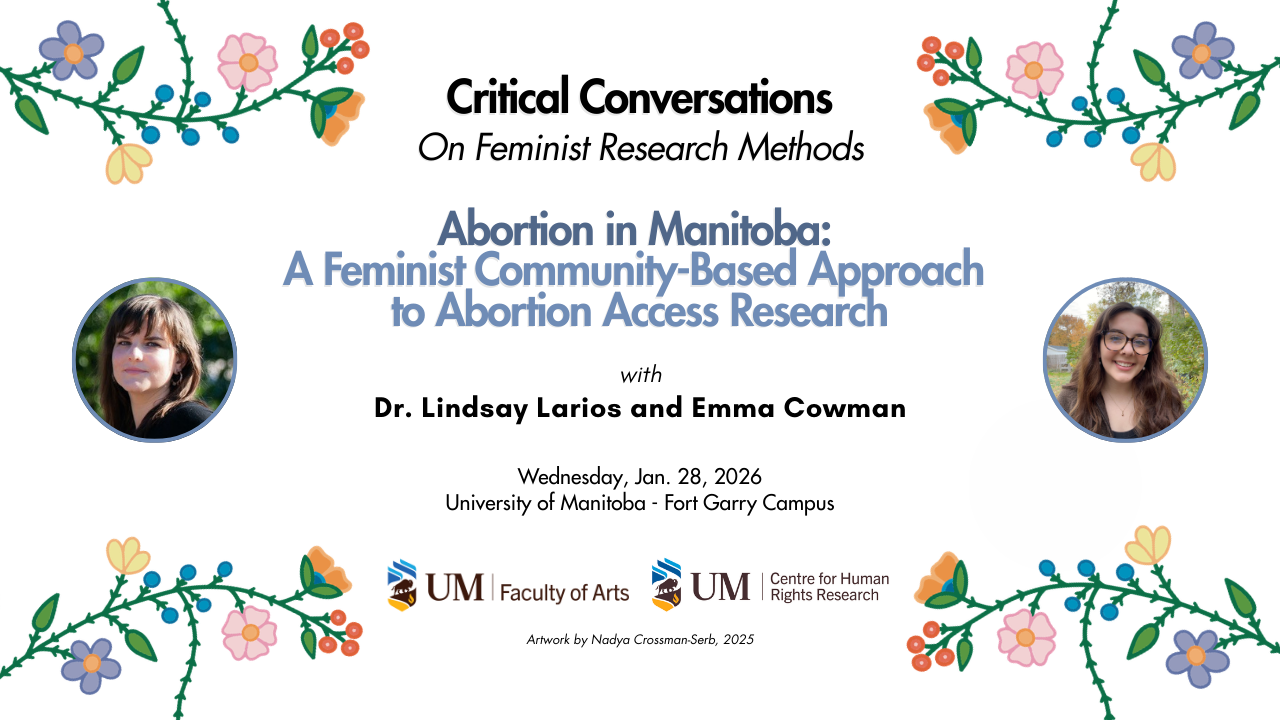
In collaboration with the University of Manitoba Faculty of Arts, the Centre for Human Rights Research hosted Dr. Lindsay Larios and Emma Cowman for a lecture titled ‘Abortion in Manitoba: A feminist community-based approach to abortion access research’. The lecture was held on Wednesday, January 28, 2026 at the University of Manitoba – Fort Garry Campus.
This seminar is a part of our annual Critical Conversations seminar series. This year, the seminar series focuses on feminist research methodologies, exploring various ways research is done within feminist and anti-oppressive scholarship.
Watch the lecture below.
Aadizookaan: Winter Storytelling Gathering
Aadizookaan: Winter Storytelling Gathering
Just Waters
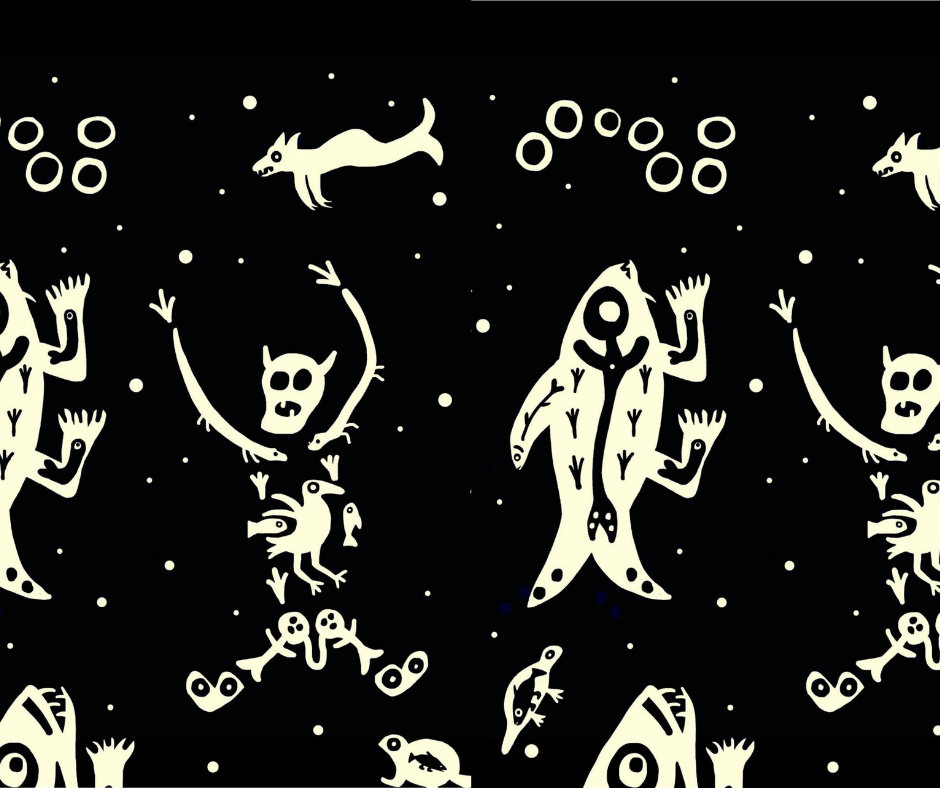
On a wintery Tuesday in January 2026, nearly 150 people gathered at the Manitoba Theatre for Young People at The Forks for Aadizookaan: Winter Storytelling Gathering, envisioned by Knowledge Keeper Ramona Milliea and hosted by Just Waters with support from the University of Manitoba Faculty of Arts.
In a dark, cozy theatre scented with sage and warmed by the crackle of a replica campfire, storytellers Jason Bone, Elder Margaret Lavallee, and Jason Parenteau—guided by MC Rylee Nepinak—shared Anishinaabe teachings in English and Anishinaabemowin with a diverse audience that included secondary students and immersion learners. Through the Anishinaabe Creation Story and other narratives such as Why Bear Has A Short Tail and Why Rabbit Has Long Ears and Feet, the gathering offered moral and ethical principles grounded in natural law, relationships, and respect for water.
Rooted in winter as the season for stories across Turtle Island, Aadizookaan also supported Indigenous language revitalization and holistic learning by honouring oral tradition as a living way to carry memory, strengthen community, and pass teachings across generations. Mi’ iw.
Abortion in Manitoba: An Overview of Care – Community Report
Abortion in Manitoba: An Overview of Care - Community Report
January 21, 2026
Emma Cowman, Lindsay Larios, O. Thomas, and Melanie Paterson
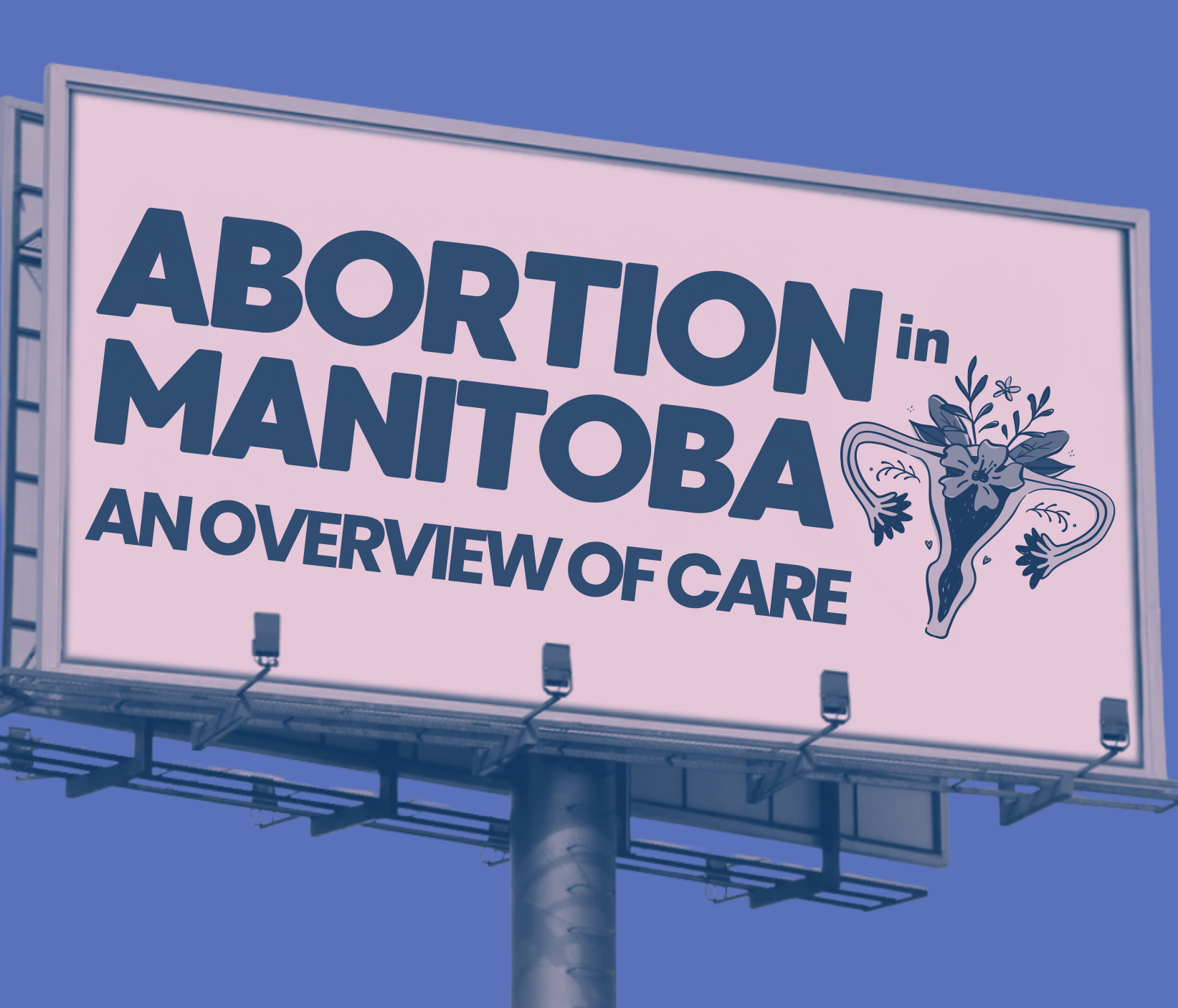
Although abortion is legally treated as a standard medical procedure in Canada, the landscape of abortion access in Manitoba remains shaped by social, political, and geographic realities. People across the province continue to encounter barriers such as long travel distances, limited appointment availability, lack of local providers, abortion an stigma, among other challenges. Collectively, these challenges shape access to abortion care in Manitoba as fragmented, inconsistent, and highly dependent on context.
The Abortion in Manitoba project was developed to document the realities of those who have sought access to abortion care in the province. Drawing on survey responses and narrative interviews, the community report highlights key barriers, sources of support, and gaps in care across all stages of the abortion experience. The findings and recommendations aim to inform policy, healthcare practice, and community advocacy, and to support more equitable, accessible, and just abortion care in Manitoba.
Contact Us
We’d love to hear from you.
442 Robson Hall
University of Manitoba
Winnipeg, Manitoba
R3T 2N2 Canada
204-474-6453
Quick Links
Subscribe to our mailing list for periodic updates from the Centre for Human Rights Research, including human rights events listings and employment opportunities (Manitoba based and virtual).
Traditional Territories Acknowledgement
The University of Manitoba campuses are located on the original lands of the Anishinaabeg, Ininiwak, Anisininewuk, Dakota Oyate, Dene and Inuit, and on the National Homeland of the Red River Métis.

Centre for Human Rights Research 2023© · Privacy Policy