A Report on Period Poverty and Equity, On Campus and Beyond

June 2024

Pauline Tennent, et al.
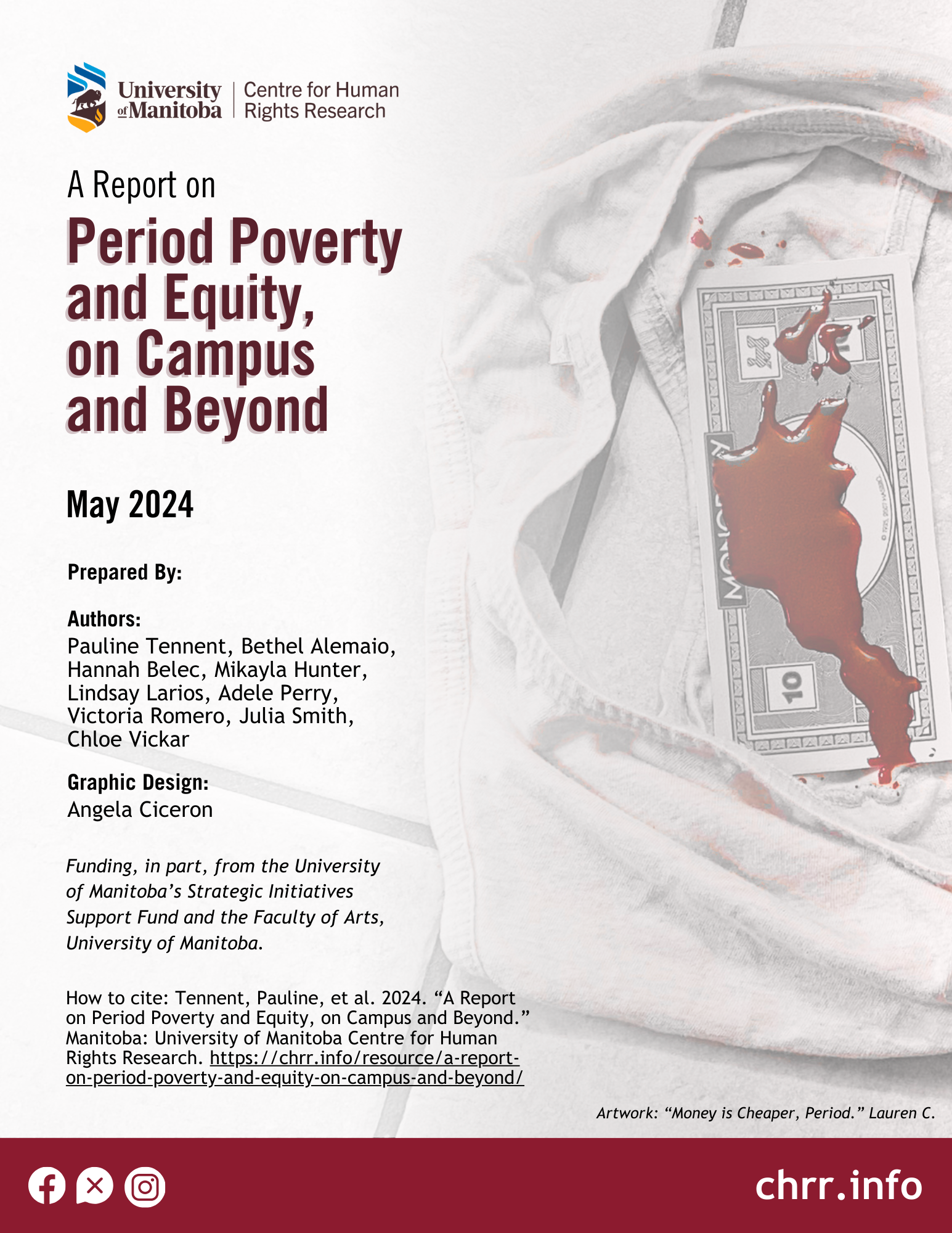
Cover Page of Period Poverty and Equity Final Report. It features artwork of a pair of underwear, with monopoly money on top, covered in what appears to be blood.

In 2023, with funding from the Centre for Human Rights Research (CHRR), the Faculty of Arts, and the University of Manitoba’s Strategic Initiatives Support Fund, a group of researchers affiliated with the CHRR came together to explore and address menstrual equity on campus. The “Period Poverty and Equity, On Campus and Beyond” project undertook a campus audit of washrooms to assess availability of menstrual supplies, a survey open to UM students, staff, and faculty, as well as a number of outreach events.

Working towards period equity is not as a charitable endeavour to be ameliorated by donations of period supplies; rather menstrual equity is an issue of justice. Shifting the conversation from period poverty to menstrual justice means asking that all people who menstruate be provided with the resources, tools, and infrastructure to do so with safety and dignity.

Support Us

Whether you are passionate about interdisciplinary human rights research, social justice programming, or student training and mentorship, the University of Manitoba offers opportunities to support the opportunities most important to you. 

DONATE
15090

Migrant Reproductive Justice: Perinatal and abortion care with precarious immigration status with Dr. Lindsay Larios

April 2, 2024

Dr. Lindsay Larios

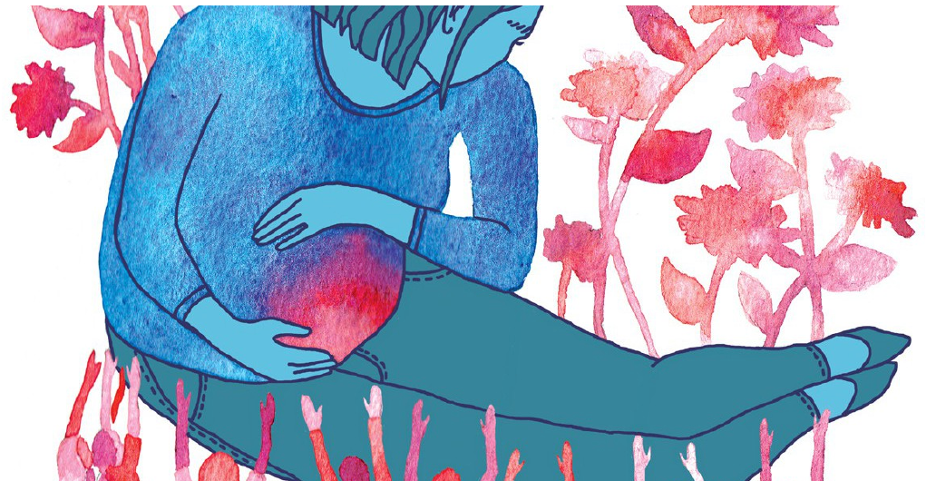
Artwork of pregnant person sitting down holding their belly, while being held up by the hands of others.

On April 2, 2024, the Centre for Human Rights Research (CHRR) hosted Dr. Lindsay Larios (UManitoba) for a seminar titled “Migrant Reproductive Justice: Perinatal and abortion care with precarious immigration status.”

Dr. Lindsay Larios is an interdisciplinary critical policy researcher and assistant professor of social work at the University of Manitoba. She studies citizenship and immigration in the Canadian context, in particular, as it intersects with family and reproductive politics and policies. Her most recent work focuses on the politics of pregnancy and childbirth and precarious migration as an issue of reproductive justice. 

This seminar is a part of our annual Critical Conversations seminar series. This year, the seminar series focused on the CHRR’s research theme Reproductive and Bodily Justice and explored histories of the body, reproduction, and care in Canada and beyond.