
Interconnections of Water and Menstrual Justice: Understanding Water Justice as a Menstrual Justice Issue in Canada
July 9, 2026
Emma Cowman
Menstrual justice is deeply interconnected with water justice, yet these topics remain largely siloed in policy and research—particularly in Canada, where water access is often assumed to be a non-issue. However, existing literature reveals that inadequate water and infrastructure significantly affect menstrual hygiene, dignity, and health, which are key to achieving menstrual justice. While much of the research on menstruation and water is focused on the Global South, the reality of water access, infrastructure, and injustices for menstruators in the Global North, particularly in Canada, remains vastly overlooked. In Canada, unhoused individuals, incarcerated populations, and Indigenous peoples disproportionately experience water insecurity in addition to facing limited or costly access to menstrual supplies. Without access to clean water and hygiene resources, menstruators face heightened risks to their health and safety, while also being denied the ability to manage their monthly cycles with dignity, thus perpetuating gender inequality. Through an examination and analysis of the existing literature, this paper discusses the issues and interconnections of menstrual and water justice, highlighting the historical focus on water, sanitation, and hygiene (WASH) and menstrual hygiene management (MHM) in the Global South, and the vast oversight of these issues in the Global North. Specifically in Canada, where the issues of menstrual and water injustices are contextualized within broader structures of settler-colonialism, patriarchy, racism, and capitalism, thus illustrating how systemic inequities shape access to water and the experiences of menstruation.
See the full article by Emma Cowman in Sexuality, Gender & Policy (SGP), a journal that focuses on the social, political, and cultural dimensions of sexuality, as well as policy-relevant research on issues related to sexual health, sexual rights, and sexuality education. The journal aims to examine and expand traditional definitions and boundaries within the realm of gender and sexuality, while acknowledging conditions of inequality, marginality, and post-coloniality.


Embracing Water Generosity and Justice as Hope for Women’s Rights
Embracing Water Generosity and Justice as Hope for Women’s Rights
Jennifer Chinoye Amadi with contributions from Sarah Deckert and Pauline Tennent
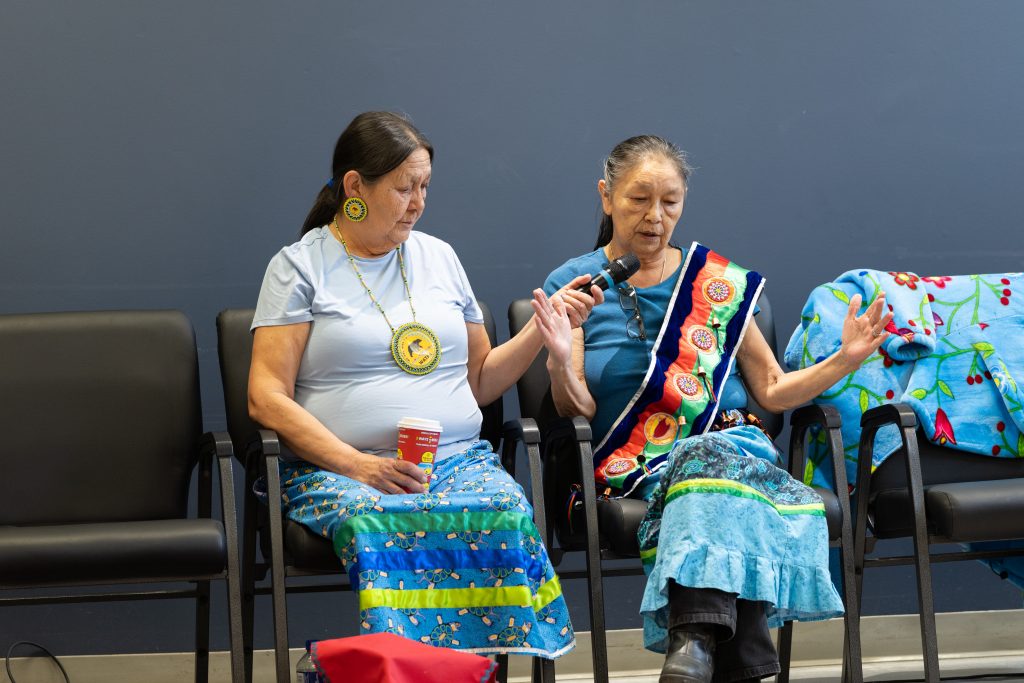
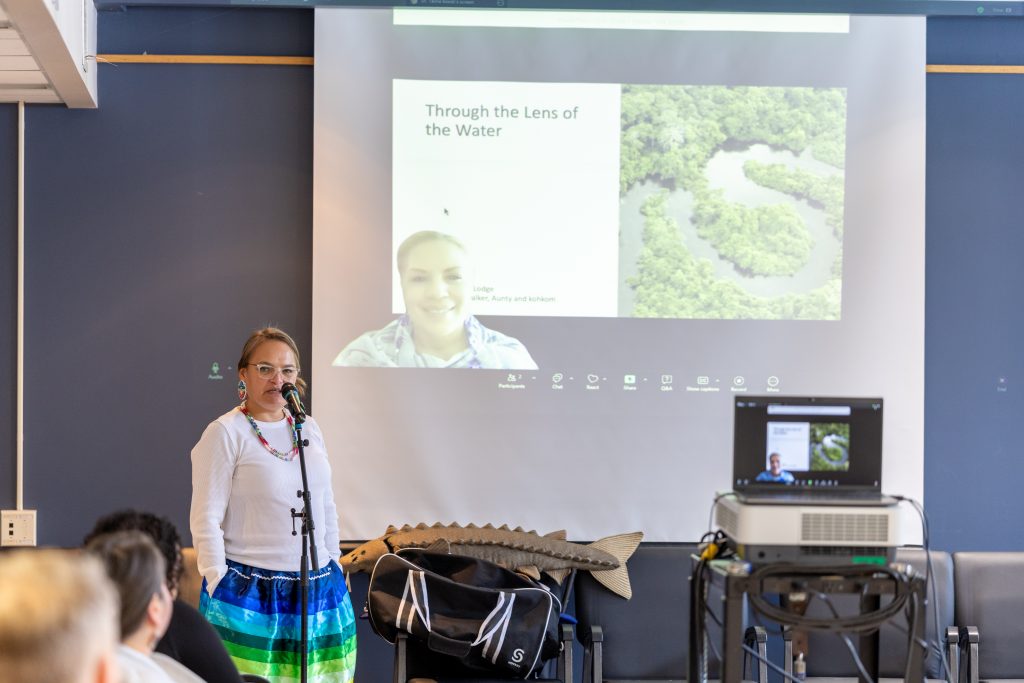
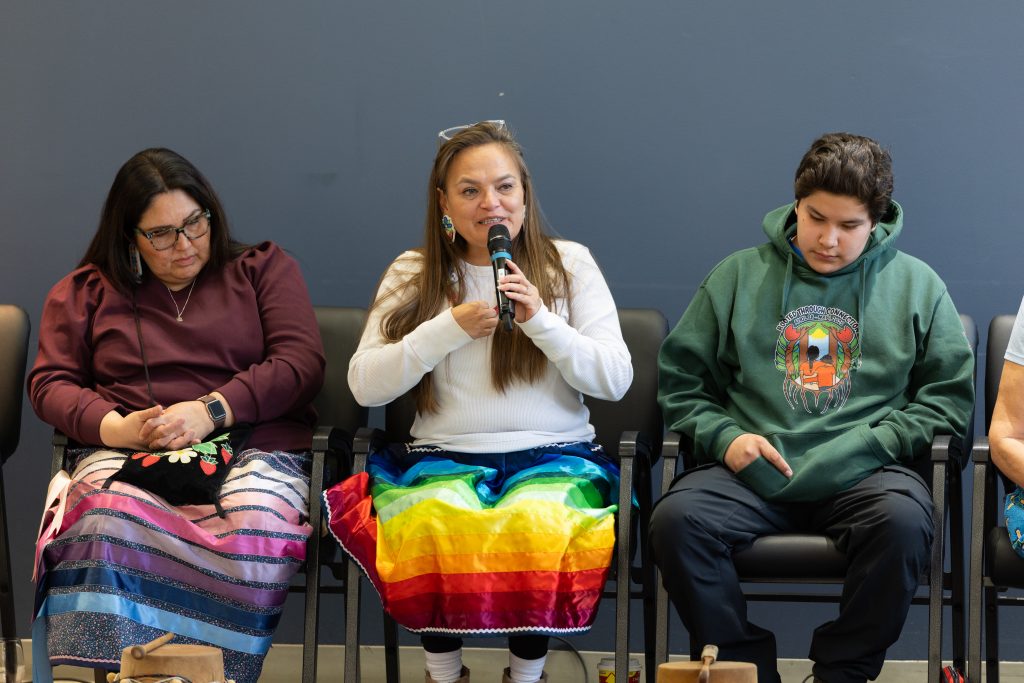
On March 17, 2026, Just Waters hosted an event titled “Respecting That Which Gives Us Life.” We were privileged to take part in a water ceremony and to learn from Nookomis Hilda Atkinson and Nookomis Louise Pierre, Roseau River Anishinaabe First Nation. Joined by their children and grandchildren, we saw these younger generations taking up sacred responsibilities to the water.
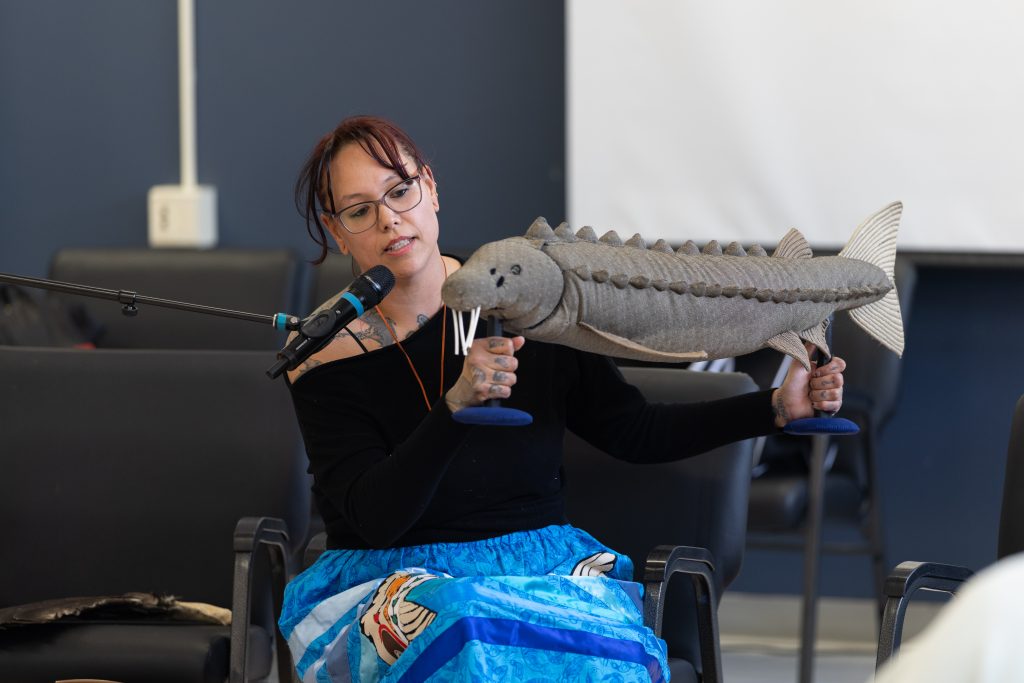
In the afternoon, Dr. Tasha Beeds spoke powerfully about her experiences participating in water walks across Canada and the United States and raising awareness about the condition of our water systems. Taylor Galvin and Kookum Nameo engaged us with stories and teachings about the sturgeon and we learned how Manitoba Hydro is impacting the sturgeon. Taylor and Kookum Nameo asked us to consider what we could do to protect the waters and the sturgeon.
Just Waters Student Researcher Jennifer Chinoye Amadi shares her reflections on World Water Day and “Respecting That Which Gives Us Life” in the following blog post titled “Embracing Water Generosity and Justice as Hope for Women’s Rights.”
Embracing Water Generosity and Justice as Hope for Women’s Rights
As you reflect on World Water Day, consider water justice as giving back to the water as much as we take from it. Water shields us as embryos and offers us a plethora of grace by supporting our birth into the world. It helps us to clean our bodies, cook our meals, nourish our bodies, and grow our foods. Water can provide us with emotional comfort and mental clarity with its beauty.
Beyond the fundamental and essential benefits that we derive from water, it can keep us safe from raging wildfires and prevent many human and animal displacements that come with fire outbreaks[i]. Think of many other ways water has given to you and continues to give to you. Now think about what happens to the waters when we dump things like refuse and sewage into them. Water, as we know it, is considered an incredibly finite resource and has in different ways become a site of conflict across the world.
While we can agree on the importance of water for human well-being and survival, certain human activities like capitalist initiatives and development agendas can make water unsafe for our use. The impacts of these actions, at worst, affect everyone. However, women and girls suffer differently, and in particular, those living in rural and Indigenous communities around the world bear the heavy burden of unsafe water and inequitable access to water. For example, at Six Nations of the Grand River, an assessment study shows how unsafe water affects maternal mental health.[ii] The study highlights how pregnant women during their post-partum period were not able to access clean running water to protect their newborns from getting infections, and to prepare food for their babies. The impact of water pollution extends to their inability to perform life-affirming spiritual ceremonies during pregnancy and birth, ultimately cutting off their ability to access support for their post-natal recovery with traditional medicines.
Similarly, when there is conflict over water, which is driven most of the time by the capitalist and corporate quest for lucrative ventures, women suffer the most by bearing the negative impact of such initiatives and are not typically consulted in decision-making. One example of this is the binational Arrowhead-Weston project that carries electricity from a dam in Manitoba through Minnesota and Wisconsin.[iii] Women remain the least consulted groups in the decision-making process and in water governance, even when they are most vulnerable to the negative impact of such initiatives. For example, as caregivers, women and girls deal with the exhaustive weight of worry associated with finding clean and safe water for domestic use and hygiene due to faulty water treatment systems.[iv] Actions like this do nothing other than heighten women’s exclusion and oppression and diminish their role in ecological democracy and preservation of water, which gives us life.
The Centre for Human Rights Research at the University of Manitoba, through the Just Waters project, held a water teachings event to remind us that we must respect that which gives us life. As a part of our respectful relationship with water, we owe it our gratitude, to fill it up with life in reciprocity by protecting it and keeping it clean. Speakers at this event described the pain that they experience when they see garbage in the waters, fish killed by pollution, and other harms to the water. This event reminded me to reflect on how I am connected to water, and that whatever I do with water affects every living thing’s well-being and sustenance on Earth. Moreso, I learned that water contains the memories of our ancestors, our grandmothers who came before us, which shifted my perspective on the ripple effects of what we do with and to the waters. I was reminded that our actions to protect waters honor the lives of our ancestors and serve as a tool for transformational change and reclamation, an approach to decolonization through water.
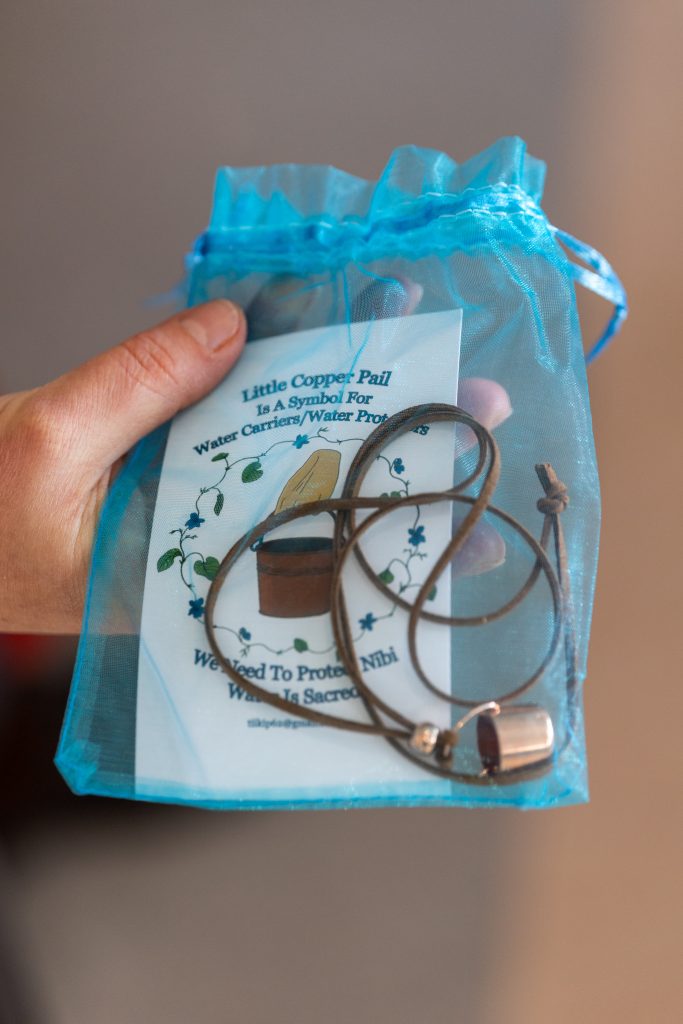
The question of what we are going to do to protect and reciprocate water’s generosity is one we should ask ourselves, as we all have a responsibility to water. Besides coming together for water teachings, we also wanted to leave the event with some commitments to protect waters, both at the individual and institutional levels. This idea was championed by one of the panelists, who work-shopped us into two groups to discuss among ourselves specific and actionable things we can do to foster water reciprocity at our various spaces. Upon reconvening from the group discussions, we agreed that first, at the micro level, as little as resisting the urge to urinate in the river because it is someone else’s home is a good start. This teaching was shared by Knowledge Keeper Ramona Milliea. The concept of discontinuing negligence toward water bodies, a quote from Josephine Mandamin, also resonated with the group.[v]
Secondly, at the meso and macro levels, we will continue engaging our communities to pass down water teachings to seven generations, to rekindle our love for water and reestablish women’s participation in water governance as true guardians of the waters. Additionally, we will deconstruct the colonial way of how we see and use water from a resource to a trust that must be used with mindfulness and reciprocity. Finally, we will reciprocate water’s generosity by standing up to raise awareness because when we all stand tall and together for water, we reassert our positions on water justice, re-enter into a relationship with water, and reconstruct our identity. When we choose generosity to the waters by protecting them, keeping them clean, and upholding them as a sacred trust, we are simultaneously choosing generosity to women. Women, as the traditional guardians of water and the ones who carry life, bear the disproportionate burden of water pollution and conflict. By ensuring water justice and reciprocity, we honour the deep, life-sustaining connection between women and water, reasserting their vital role in ecological democracy and ensuring the well-being of all future generations. Choosing water is also about recognizing the rights and labour that women have always done to care for waters, their work in water governance, and the dignity of women as rights holders.
[i] FN Robinne et al., “Scientists’ warning on extreme wildfire risks to water supply.” Hydrological processes 35, no. 5 (2021): e14086. https://onlinelibrary.wiley.com/doi/full/10.1002/hyp.14086.
[ii] Afroza Sultana et al., “Assessing the impact of water insecurity on maternal mental health at six nations of the Grand River,” Frontiers in Water 4 (2022): 834080,https://www.frontiersin.org/journals/water/articles/10.3389/frwa.2022.834080/full.
[iii] Greta Gaard, “Women, water, energy: An ecofeminist approach,” Organization & Environment 14, no. 2 (2001): 157-172, https://journals-sagepub-com.uml.idm.oclc.org/doi/abs/10.1177/1086026601142002.
[iv] Human Rights Watch, “Make it Safe: Canada’s Obligation to End the First Nations Water Crisis”. June 07, 2016. https://www.hrw.org/report/2016/06/07/make-it-safe/canadas-obligation-end-first-nations-water-crisis
[v] Ayse Gursoz, “Meet Josephine Mandamin (Anishinaabekwe), The “Water Walker,” Mother Earth Water Walk, accessed March 26 2026. https://www.motherearthwaterwalk.com/?p=2845
Investing for ourselves, and those downstream
Investing for ourselves, and those downstream
November 24, 2025
Jocelyn Thorpe and Adele Perry
Adele Perry and Jocelyn Thorpe respond to a City of Winnipeg Report outlining the importance of completing the final phase of the new North End Water Pollution Control Centre (NEWPCC) in a Winnipeg Free Press article published November 24, 2025.
We have invested large sums of money in infrastructure before.
You don’t often hear Winnipeggers complaining about the results: soft, clean drinking water thanks to the Shoal Lake aqueduct and flood protection thanks to the Red River Floodway.
A new city report outlines the importance of upgrading Winnipeg’s North End sewage treatment plant, which is responsible for treating 70 per cent of the city’s wastewater and all sewage sludge. The report focuses on the upgrades’ potential benefits to the city, including increased capacity to build new homes and businesses, and related economic growth.
It briefly mentions that upgrades to the plant are necessary in order to meet environmental regulations designed to protect waterways from the discharge of harmful materials that compromise the health of the Red River and Lake Winnipeg.
But nowhere does the report mention that Indigenous communities located downstream from Winnipeg are the ones bearing the brunt of Winnipeg’s sewage treatment shortcomings. Last year, in response to a sewage spill that resulted in over 228 million litres of sewage flowing into the Red River, 10 First Nations situated around Lake Winnipeg sued municipal, provincial and federal governments for the violation of their treaty rights, ongoing pollution of the lake, and its effects on the health and well-being of First Nations citizens.
Winnipeg, Wastewater & Environmental Racism Postcards
Winnipeg, Wastewater & Environmental Racism Postcards
November 4, 2025
Cameron Armstrong, Angela Ciceron and Sarah Deckert
On September 22, 2025, we met at the Assiniboine and Red Rivers to discuss how Winnipeg’s wastewater reflects and perpetuates environmental racism and colonialism. Dr. Kathy Bird spoke about the interconnectedness of the waters and reminded us that what we do to the waters in Winnipeg impacts our neighbours downstream. With profound insight and storytelling, she called us to a deep respect for the waters, both in spirit and in action. Dr. Jocelyn Thorpe shared about the reality of sewage that flows into the rivers not only when pipes break but when we have a heavy rainfall and the combined sewers overflow. Finally, Councillor Brian Mayes brought our attention to the need for federal support for the North End Sewage Treatment Plant upgrades, which would greatly reduce the amount of nutrients that flow into Lake Winnipeg.
We provided the postcards below as a way for attendees to advocate for the waters, and for our neighbours downstream. Please feel free to print these postcards and send to your MPs, MLAs and city councillors with a personal message about your connection to and hope for the waters. Below the postcards we have provided a few additional resources, including links to help you find your MP, MLA and city councillor, and some prompts for writing an effective letter.
World Water Week 2025: Ripple Effects
World Water Week 2025: Ripple Effects
October 23, 2025
Sarah Deckert
We understand that water is central to life. We are made of water and it is to be cherished. We respect water, work with it, live with it and nurture it. We are the custodians, guardians and knowledge holders of the lands, coasts, waters, ice and sky in our Homelands. We have sustainably managed, observed and cared for our lands, waters, and natural resources for the health and benefit of both people and Homelands for millennia. Our spiritual connections, ecological and biocultural knowledge, including lived experiences of climate change, have been, and continue to be, passed down from generation to generation through our stories, art, song, dance and cultural life…
Excerpts from “A message from the Indigenous Peoples Delegation to World Water Week“
Early, full and effective participation by Indigenous Peoples in governance and decision-making for environmental management, cultural heritage protection, and climate change is essential to enabling a sustainable future. We need to be empowered in generating global climate change solutions that embed both Indigenous knowledge systems and science.
Joining the Indigenous Peoples Delegation to World Water Week as an ally was a privilege. Held from August 25-29, 2025 in Stockholm, Sweden, World Water Week has been increasing efforts to highlight Indigenous voices over the past several years. This year, the delegation included Indigenous delegates from Australia, Aotearoa New Zealand, Brazil, Canada, Fiji, Nepal, United States, Sweden and more.
Along with Just Waters researcher Nicole J. Wilson, I had the opportunity to build relationships with and learn from an incredible group of Indigenous experts, water protectors, scientists and advocates. I learned too much for one blog post, so I’ll share a few snapshots.
Sámi presenters Sara-Elvira Kuhmunen and Inger Axiö Albinsson spoke about Sámi experiences of green colonialism. Green energy systems such as windfarms and hydroelectric dams are built in Sápmi, the land of the Sámi that covers parts of Norway, Sweden, Russia and Finland, and are lauded by governments and the public. Stockholm subway station walls are decorated with images of Samuel L. Jackson gazing off into the distance while holding a bag of Vattenfall Windfarmed Seaweed Snacks.
Just before I left for Sweden, I heard about the story of a 113-year old church, and the entire town of Kiruna, being moved five kilometers away to make room for a rare earth mine expansion.

Kiruna and the Vattenfall windfarms are both in Sápmi. Likewise, both projects, and many others, impact reindeer migration paths and grazing grounds—which in turn impacts Sámi livelihoods and culture. Listening to Sara-Elvira and Inger gave me a case of déja-vu—Manitoba Hydro anyone?
The many sessions on nature-based solutions (NbS) caught my interest. While I’m sure there are nuances I didn’t catch, my impression of NbS is that they can be summed up like this: Don’t drain wetlands and other watery places. Dig holes to collect water. Replace concrete with native plants. Follow Indigenous peoples’ lead. Leave forests alone. It almost seems too simple and yet, can you imagine the outrage if we tried to remove downtown parking spots to create a rain garden?
In a powerful moment, Professor Bradley Moggridge from the Kamilaroi Nation of Australia called for the implementation of “culture-based solutions,” which will achieve the intended results of NbS—supporting biodiversity, storing carbon, and more— while also protecting and revitalizing Indigenous cultures.
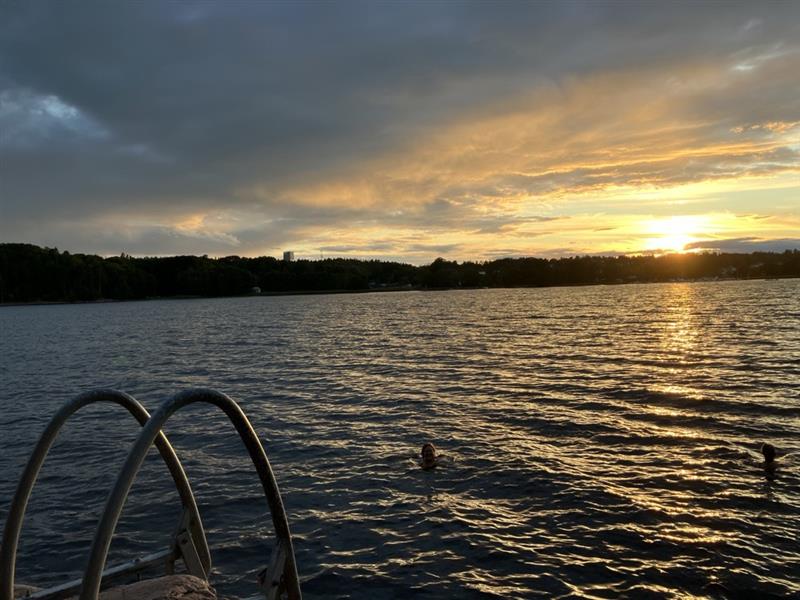
Dr. Tafue Lusama, a Tuvaluan Indigenous man, spoke to a whole of life philosophy that recognizes the interrelatedness of all things. He highlighted the special knowledge that children have about the lands and waters and encouraged the use of cultural indicators of biodiversity and water quality in addition to technical western scientific monitoring. He was also the only speaker I heard who referenced the experience of being in the water, saying, “You have only to immerse yourself to be refreshed.” As a person who ended every day of the conference by swimming in the 17°C water of the Baltic Sea, I wholeheartedly agree!
In each Indigenous-led session, some version of the opening quote was repeated: “Early, full and effective participation by Indigenous Peoples in governance and decision-making for environmental management, cultural heritage protection, and climate change is essential to enabling a sustainable future.”
While attendees listened attentively and applauded enthusiastically, the question remains: will they go back to their roles in project management, engineering and conservation with good intentions alone or will they offer early, full and effective participation to Indigenous communities that are impacted by their projects?
Powerful words spoken by Indigenous Hawaiian KaiLei’a Duriano are still ringing in my ears:
You have to be vulnerable and willing to risk… When you ask us, we are risking everything. I am pouring my entire cup into this larger cup, and if you are not willing to risk even a drop, I challenge you to reevaluate your role in working with Indigenous communities because it isn’t a project for us—it is a ripple into our tidal waves that we feel for generations to come.
Kailei’a duriano
What kind of ripples are you creating?
Environmental Racism: A Resource Guide
Environmental Racism: A Resource Guide
October 23, 2025
Jenny Amadi, Angela Ciceron, Sarah Deckert and Florence Lange
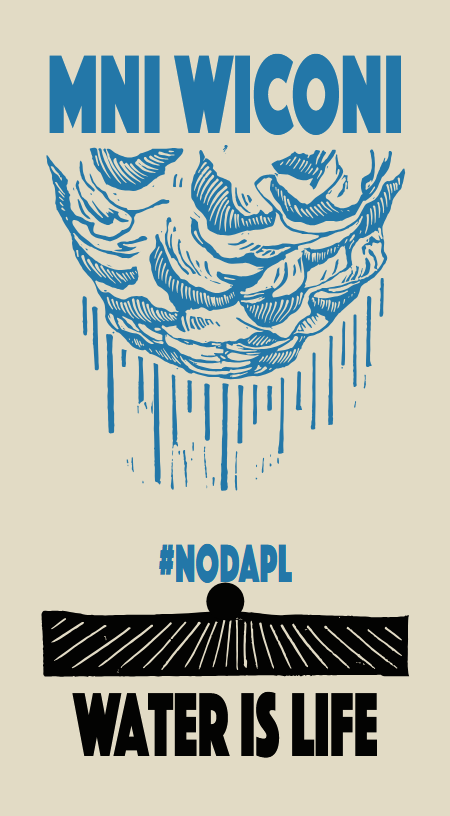
On September 22, 2025, we met at the Assiniboine and Red Rivers to discuss how Winnipeg’s wastewater reflects and perpetuates environmental racism and colonialism. Dr. Kathy Bird spoke about the interconnectedness of the waters and reminded us that what we do to the waters in Winnipeg impacts our neighbours downstream. With profound insight and storytelling, she called us to a deep respect for the waters, both in spirit and in action. Dr. Jocelyn Thorpe shared about the reality of sewage that flows into the rivers not only when pipes break but when we have a heavy rainfall and the combined sewers overflow. Finally, Councillor Brian Mayes brought our attention to the need for federal support for the North End Sewage Treatment Plant upgrades, which would greatly reduce the amount of nutrients that flow into Lake Winnipeg.
This resource guide was created as a starting point for those seeking to learn more about environmental racism.
Download the screen reader friendly Environmental Racism Resource Guide here:
Water and Justice Resource Guide
Water and Justice Resource Guide
July 23, 2025
Sarah Deckert and Shaylyn Pelikys
The Nibi Declaration of Treaty #3 begins, “Nibi (water) is alive and has a spirit. It is the lifeblood of our mother (aki) and connects everything. It can give, sustain and take life.” Indigenous knowledges teach us to relate to water not as a resource to be extracted but as a living being to be loved and respected. As you engage with the podcasts, documentaries, books and other resources included in this preliminary resource guide, we hope that you will do so while holding on to the central truth of the Nibi Declaration: “Nibi (water) is alive and has a spirit.”
Download the screen reader friendly Water and Justice Resource Guide here:
The Lake St. Martin Story
March 12, 2025
Cameron Armstrong
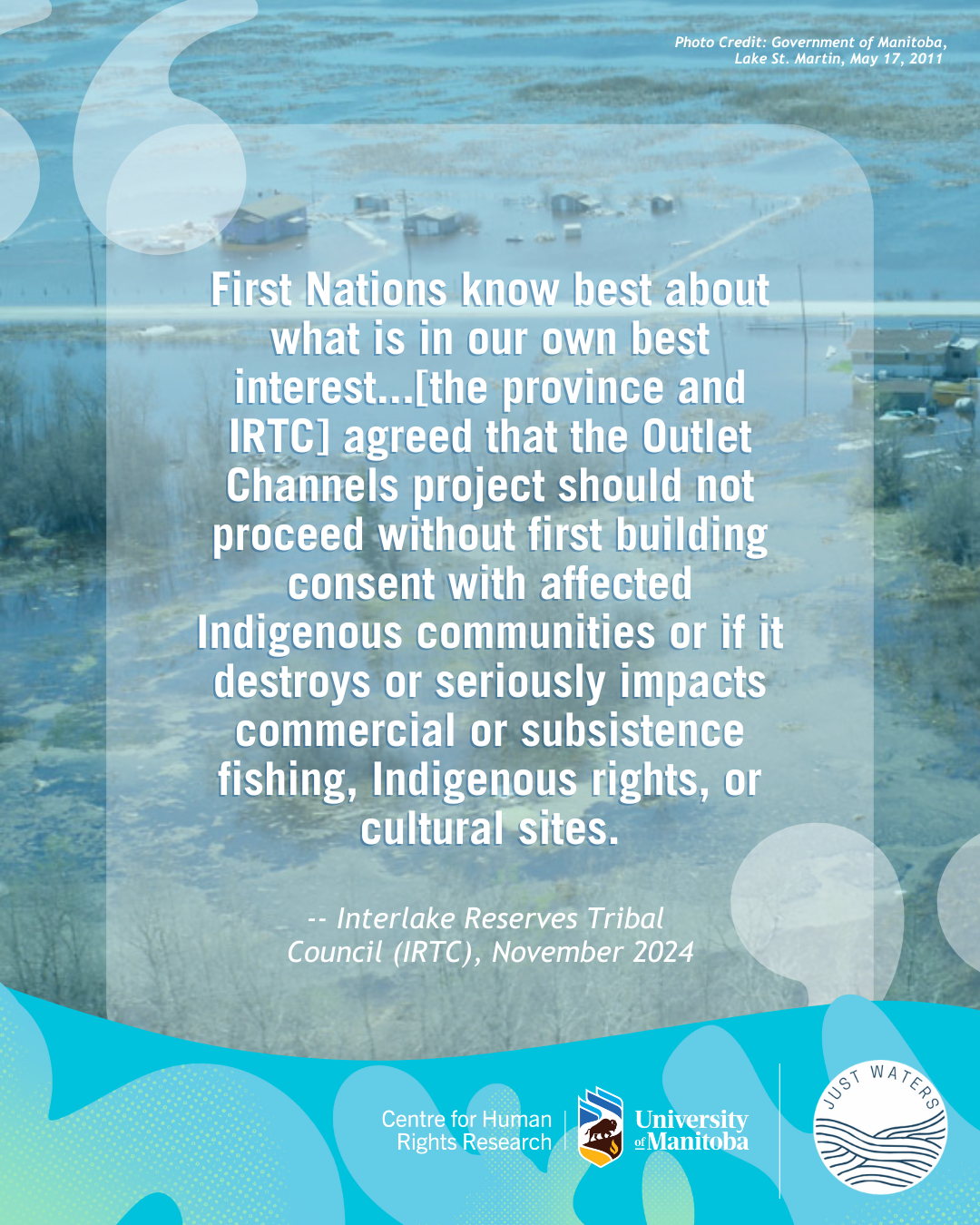
Water control structures have disempowered and displaced First Nations, destroying livelihoods in the name of development, upholding colonial systems and perpetuating environmental racism. One such case is that of Lake St. Martin and the Lake St. Martin First Nation.
As part of the Just Waters project, student RA Cameron Armstrong wrote a plain language summary giving an account of 50+ years of artificial flooding that have impacted the Lake St. Martin First Nation in a myriad of ways, including long term evacuation. Download the resource to find out more.
Contact Us
We’d love to hear from you.
442 Robson Hall
University of Manitoba
Winnipeg, Manitoba
R3T 2N2 Canada
204-474-6453
Quick Links
Subscribe to our mailing list for periodic updates from the Centre for Human Rights Research, including human rights events listings and employment opportunities (Manitoba based and virtual).
Traditional Territories Acknowledgement
The University of Manitoba campuses are located on the original lands of the Anishinaabeg, Ininiwak, Anisininewuk, Dakota Oyate, Dene and Inuit, and on the National Homeland of the Red River Métis.

Centre for Human Rights Research 2023© · Privacy Policy